I’m a college student worried about accidentally sounding “too AI” in my papers, so I’ve been testing Clever AI Humanizer to rewrite some of my drafts. Before I rely on it, I really need honest feedback from people who’ve used it: does it actually bypass detectors without messing up accuracy, tone, or originality? Any real experiences, pros/cons, or better alternatives for academic writing would really help me decide what to do next.
You know that feeling when you paste something from ChatGPT into a doc, read it back, and instantly think, “Yeah, that sounds like a robot who just discovered punctuation”? That was me a few months ago. I started looking for ways to clean that up and make it sound like something a human would actually write. That’s how I ended up messing around with Clever AI Humanizer for a while and collecting notes.
Below is basically my full experience with it, warts and all, plus how it stacks up against other “make AI undetectable” tools. Not sponsored, no affiliate links, nothing like that. Just what I found after abusing it on a bunch of texts.
So… what is Clever AI Humanizer, really?
Clever AI Humanizer lives here:
https://aihumanizer.net/
Functionally, it sits between your AI and whatever you’re submitting. You paste in text from ChatGPT (or any LLM), pick a style, hit a button, and it rewrites it so it feels more like a human wrote it and less like an over-eager intern who read one writing guide.
There’s also this explainer they link to a lot (ignore the weird broken shortcode in the URL, the link still goes):
https://www.insanelymac.com/blog/clever-ai-humanizer-review/[sc%20name=
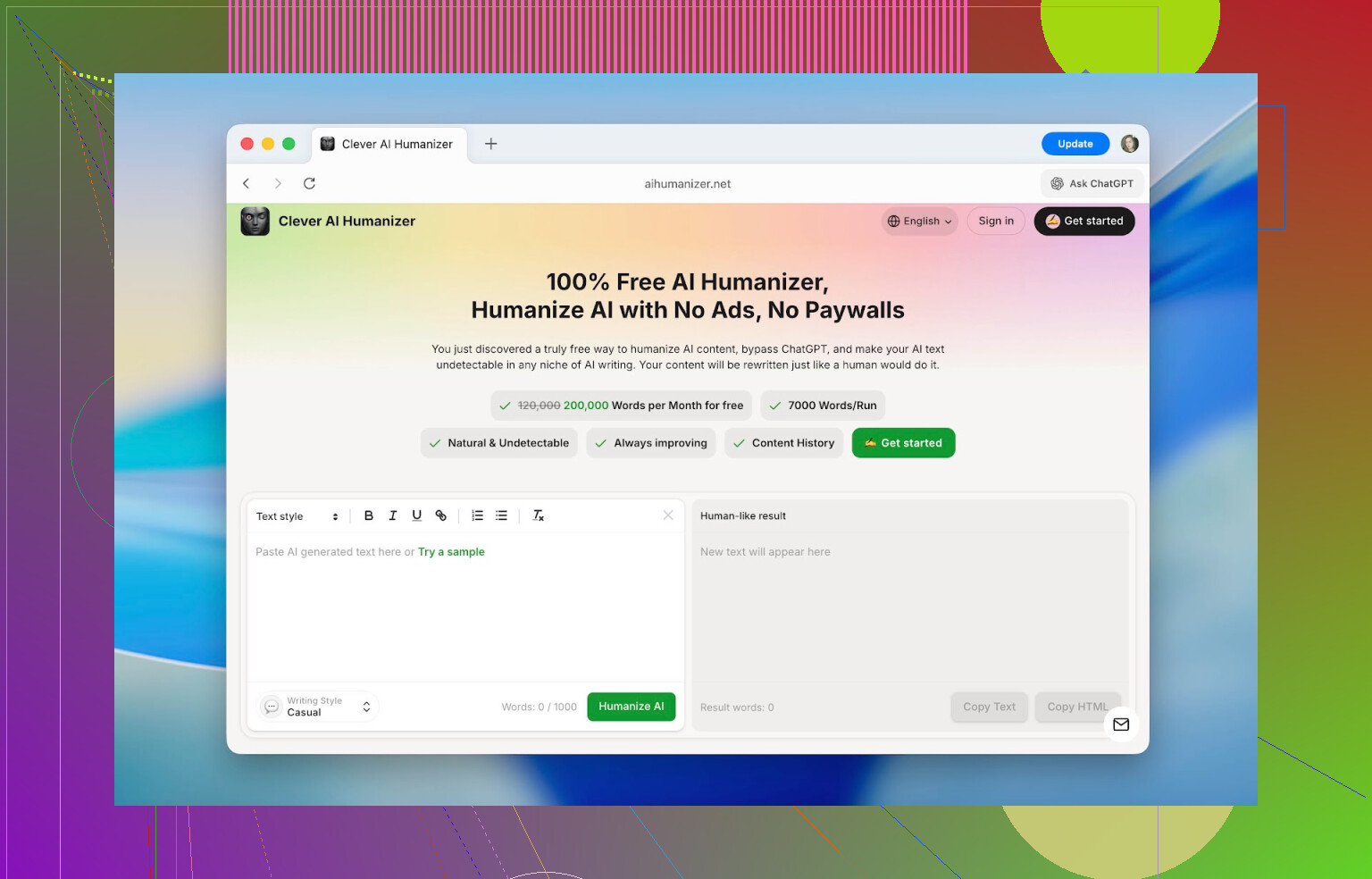
The thing that tipped me off that this wasn’t somebody’s weekend side project: the UI doesn’t suck.
A lot of these “AI humanizer” sites look like the default template someone forgot to style. Tiny cramped text box, no word counters, zero thought put into usability. Clever AI Humanizer actually looks like a product:
- Clean workspace with left/right panels.
- Clear word counts and limits.
- Obvious “paste here / result appears there” setup.
You don’t have to guess where stuff goes. If you’ve ever used any online editor before, you’re good.
The other big surprise: it’s actually free. Not “free until your second paragraph” or “free but only if you sign away your soul.” The limits are:
- Up to 1,000 words per run
- Up to 7,000 words per day
- 4,000 words without an account
- Extra 3,000 words if you create a free account
So you can realistically run a couple essays, assignments, or a day’s worth of content through it without getting immediately paywalled. For a lot of people, that’s enough for daily use.
What Clever AI Humanizer actually does well
I assumed this would just be another glorified paraphraser. It’s not perfect, but a few things genuinely stood out.
Detection drop: from “100% AI” to “uhh, maybe?”
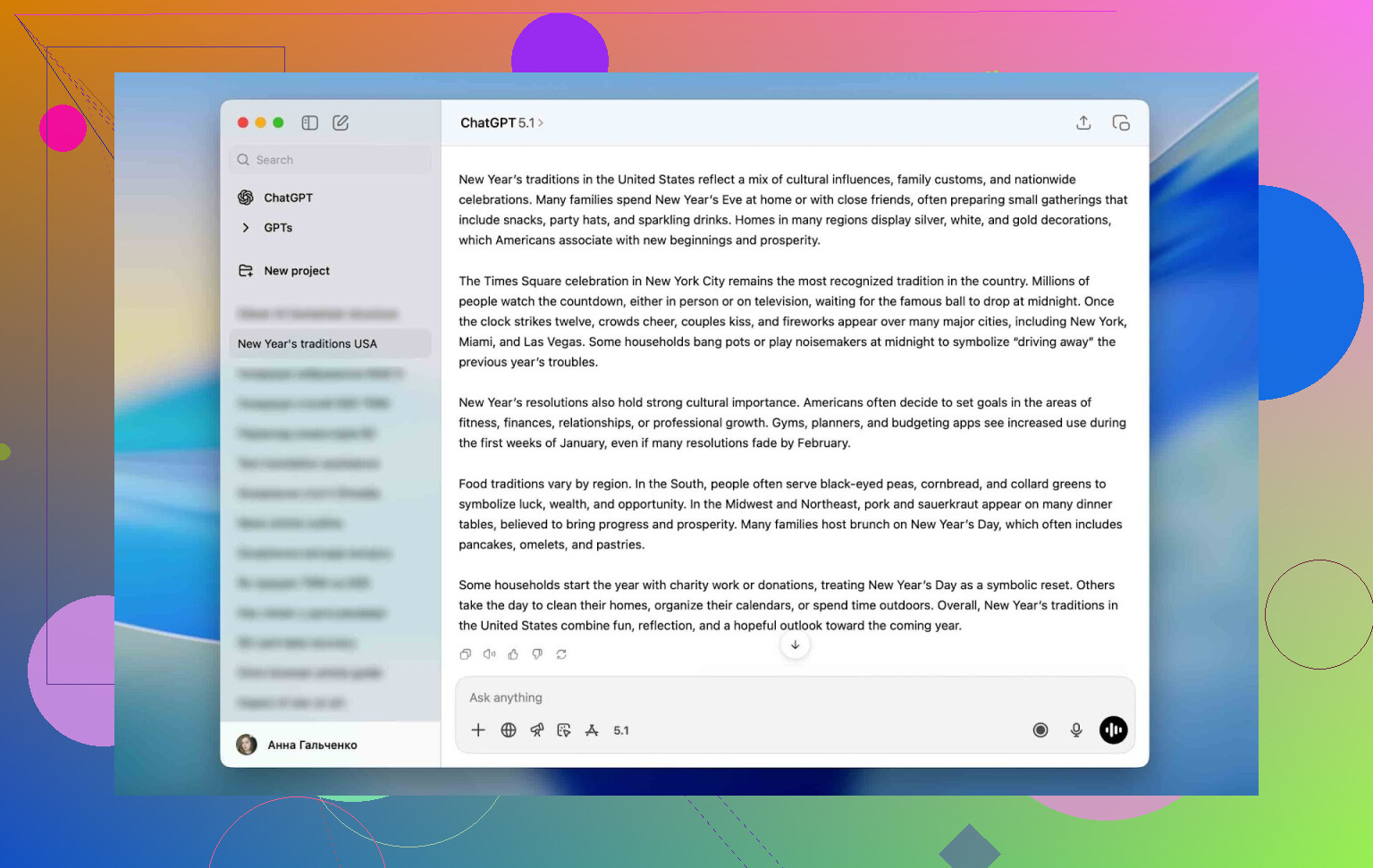
I took some painfully default ChatGPT output. The type of thing you get when you throw in a vague prompt and hit enter once.
I ran that untouched text through several detectors:
- ZeroGPT
- GPTZero
- QuillBot AI Checker
- Undetectable AI’s detector
Everything came back as basically 100% AI.
Then I sent those same paragraphs through Clever AI Humanizer (Casual mode most of the time) and checked again. The new scores were bouncing somewhere between:
- 13%
- 6%
- Down to almost 0% on some tools
Is it always 0%? No. And any tool claiming “guaranteed 0% AI detection anywhere” is lying. These checkers constantly change what they look for and they’re looking more at patterns than words.
But yeah, the drop was real and noticeable.
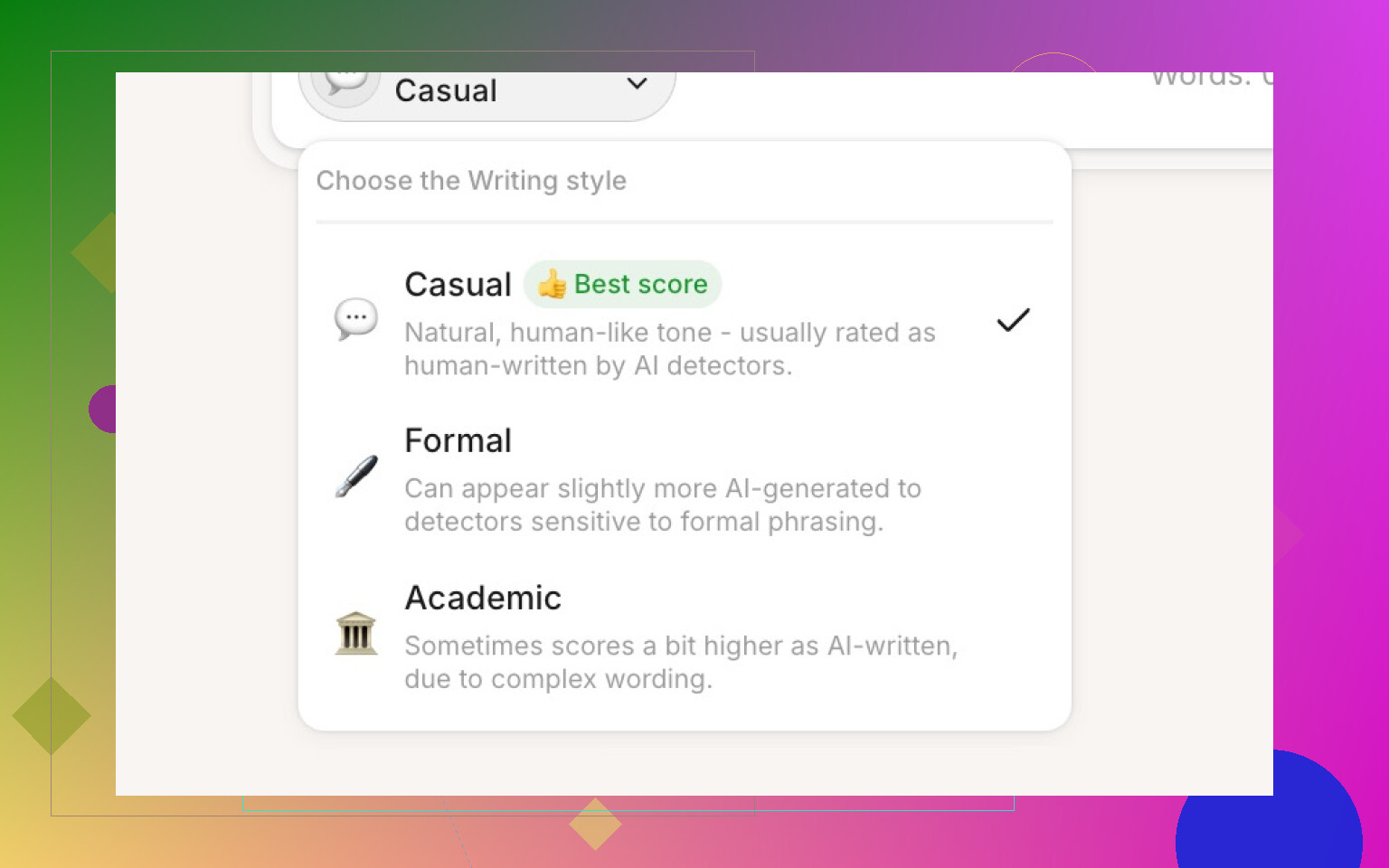
Different styles that actually feel different
You can pick one of three tones:
- Casual
- Formal
- Academic
They don’t just re-label the same output:
- Casual reads closer to how people talk in forums or emails.
- Formal is cleaner, more neutral, with tighter structure.
- Academic goes full “research paper,” with heavier phrasing.
Detectors reacted slightly differently depending on the style, but mostly within a 3–5% range. I stuck to Casual most of the time so I wouldn’t waste the daily word cap retesting the same thing in every mode.
History that doesn’t vanish after a day
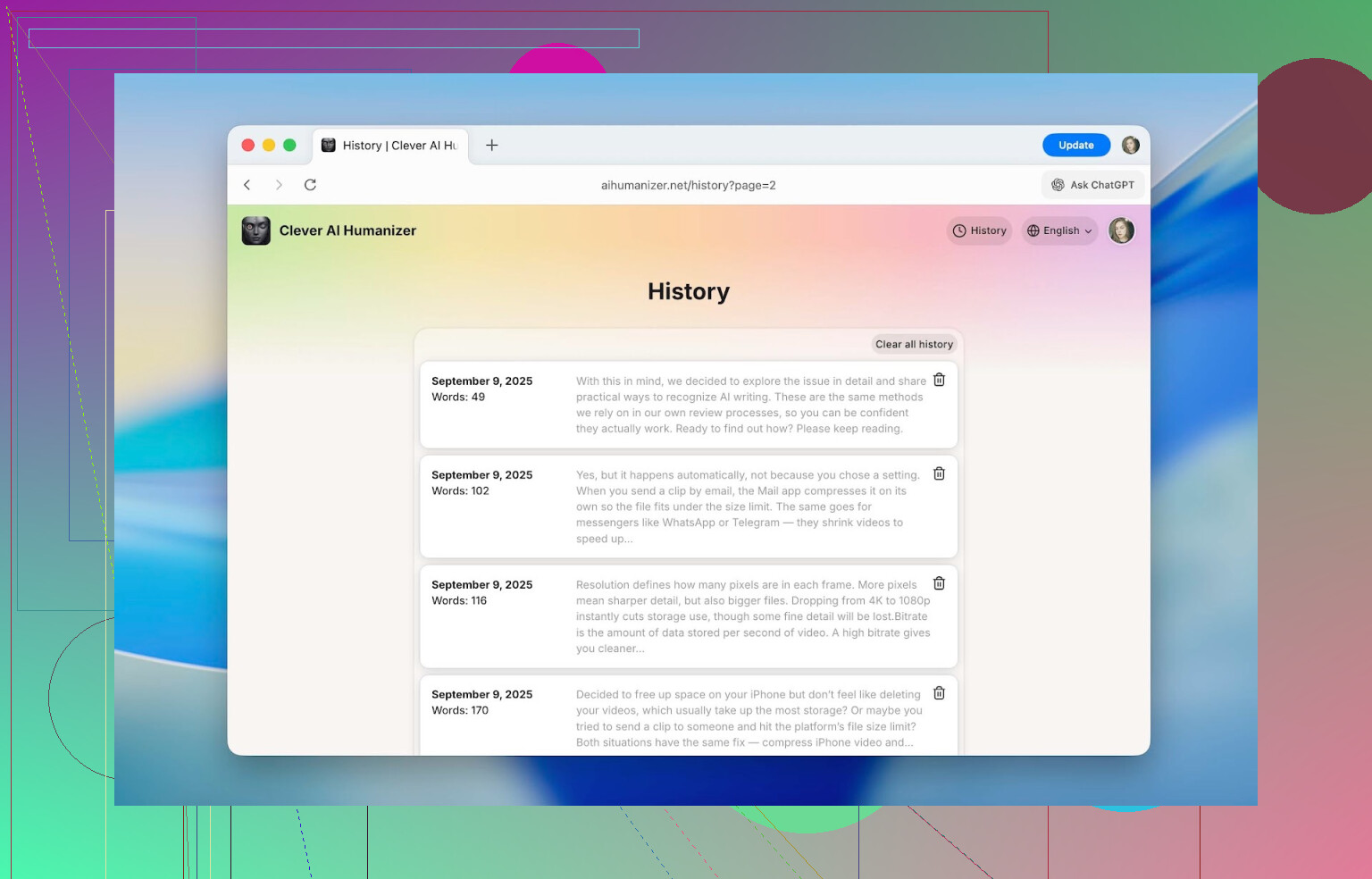
Once you make an account, it tracks all your past rewrites:
- Date
- Word count
- Short snippet preview
I checked stuff I had run through it back in September and it was still there. If you’re working on long-term writing (thesis, documentation sets, content calendars, etc.), this is actually useful. No more “where is that version I liked from last week” drama.
Formatting survives the rewrite
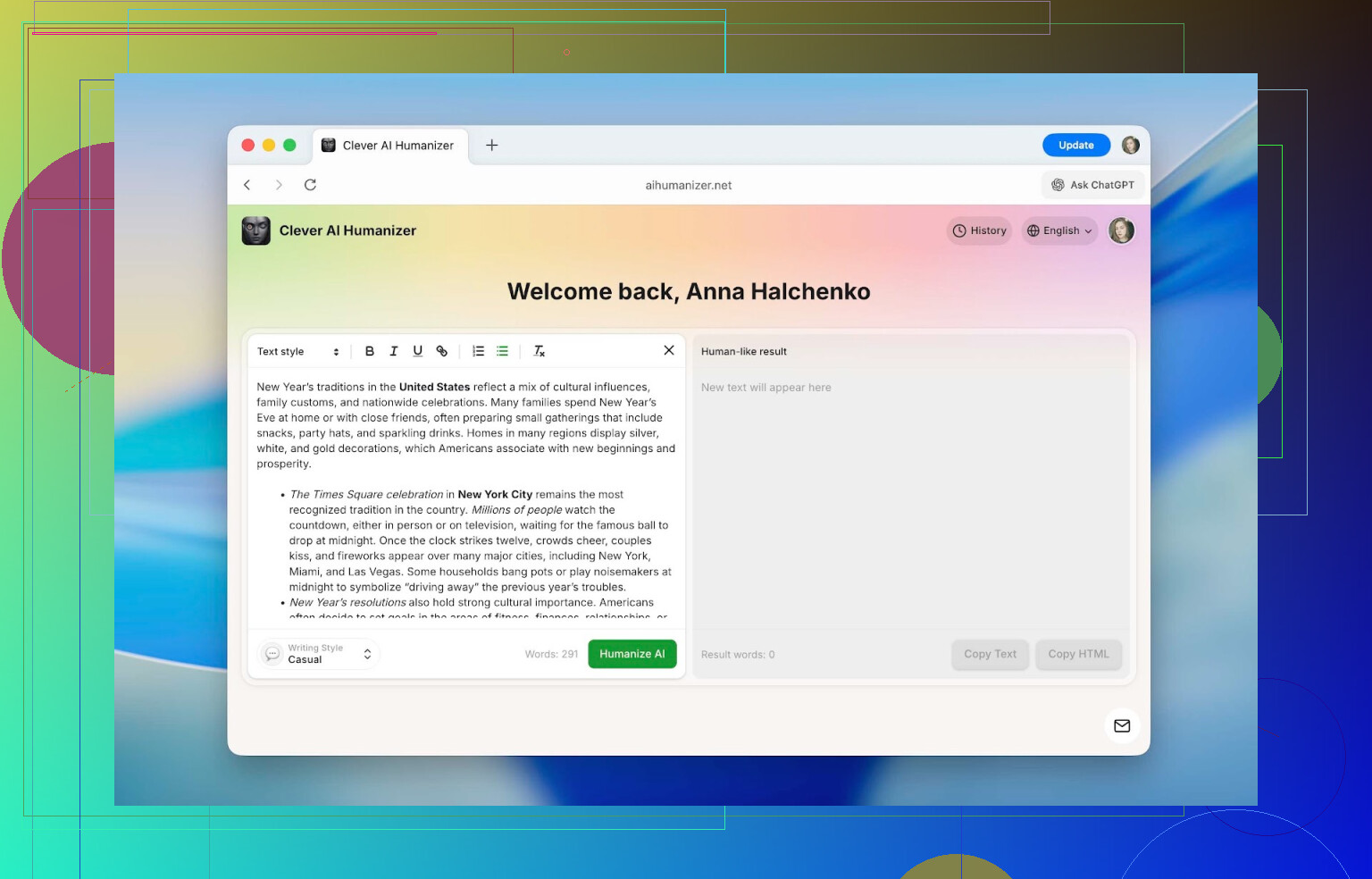
Inside the editor, you can:
- Add headings
- Use bold, italics, underline
- Insert links
- Create bullet/numbered lists
And after it rewrites the text, the formatting is still there when you copy it out. That’s rare. Most tools strip formatting, then you have to redo all your headings, lists, etc. manually.
If you’re working with stuff like:
- School assignments with strict formatting rules
- Internal docs with style guides
- Articles that must preserve markup
This saves a surprising amount of time.
Not just English-only
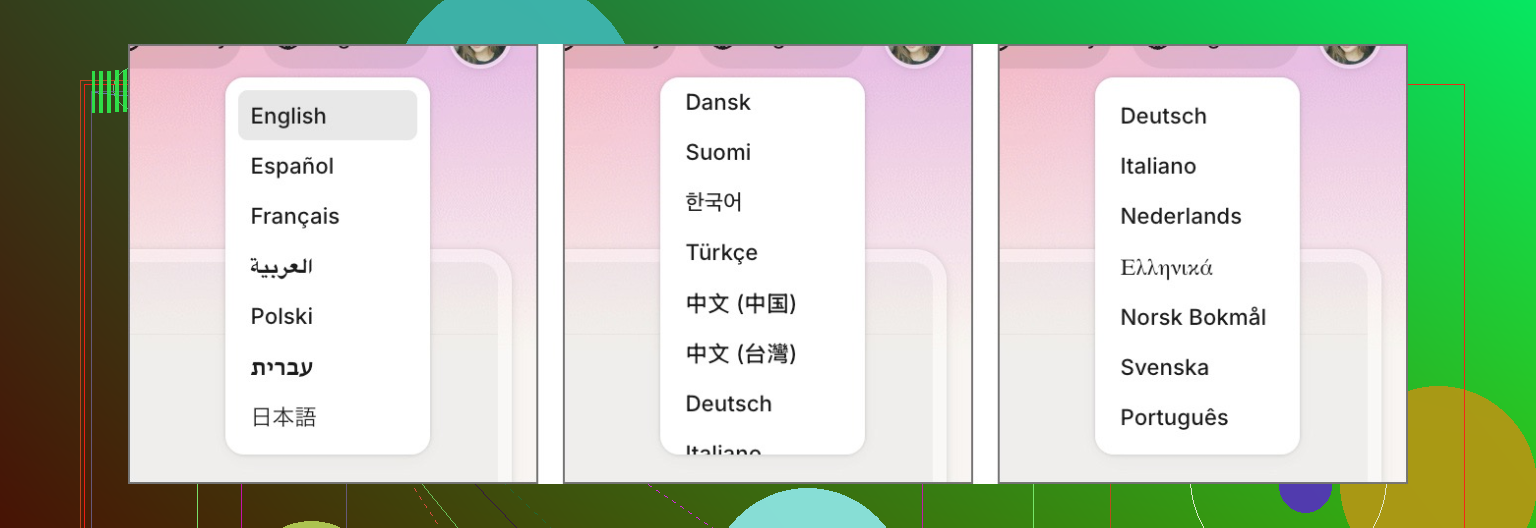
It handles multiple languages, including but not limited to:
- French
- Spanish
- Italian
- German
- Dutch
- Portuguese
- Polish
Also, the interface itself can switch languages, so non-English speakers don’t have to rely on browser auto-translate hacks.
If you’re doing bilingual content or anything EU-market-focused, that’s an obvious win.
How to use Clever AI Humanizer (step-by-step, no magic)
This part is just the practical “how do I actually run text through it” bit. If you want some deep dive on the internal algorithm, that’s here:
https://aihumanizer.net/how-does-ai-humanizer-work
But I’m not reverse-engineering models. I’m more interested in what it does from the outside.
Using it is brain-dead simple:
-
Open the site in your browser:
https://aihumanizer.net/ -
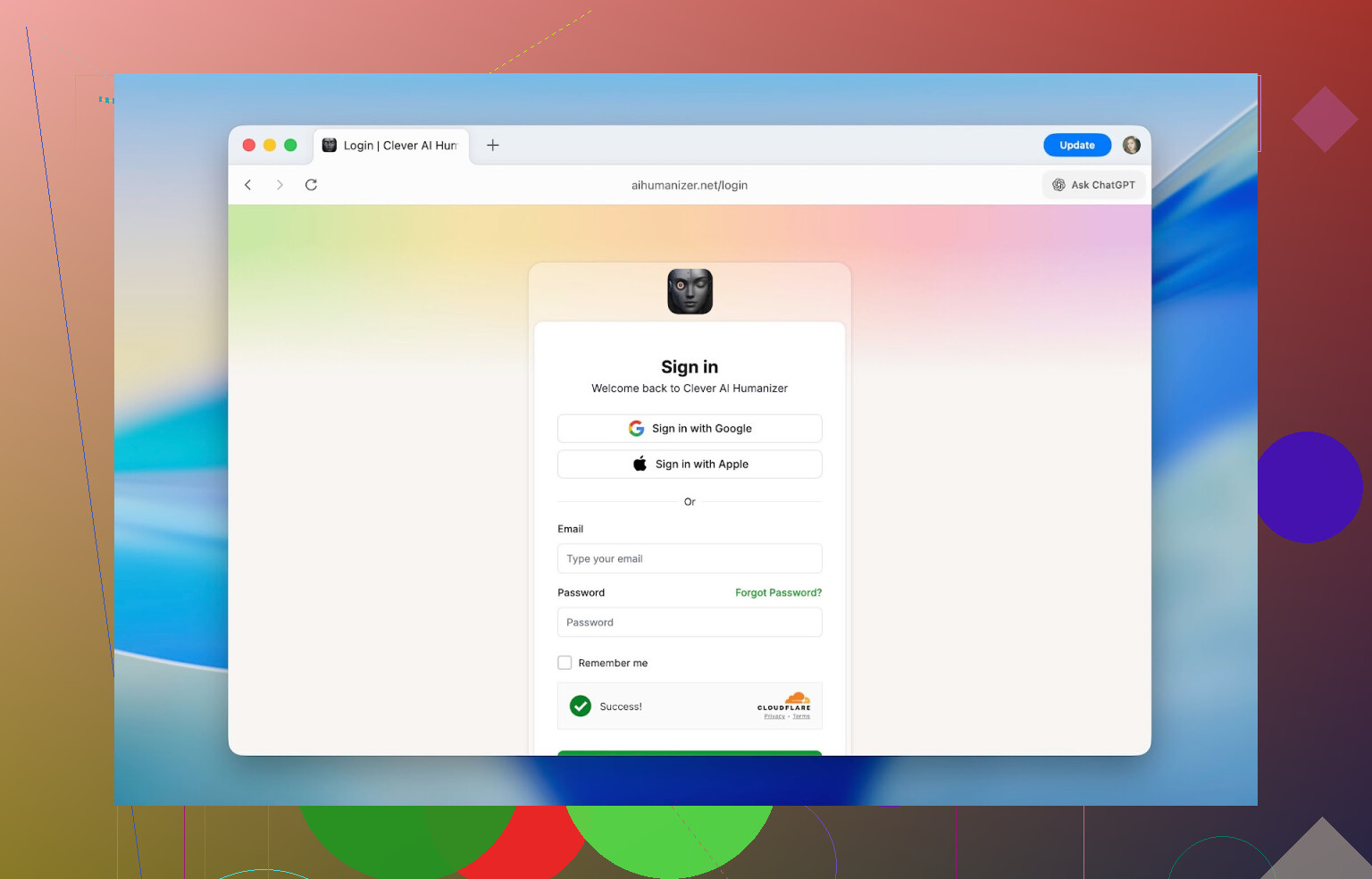
(Optional but worth it) Hit Sign In in the top right. You can log in with:
- Apple
- Email + password
Signing in unlocks: - Higher daily word limit
- Access to history
-
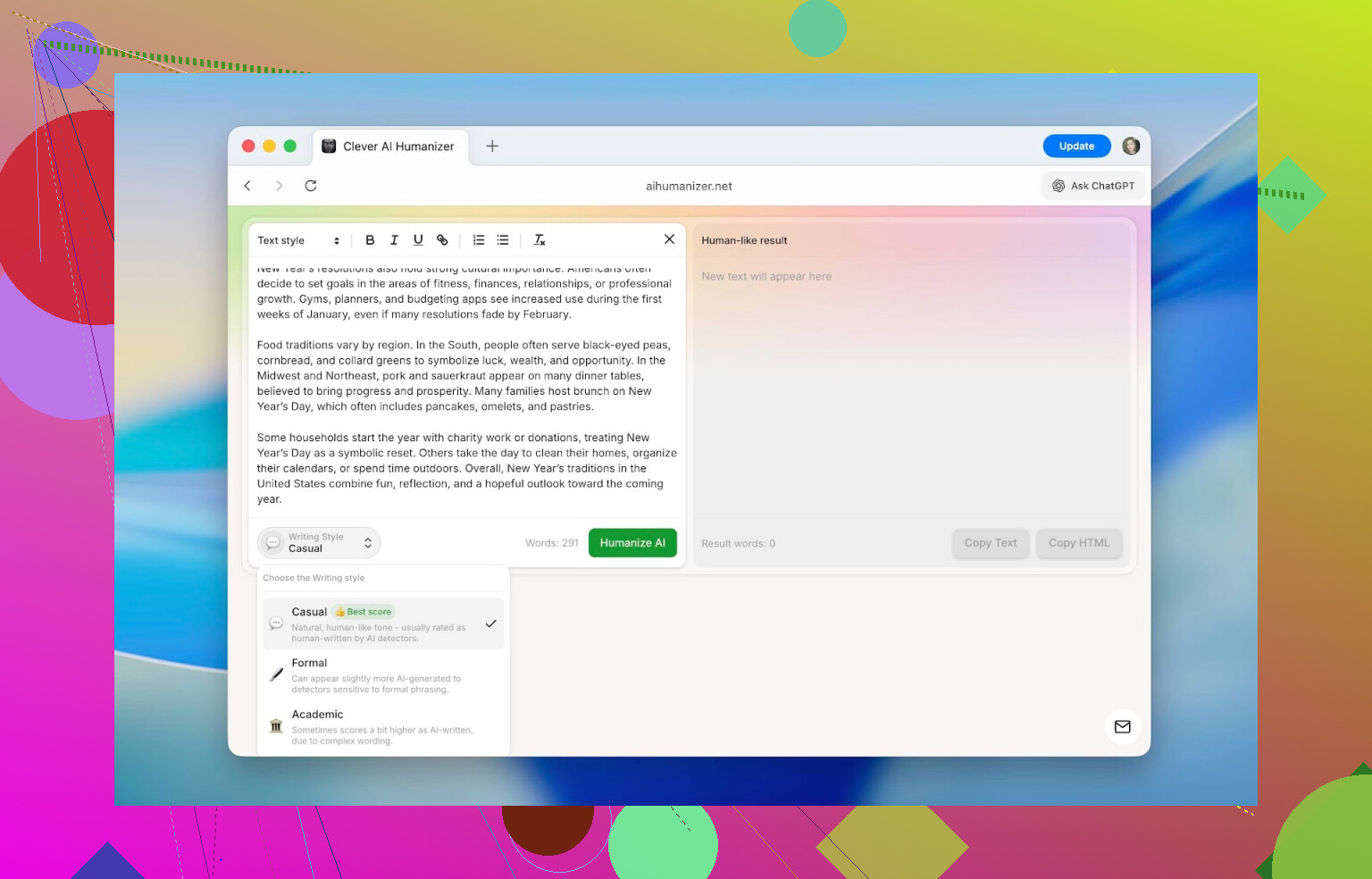
Paste your AI-generated text into the left text area. This is your input.
-
At the bottom, choose your style:
- Casual
- Formal
- Academic
Then click Humanize AI.
-
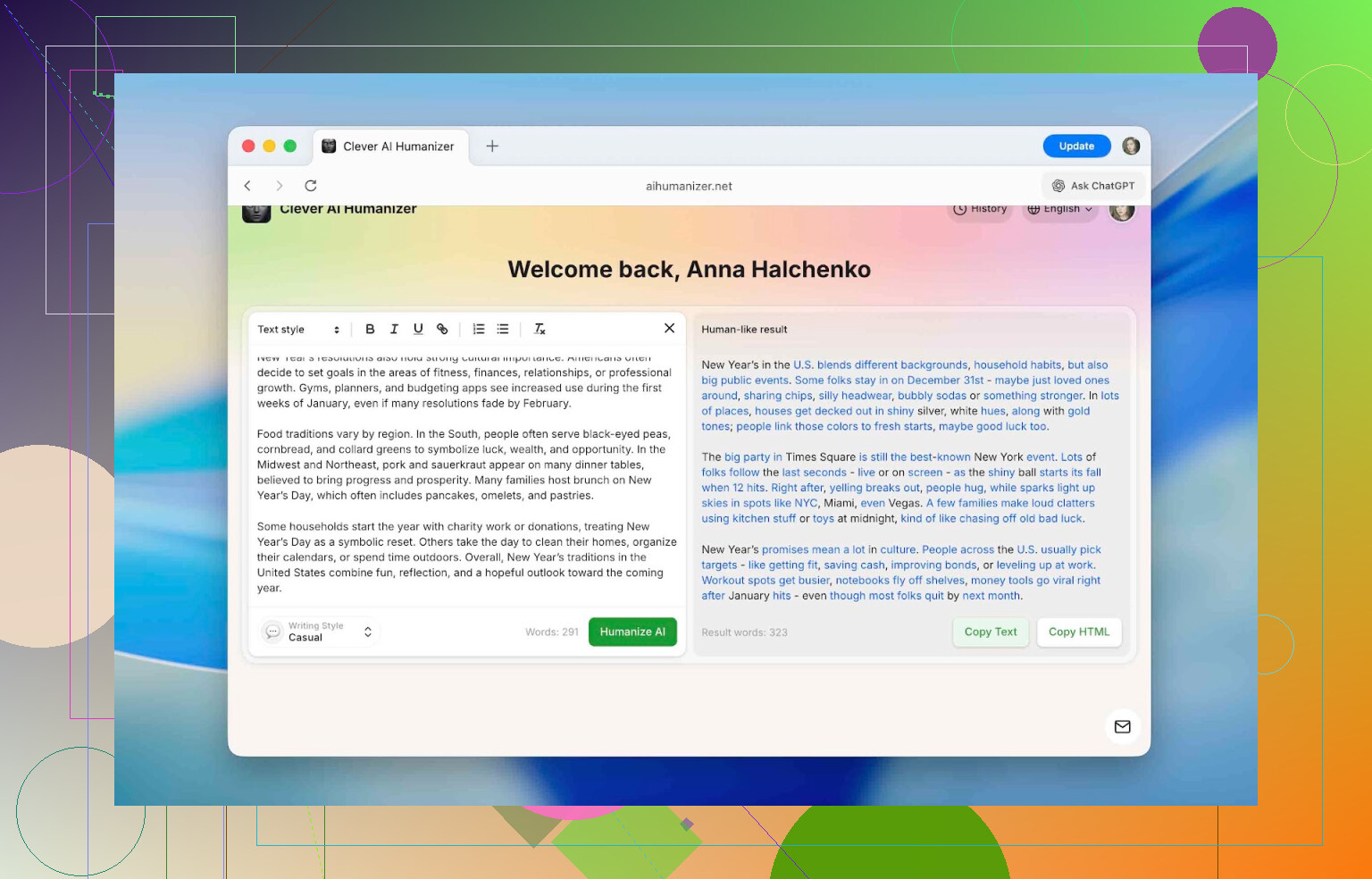
Wait a second. The rewritten version shows up on the right. Changes are highlighted in blue so you can see what shifted. Copy the result and send it wherever:
- Your doc
- LMS upload
- Blog
- Straight into an AI detector if you feel like testing it
That’s literally it. No settings menus, no sliders, no weird “temperature” controls.
How it performed against AI detectors
Here’s the part a lot of people jump to: does this thing actually trip up AI detectors or not?
I used four popular ones:
- QuillBot AI Checker
- ZeroGPT
- GPTZero
- Undetectable AI detector
They’re all mentioned a lot in academic policies and corporate “AI use” guidelines, so they’re a decent sample.
How I tested
-
Generated a basic text with ChatGPT.
Normal prompt, nothing fancy. Just a vanilla response like anyone would produce on a first try. -
Ran that raw text through all four detectors.
Every single one came back basically maxed as “AI.” -
Passed the exact same text through Clever AI Humanizer (Casual).
No manual editing before or after. Just one click. -
Checked the humanized output in the exact same four detectors.
Logged all the results.
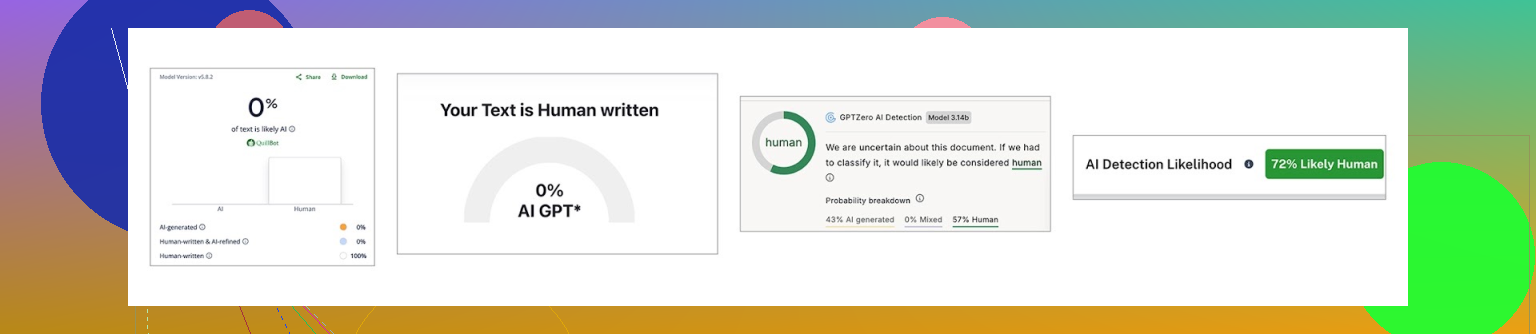
Here’s what the numbers looked like:
| QuillBot | ZeroGPT | GPTZero | Undetectable AI | |
|---|---|---|---|---|
| Before, % | 98 | 100 | 100 | 90 |
| After, % | 0 | 0 | 43 | 27 |
So:
- QuillBot & ZeroGPT: dropped all the way to 0%
- GPTZero: dropped to 43%
- Undetectable AI: dropped to 27%
This confirms two things:
- The tool doesn’t just shuffle synonyms. It changes patterns enough that some detectors basically back off.
- Detectors don’t agree with each other at all. ZeroGPT can scream “100% human,” while GPTZero is still side-eyeing you at 43%.
That lines up with what’s discussed in this LLM detector comparison write-up:
https://www.insanelymac.com/blog/clever-ai-humanizer-review/[sc%20name=
These detectors use different indicators, assumptions, and thresholds. None of them is “proof” of anything. At best, they say “this text looks statistically similar to something AI might write.”
Human context still matters.
Ethical note, because it needs saying
I’m not telling anyone to generate full essays with AI, run them through a humanizer, and submit as “your” work. In the test above, the text was 100% AI, but that was purely to see how the detectors reacted.
The saner, more honest workflow looks like:
- You write the core content yourself.
- You use AI to:
- Suggest improvements
- Reorganize sections
- Help with phrasing or grammar
- You pass those AI-touched segments through a humanizer to:
- Remove obvious “AI style”
- Keep everything consistent with your voice
That way the ideas are still yours, the structure is yours, and the AI is playing “editor,” not “ghostwriter.”
How it stacks up against other AI humanizers
There are a ton of tools calling themselves “AI humanizers” now. To see where Clever AI Humanizer fits, I compared it to a few that show up when you search for this kind of thing:
- Humanize AI
- Originality.ai Humanizer
- Undetectable AI Humanizer
- QuillBot AI Humanizer
- AI Humanize
- Decopy AI Humanizer
Same input text for all of them: the same ChatGPT sample I mentioned earlier. After running each tool, I took the outputs and checked them with ZeroGPT for consistency.
Here’s the summary:
| Metrics | Clever AI Humanizer | Humanize AI | Originality.ai Humanizer | Undetectable AI Humanizer | QuillBot AI Humanizer | AI Humanize | Decopy AI Humanizer |
| Pricing model | Free | Light $19 / Standard $29 / Pro $79 | $14.95/month or pay-as-you-go $30 | from $19/month | $9.95/month | Basic $15 / Pro $25 / Unlimited $40 | Free |
| Monthly word limit | 210000 | 20000 | 200000 | 20000 | Unlimited | 15000 | Unlimited |
| Additional features | Formatting preserved, rewrite history, 3 tone modes | Humanization style | Plagiarism/AI detection, scan history, 4 tone modes, control of the output text length | – | Rewrite history | 8 tone modes, rewrite history | 8 tone modes, control of the output text length |
| Detection drop in tests (ZeroGPT) | 0% | 100% | 100% | 17.76% | 65.12% | 53.74% | 62.4% |
Couple of important details:
- Some tools lock meaningful use behind paywalls, so the numbers shown are usually from the cheapest paid tier, not the toy free version.
- Sticking to ZeroGPT as the evaluator kept the comparison from turning into chaos.
If you strip everything down, two metrics matter the most:
- How far it drops AI detection
- How much that result costs
Based on that:
- Clever AI Humanizer hit 0% in ZeroGPT and charges nothing.
- Undetectable AI Humanizer came in second for detection performance but is paid, and pricing shifts based on monthly word quotas (entry tier is around $19/month).
The weirdest letdown in this whole comparison was:
- QuillBot AI Humanizer
- Originality.ai Humanizer
Both are big names with heavy branding and recurring subscription fees, but their “humanized” outputs still showed up as basically 100% AI in ZeroGPT. Which kind of defeats the whole purpose if you’re using a humanizer specifically to avoid detection spikes.
People might still go with those tools for other reasons (built-in plagiarism checks, reputation, integrated ecosystems), but purely on “make this look less AI to detectors,” they didn’t deliver for the price.
Clever AI Humanizer, on the other hand, landed at the top of this ranking here:
https://www.insanelymac.com/blog/clever-ai-humanizer-review/[sc%20name=
And honestly, I get why.
Where this tool actually makes sense to use
This isn’t just an “education cheating” thing. Anywhere people are leaning on AI text, you start to see that same generic tone show up everywhere. A humanizer helps sand that down.
Places where it fits pretty naturally:
-
Cleaning up AI-style chunks in:
- Essays
- Homework
- Reports
- Presentations
-
Rewriting social posts like:
- Instagram captions
- Threads posts
- TikTok or YouTube descriptions
-
Improving marketplace/product descriptions so they:
- Don’t sound stock
- Build more trust
-
Editing website or blog content that:
- Started as AI output
- Needs a more “human” or brand-aligned voice
-
Polishing internal company docs:
- Policy drafts
- Knowledge base articles
- Meeting summaries
-
Adapting content for editorial platforms:
- Guest posts
- Sponsored content
- Articles for sites with style expectations
In all those cases, the goal is basically the same: keep the convenience of AI, but dump the obviously robotic quirks.
Final thoughts
After pushing Clever AI Humanizer through a bunch of tests, here’s where I landed:
- It does what it claims in a practical sense: drops AI detection scores, sometimes dramatically.
- It does that while being free, with a daily allowance of about 7,000 words.
- It preserves formatting, stores history, and offers usable tone options. Those are things some paid tools still don’t handle well.
So if you’re trying to make AI-assisted writing feel closer to your own voice and less like you copy-pasted a bot answer, it’s absolutely worth trying.
Just don’t let it become a full replacement for thinking. The strongest use case is still:
- You bring the ideas.
- AI helps with structure and phrasing.
- The humanizer helps smooth out the AI fingerprints.
If you’ve used Clever AI Humanizer or any similar tools and have your own results, people are talking about this here:
https://www.insanelymac.com/forum/
Curious what others are seeing in terms of detector scores and real-world reactions.
20 Likes
Short version: Clever Ai Humanizer is decent as a tool, but you absolutely should not “trust” it as a shield for full-on AI essays, especially in college.
A few specific points that might help:
-
Detection ≠ innocence
@mikeappsreviewer already showed it can drop detector scores a lot. That’s cool, but your school is not going to say “ZeroGPT says 0%, therefore this is fine.”- Detectors are unreliable and inconsistent.
- In a dispute, they’ll look at your past writing, your in‑class work, drafts, and how you talk about the topic. If your humanizer-polished essay reads way above your normal level, that’s a bigger red flag than any % score.
-
It changes tone, not thinking
Tools like Clever Ai Humanizer mostly tweak style: sentence rhythm, vocab, some structure.
They do not:- Fix weak arguments
- Add citations correctly
- Match your prof’s specific expectations
- Replace actually understanding the material
If your underlying draft is shallow AI fluff, a “humanizer” just makes it nicer-sounding fluff.
-
Academic integrity is the real landmine
Most uni policies now mention “submitting AI-generated work as your own” pretty explicitly.
Whether you:- Generate with ChatGPT
- Run it through Clever Ai Humanizer
- Hand it in as if you wrote it
…that’s still going to fit the “misrepresentation of authorship” box at a lot of schools if they decide to push it.
And no, “but it was undetectable” is not a defense if a prof just asks you to explain paragraph 3 and you blank.
-
Where it is actually useful for college
This is where I’d personally trust it:- You write the essay yourself, then:
- Use an LLM to suggest rephrasing / make it clearer
- Run only those AI-touched parts through Clever Ai Humanizer to kill the “generic AI vibe”
- Polishing cover letters, emails to professors, club announcements
- Cleaning up awkward phrasing if English isn’t your first language
In those cases, your ideas and structure are yours. The tools are more like Grammarly on steroids.
- You write the essay yourself, then:
-
Voice consistency matters more than detectors
If you do use Clever Ai Humanizer, try this:- Write 1–2 paragraphs fully yourself.
- Run the rest of your draft through the humanizer.
- Then edit the output by hand so the whole thing matches your natural quirks: favorite phrases, sentence length, how you usually transition, slight grammar habits etc.
Professors subconsciously notice when one section sounds like you in class and the other sounds like a LinkedIn whitepaper.
-
Don’t overestimate any tool
Slight disagreement with the vibe from @mikeappsreviewer: the fact it hits “0%” on some detectors is interesting, but I’d treat that as a side effect, not the goal. If your entire plan is “I’ll just humanize my ChatGPT essay and I’m safe,” that’s a pretty fragile strategy.
AI policies are tightening, and a single annoyed prof with enough suspicion + a quick oral quiz can end the whole thing.
If you’re already writing your own drafts and just worried about sounding “too AI,” Clever Ai Humanizer is honestly a solid, low-friction editor to pass stuff through, as long as you still revise manually and stay inside whatever your school’s AI rules are.
If your plan is “let AI do 90% of the work and this will hide it,” then no, I wouldn’t “trust” it for that at all. That’s where you move from “smart tool use” to “rolling dice with your academic record,” and the odds aren’t as good as the marketing makes it sound.
Short answer: you can use Clever Ai Humanizer for college essays, but you absolutely shouldn’t trust it as a safety net.
Here’s the non-sugarcoated version, trying not to just repeat what @mikeappsreviewer and @chasseurdetoiles already covered:
-
Detectors are not your real problem
Yeah, Clever Ai Humanizer can drop scores hard. I’ve seen the same thing: stuff go from “100% AI” to “lol 0%” on some checkers.
Your professor is not running ZeroGPT and then turning their brain off. If your essay:- Sudddenly sounds way more polished than your in-class writing
- Uses vocabulary/structure you never use
- Has that weird, super-balanced, “every paragraph is the same length” feel
they don’t need a detector to get suspicious. One 5‑minute convo in office hours can wreck the whole “but detector said 0% AI” defense.
-
Humanizer ≠ your voice
Clever Ai Humanizer is pretty good at changing style, but it still has a very identifiable “smoothed-out internet essay” feel sometimes.
It won’t:- Add messy, specific details from your actual experience
- Mimic your usual sentence quirks
- Match the small grammar mistakes you naturally make
That mismatch is what gives people away way more than AI checkers. Honestly, I’d trust a prof’s “this doesn’t sound like you” over any percentage bar.
-
Academic honesty side of this is ugly
Most schools now phrase their policies like “use of AI to generate substantial portions of an assignment without permission is misconduct.”
If your workflow is:
ChatGPT essay → Clever Ai Humanizer → submit as yours
that is basically textbook “misrepresentation of authorship” if they decide to enforce it. The fact it’s “undetectable” technically doesn’t change the rule, just the odds of getting caught. -
Best way to use it without nuking your conscience
Where I think Clever Ai Humanizer actually shines for college:- You write the draft yourself first. Like, from a blank page.
- Use ChatGPT or whatever only for:
- Rephrasing awkward sentences
- Suggesting transitions
- Cleaning up grammar
- Run those AI-touched parts through Clever Ai Humanizer so they don’t stick out as obviously bot-written compared to the rest.
- Then you do a final pass and re-insert your own voice: slang, shorter sentences, your usual phrasing.
In that setup, Clever Ai Humanizer is basically a style filter plus vibe normalizer, not a cheating tool. That’s a huge difference if anyone ever asks “how did you use AI?”
-
Don’t fully rely on it for “sounding human”
Small disagreement with some of the optimism from others: the fact that it hits 0% on certain tools doesn’t mean the text feels human to an actual human.
Real humans:- Go off on slightly messy tangents
- Use examples from class or their own life
- Make a few minor errors or weird word choices
Clever Ai Humanizer tends to polish all that out. So if you use it, re-add some mess. Seriously. A weird analogy, a half-clunky sentence, a too‑specific example from last week’s lecture. Those are the bits that sell “this was written by a stressed student at 1:37am.”
-
Concrete suggestion for your situation
Since you said you’re worried about “accidentally sounding too AI,” here’s a safer workflow that won’t blow up on you:- Draft the essay yourself. Even if it’s rough.
- Use AI to help only with:
- Fixing structure
- Clarifying confusing sentences
- Run sections that feel “AI-polished” through Clever Ai Humanizer to loosen them up.
- Compare with an old paper you actually wrote. If this new one sounds like a completely different person, dial it back.
That way you’re using Clever Ai Humanizer as a legit editing tool, not a magic cloak.
So yeah, I would recommend Clever Ai Humanizer as a tool in your stack, especially for tone and style cleanup. I would not trust it as a shield that makes fully AI essays “safe” for college. That plan relies on professors being lazy, policies staying loose, and detectors staying dumb. That’s a lot of dice to roll for a few pages of homework.
Short version: Clever Ai Humanizer is useful, but it will not magically make AI‑written essays “safe” for college. Treat it like a style editor, not a cheat code.
Going a bit deeper and trying not to rehash what’s already been said by @chasseurdetoiles, @hoshikuzu and @mikeappsreviewer:
Where Clever Ai Humanizer actually helps a student
Pros:
- Makes stiff AI text less obviously robotic, especially if you use a bit of your own editing after.
- Preserves formatting, which is handy for MLA/APA headings and structured essays.
- Free tier is generous enough for most coursework, so you are not stuck in paywall hell.
- Multiple tones (formal / academic) can get you closer to “college essay” voice than vanilla chatbot output.
Cons:
- It still has a recognizable “smoothed” tone. If your in‑class writing is messy and this reads like a polished blog article, that contrast is a red flag.
- It does not understand your professor, your course, or your personal writing quirks. It just reshapes text statistically.
- If you push whole AI‑generated essays through it, you are still in academic‑misconduct territory even if detectors chill out.
- Overuse can flatten your natural voice. Everything starts sounding like the same mildly formal internet article.
Where I slightly disagree with the vibe some others gave: I would not lean so hard on detector scores. In practice, profs increasingly ignore the percentages and look for things like:
- Lack of specific references to lectures, discussions or assigned editions.
- Overly generic claims with no close reading or concrete argumentation.
- Perfect grammar and structure from someone who usually struggles on in‑class exams.
Clever Ai Humanizer cannot fix those gaps because they are content problems, not style problems.
How I’d use it without stressing about getting burned
- Draft the essay yourself, even if it is rough and a bit chaotic.
- Use an AI assistant only for small things: rephrasing a sentence, suggesting transitions, smoothing grammar.
- Run those limited AI‑touched bits through Clever Ai Humanizer so they do not stick out as “obviously AI” next to the rest you wrote.
- Finally, re‑inject your voice: add course‑specific references, examples from class discussions, and a few natural imperfections.
That way, if anyone ever asks “did you use AI,” you can honestly say:
“I wrote the essay myself and used tools like Clever Ai Humanizer for editing the wording, not for generating the ideas.”
So yes, Clever Ai Humanizer can be part of a sane workflow that improves readability and avoids the worst AI telltales. No, it should not be the crutch you rely on to launder fully AI‑written essays. The risk is less about detectors and more about your work no longer looking like you.