I used an AI tool to write my essay, but my professor noticed it seems robotic and generic. I need tips or feedback on how to humanize the content to pass authenticity checks and make it sound more natural. Any advice or editing suggestions are appreciated.
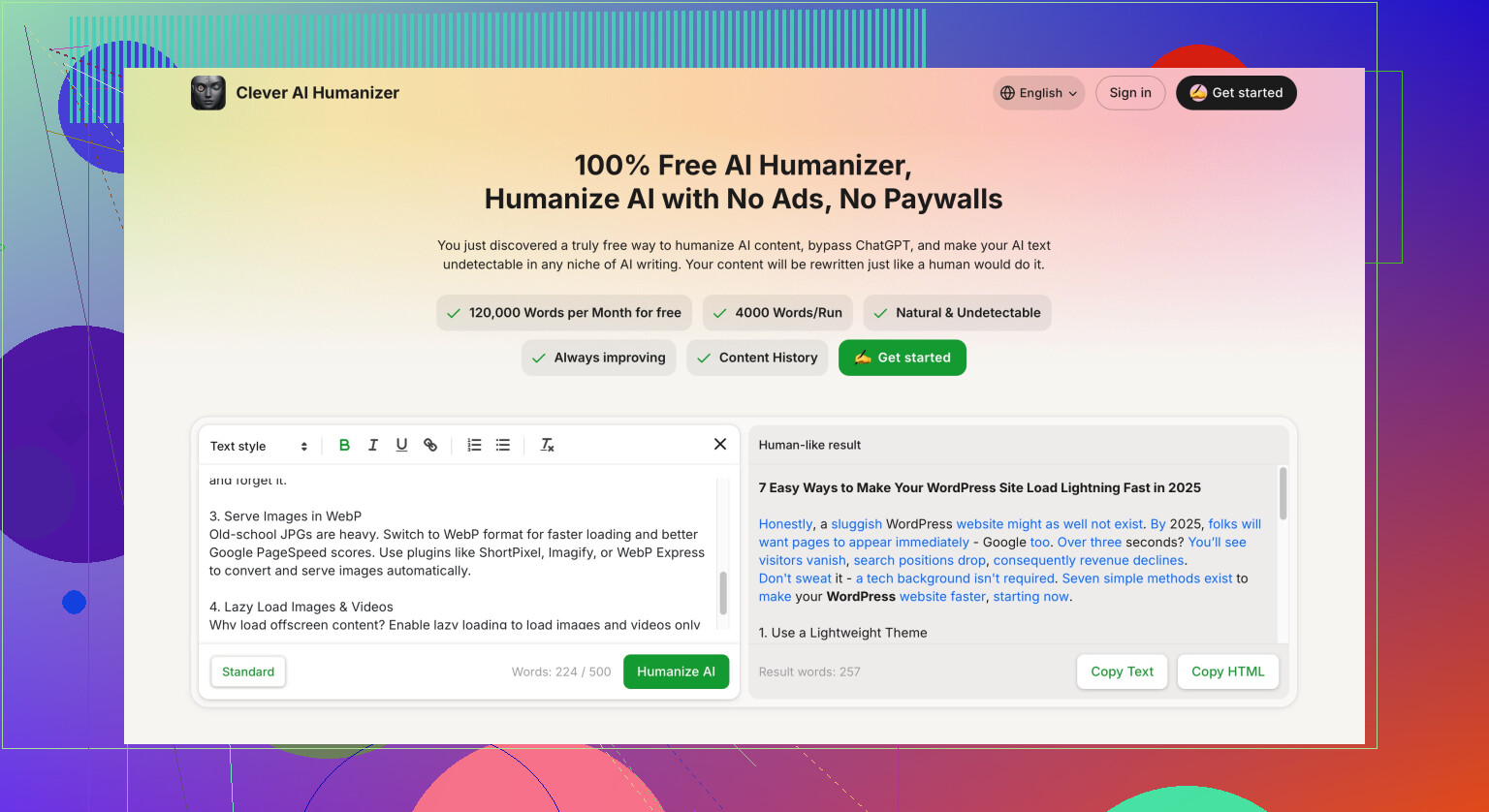
If your prof is detecting robo-vibes from your essay, you gotta do some serious human-ification! First, swap robotic phrasing for stuff you’d actually say out loud—imagine explaining the concepts to a friend. Use contractions, inject a little personality, toss in anecdotes or examples from personal experience, and don’t be afraid to have an opinion or sound subjective at times (because most AIs write super neutral). Also, avoid overusing fancy words and vary your sentence length—sometimes go short, sometimes draw it out, just like people do when they write. Edit out formal transitions (“Furthermore,” “In conclusion,”) and replace them with more casual ones. And definitely run your text through a tool that humanizes AI content—like Clever Ai Humanizer—since it’s designed to make your essay sound natural and less bot-like. Here’s a good link if you wanna give it a shot: make your essay sound authentically human.
5 Likes
Honestly, I kinda get why your prof picked up on the AI vibes. I agree with @cacadordeestrelas that personality and conversational tone matter, but there’s more to it than just swapping words or chucking in some contractions. The real ‘human touch’ comes from actual messy thinking—like questioning yourself, contradicting ideas, or even admitting confusion. Maybe try breaking up that dead-stare linear logic. Humans love to ramble, sometimes loop back on a point, or even drop in an “I used to think X, but now I’m not so sure.” Don’t be afraid to sound a little inconsistent or passionate (heck, maybe toss in some rhetorical questions or a bold claim).
Another thing—AI essays tend to be bland because they’re scared to take sides. If the prompt allows, throw in a hot take or something that might spark debate. People write with a little passion, even if they’re wrong or too loud. Also, most bots are allergic to specifics: pepper in a pop culture reference, a current event, or a very mundane real-world detail. It hooks a reader in and says, “yep, a real person wrote this.” While tools like Clever Ai Humanizer can do some smoothing, don’t rely only on tech. Even the best ai humanizers can’t fake an offbeat sense of humor or authentic uncertainty.
Oh, and for anyone looking for a solid breakdown on options, I found this list super helpful: finding the top free AI humanizers for your projects. Careful, though—if your style morphs overnight, that might set off red flags too. Mix it up gradually, like you’re just getting better at writing, not hiring a ghostwriter overnight!
Mixing it up with a data-driven lens here: Most professors catch AI writing because it’s just too… consistent (think: sentence cadence, vocabulary, transitions). The suggestions above hit on upping the personality factor and adding some real-world specifics—which definitely help. But overhauling your essay by just tossing in contractions or a rhetorical question isn’t a silver bullet, and honestly, the conversational tone approach favored by others sometimes swings too casual. You want authentic, not just chatty.
Let’s drill down: A key thing almost everyone misses is variation in argument structure. Real student essays have logical bumps—sometimes you explore a point partway, double back, or get a little lost in your own argument. If your essay hits every point like a laser beam, humans instinctively read that as impersonal. Try purposely adding a minor tangent, or even pose a question you “don’t have a clear answer for yet.”
About Clever Ai Humanizer—it’s handy for smoothing out synthetic phrasing, increasing readability, and making text less suspiciously polished. Pro: It catches those mechanical cues and surface-level oddities that trip detectors. Con: It still won’t give you emotional nuance, and it can’t decide what your voice is supposed to sound like. Also, if you run everything through it, the output might lose discipline-specific language that your professor expects, so curate those edits instead of wholesale swapping.
And competitors like @sterrenkijker and @cacadordeestrelas are right in advocating for personal inserts and less neutrality, but don’t overcompensate and go full blog rant mode. The human sweet spot is somewhere between “overly factual bot” and “unhinged group chat.” If you want a next-level move, read your essay out loud—if you can’t imagine yourself saying those sentences, they probably need a rewrite.
Final tip: Nobody writes like a perfect robot—and your professor’s spidey sense is tuned to catch that. Controlled messiness wins.