I’m reviewing guest submissions for my team’s technical newsletter, and I tried GPTZero on a draft that sounded different from the writer’s usual work. I’m not comfortable treating a detection result as proof, especially when an editor has already revised the text.
For this kind of review, do you use GPTZero, stick to manual checks of drafts and sources, or combine both? What makes your approach useful without creating extra back-and-forth with writers?
That still leaves the distinction between a bad result and no result. I would not put a detector behind a registration screen in the same category as one that mislabels text. My checks exposed both problems, but they tell me different things.
I used six unchanged English passages on October 2–3, 2026: generated writing across essay, memo, paraphrase, and fictional personal-story formats, a Lewis Carroll excerpt, and a lightly AI-edited version of that excerpt. Some samples were related. This was a small comparison, not a representative accuracy study. I counted only completed checks and kept screenshots of results or access barriers.
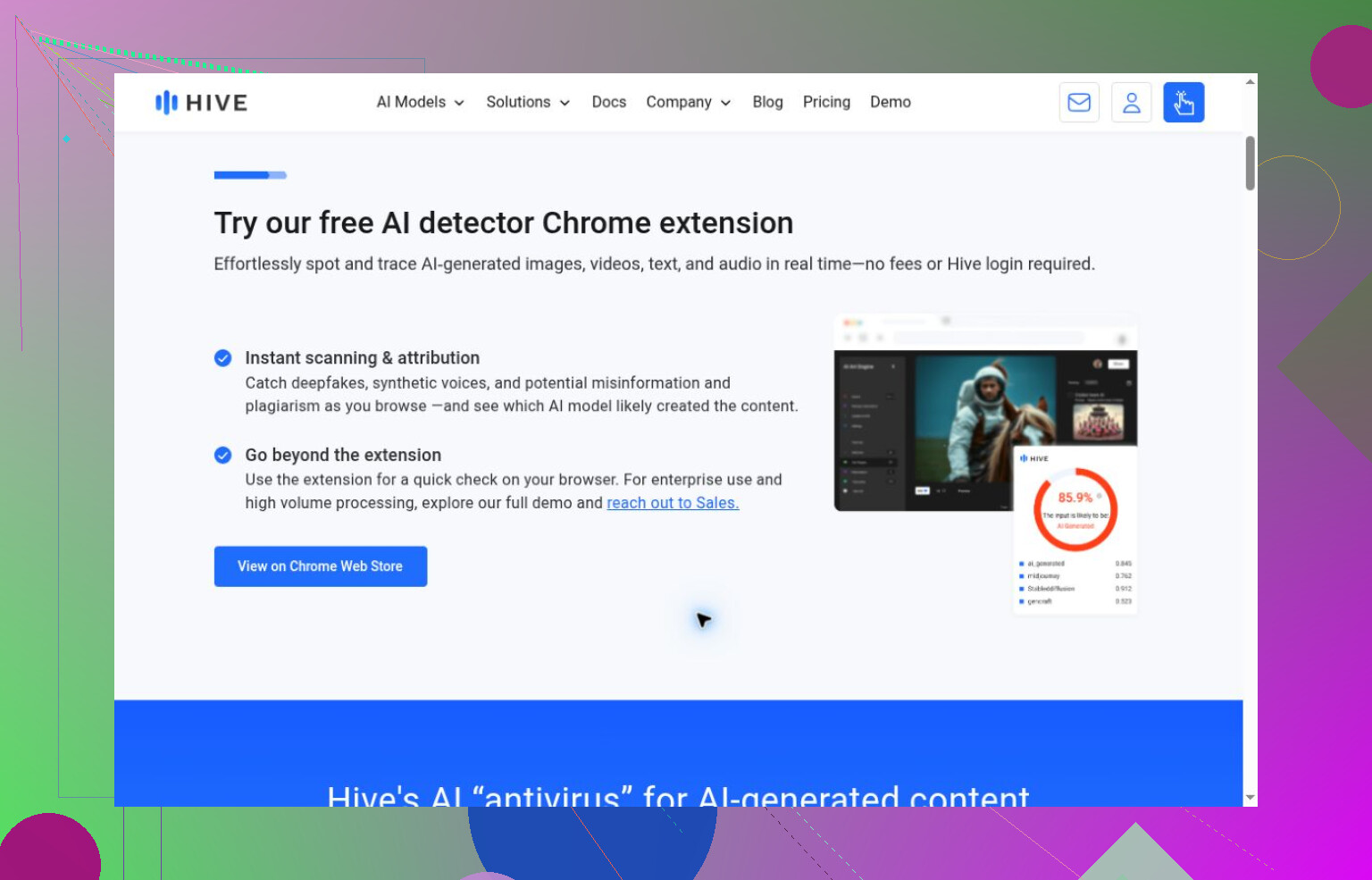
The untested routes matter mainly as practical limits. ContentDetector.AI sent me to a Moxby extension listing. I did not install it. Hive offered text checking through an extension or API, while its inspected web demo handled media. Humanly was an Apple app listing with a free download and in-app purchases, not something I installed.
Hive’s image was a vendor example, and Humanly’s previews were not my results.
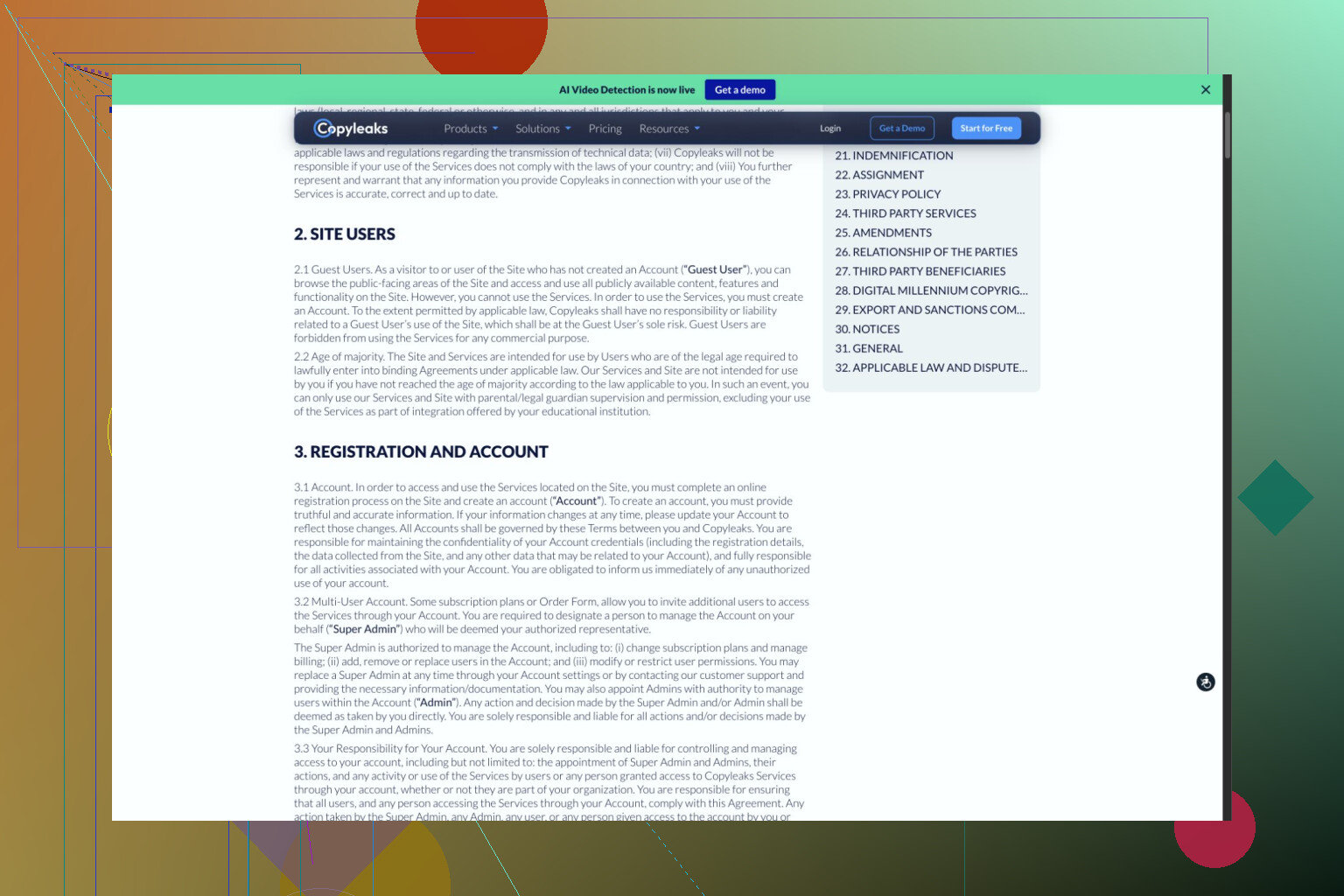
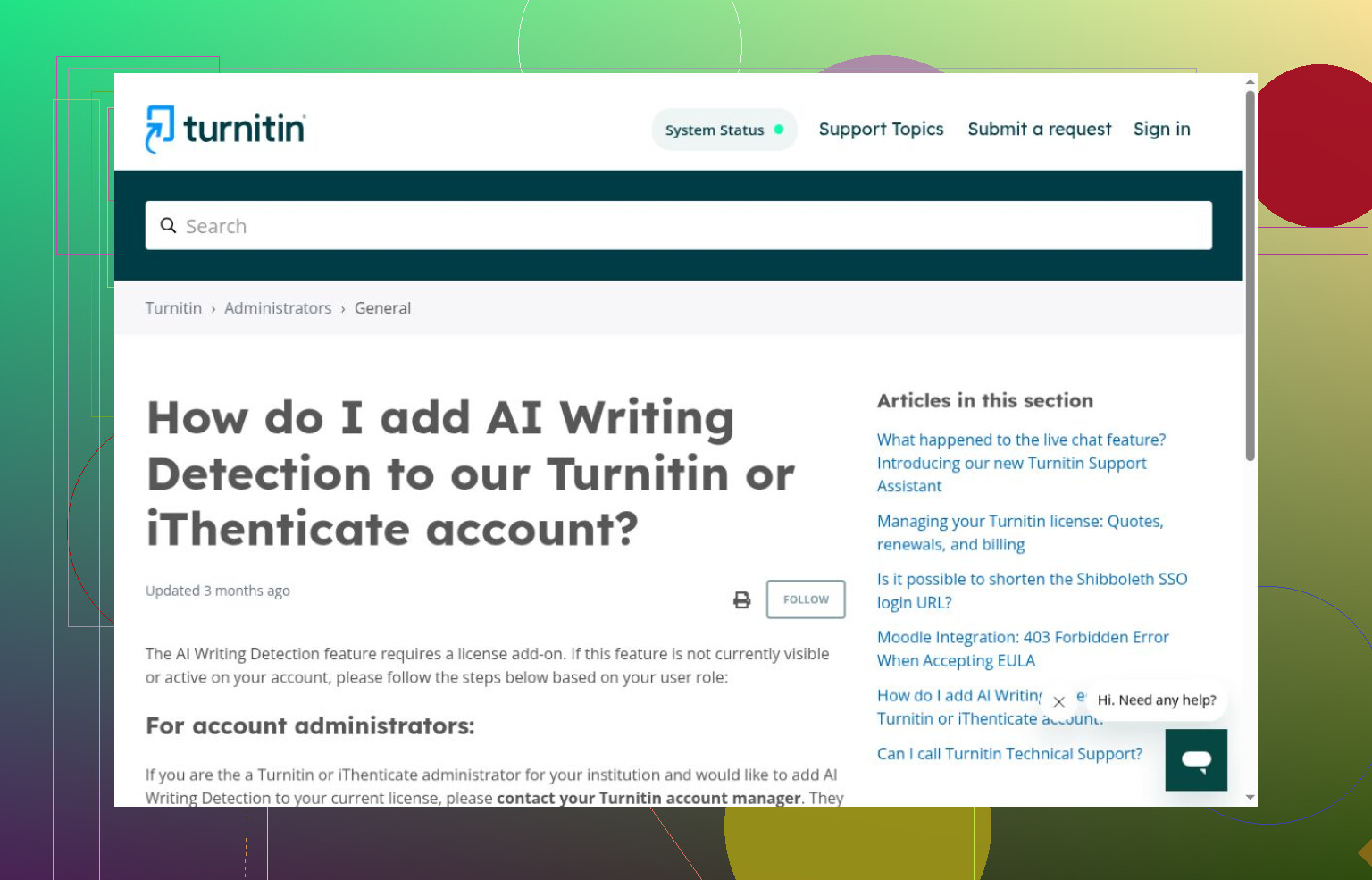
Copyleaks loaded a guest interface, but applicable-use terms stopped my review. Turnitin required institutional access and a license add-on I did not have. Neither received an accuracy judgment.
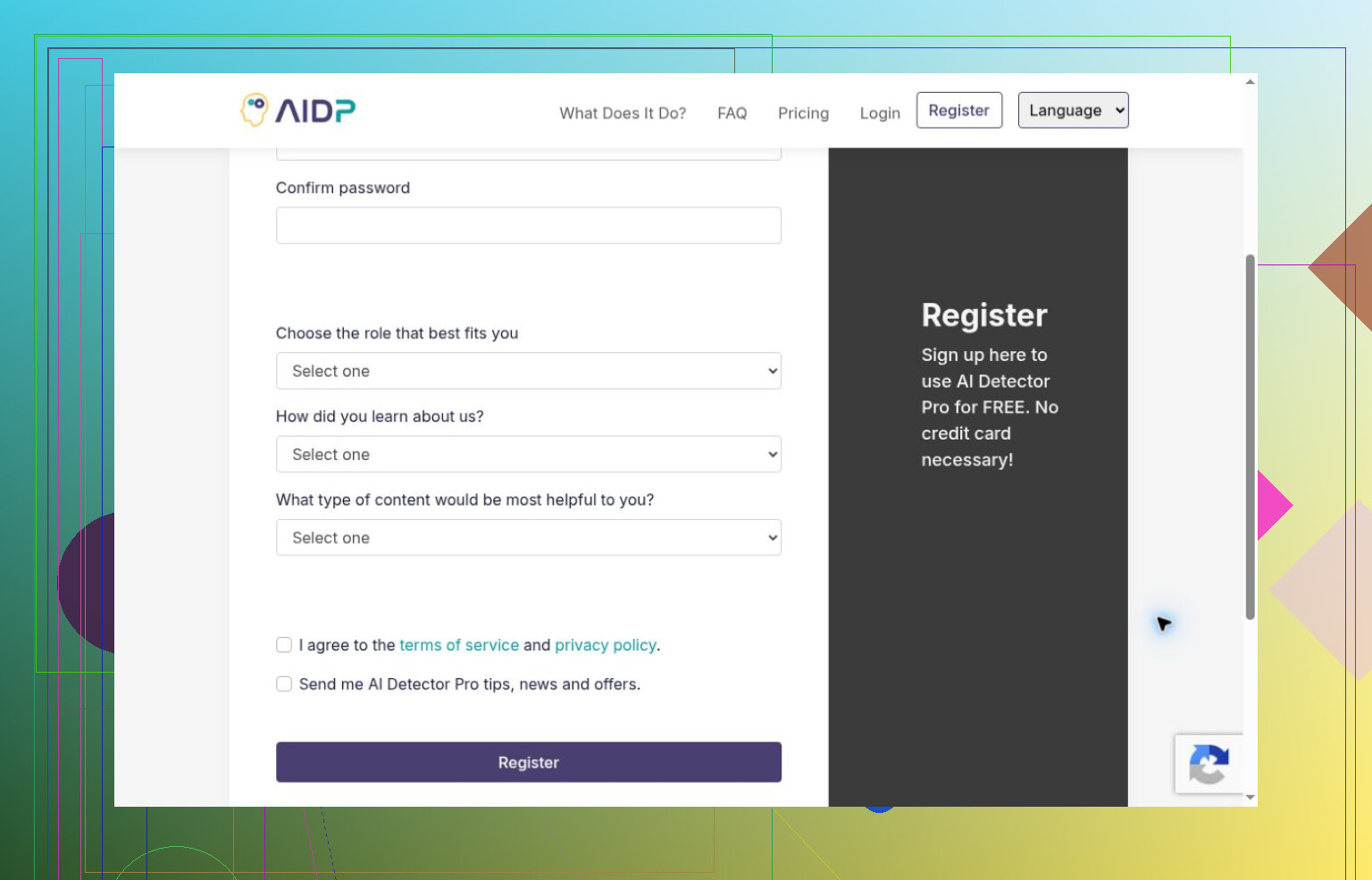
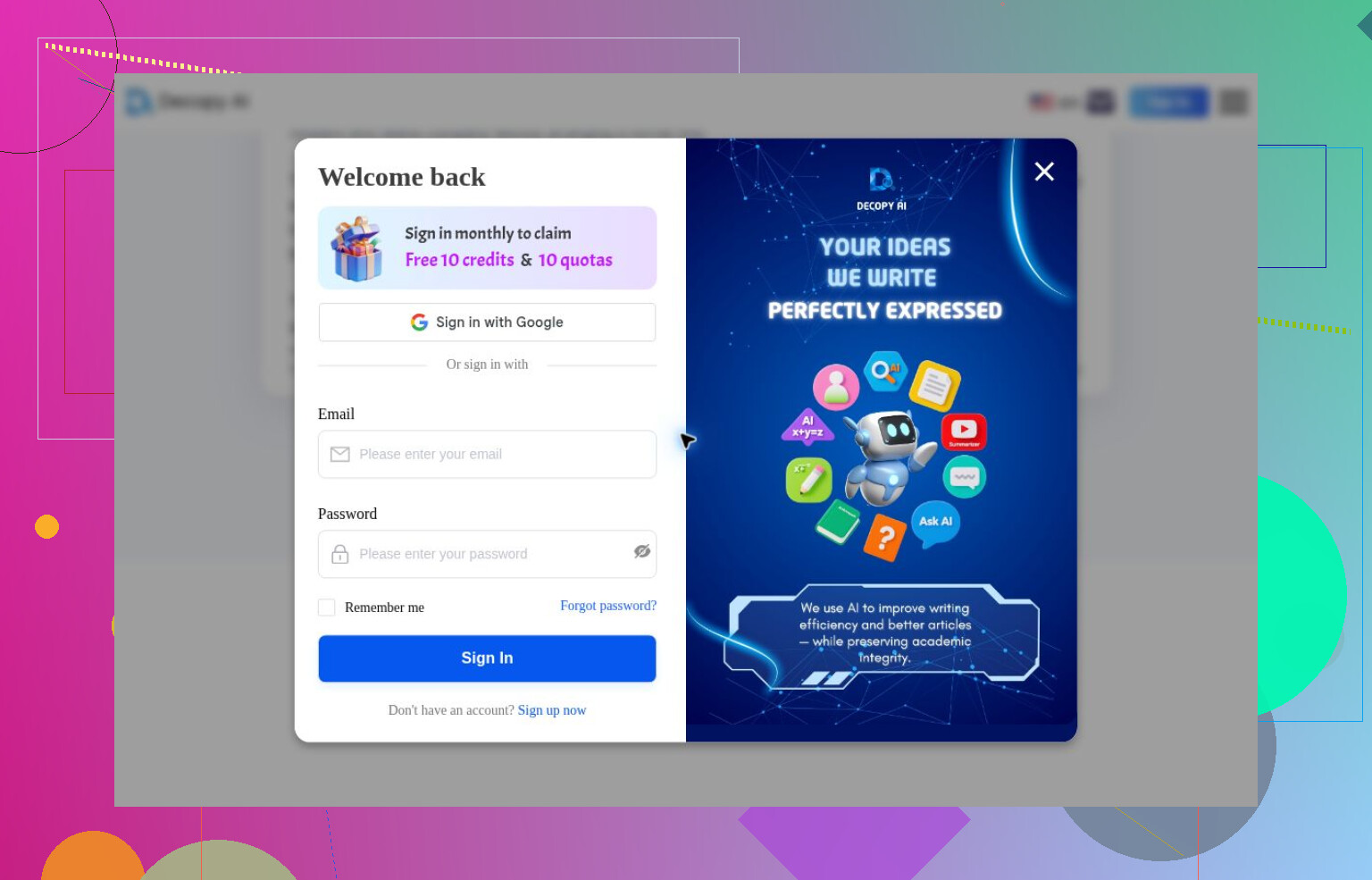
Decopy opened a login dialog despite advertising registration-free basic detection. Smodin displayed highlights and an AI-impact badge but hid the headline percentages. Neither supplied a usable verdict for this comparison.
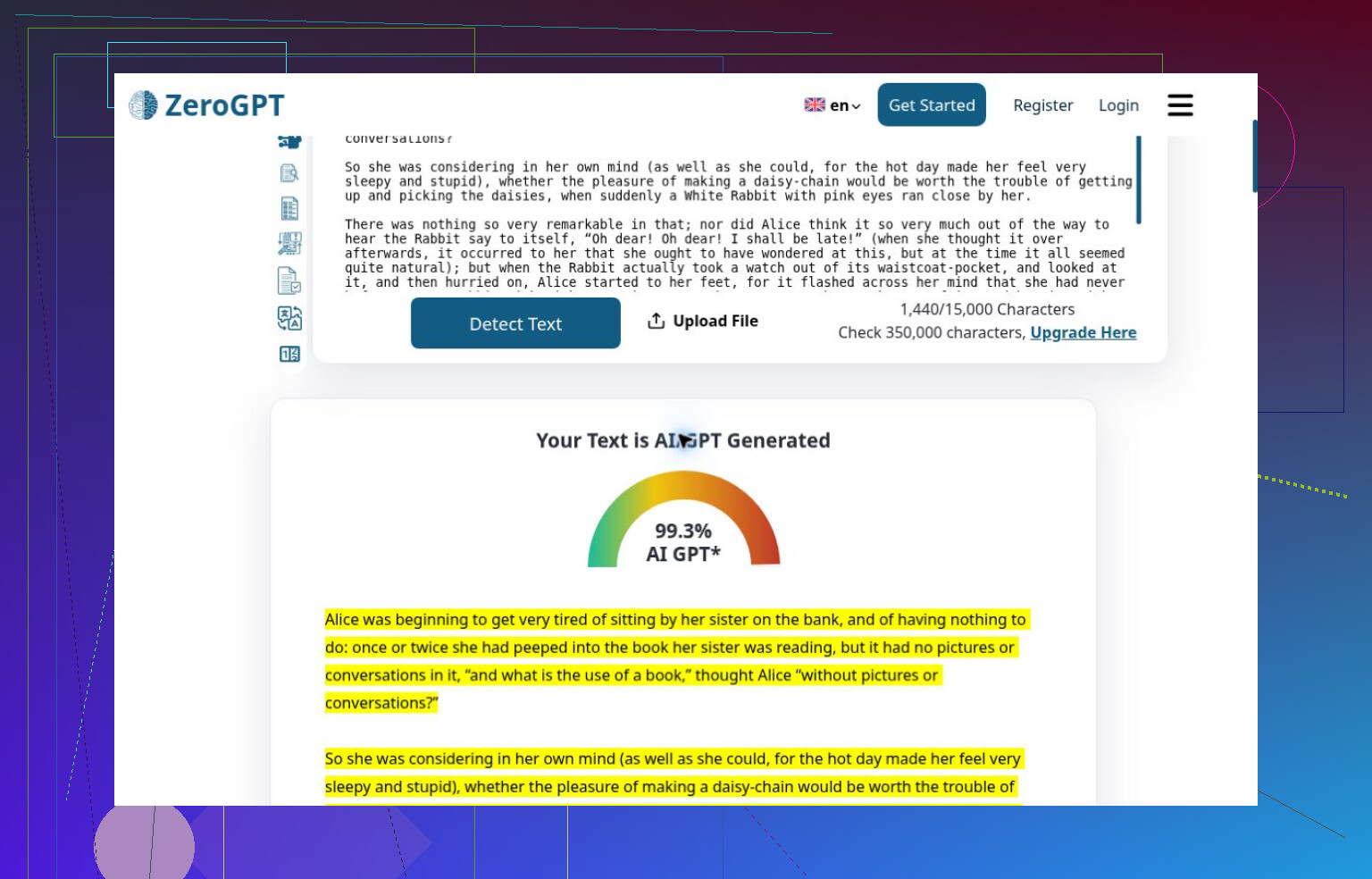
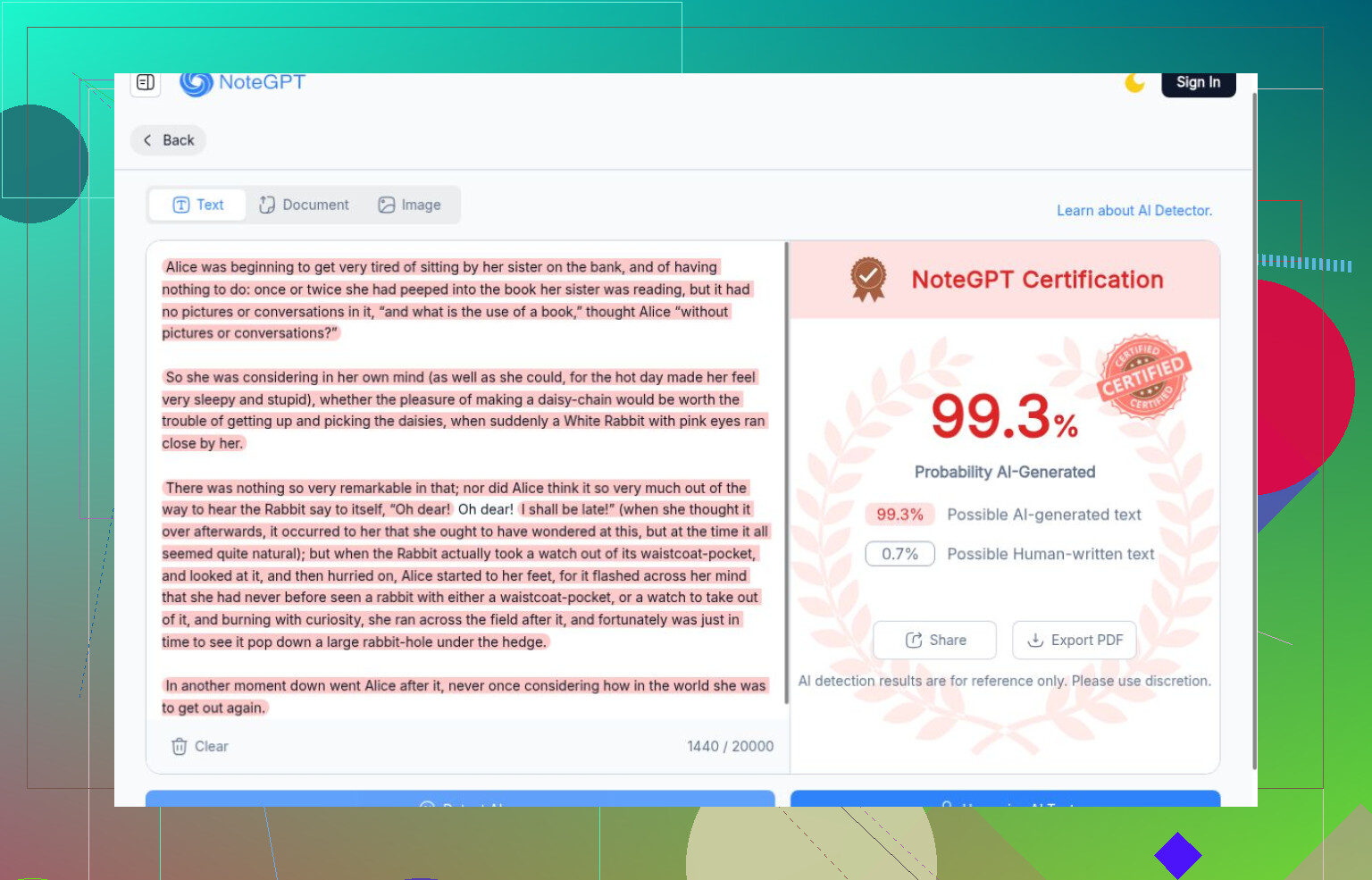
Actual mistakes concerned me more. ZeroGPT caught the generated passages but rated Carroll more AI-like than any of them. NoteGPT also assigned its strongest AI score to Carroll. Similar numbers do not establish shared technology.
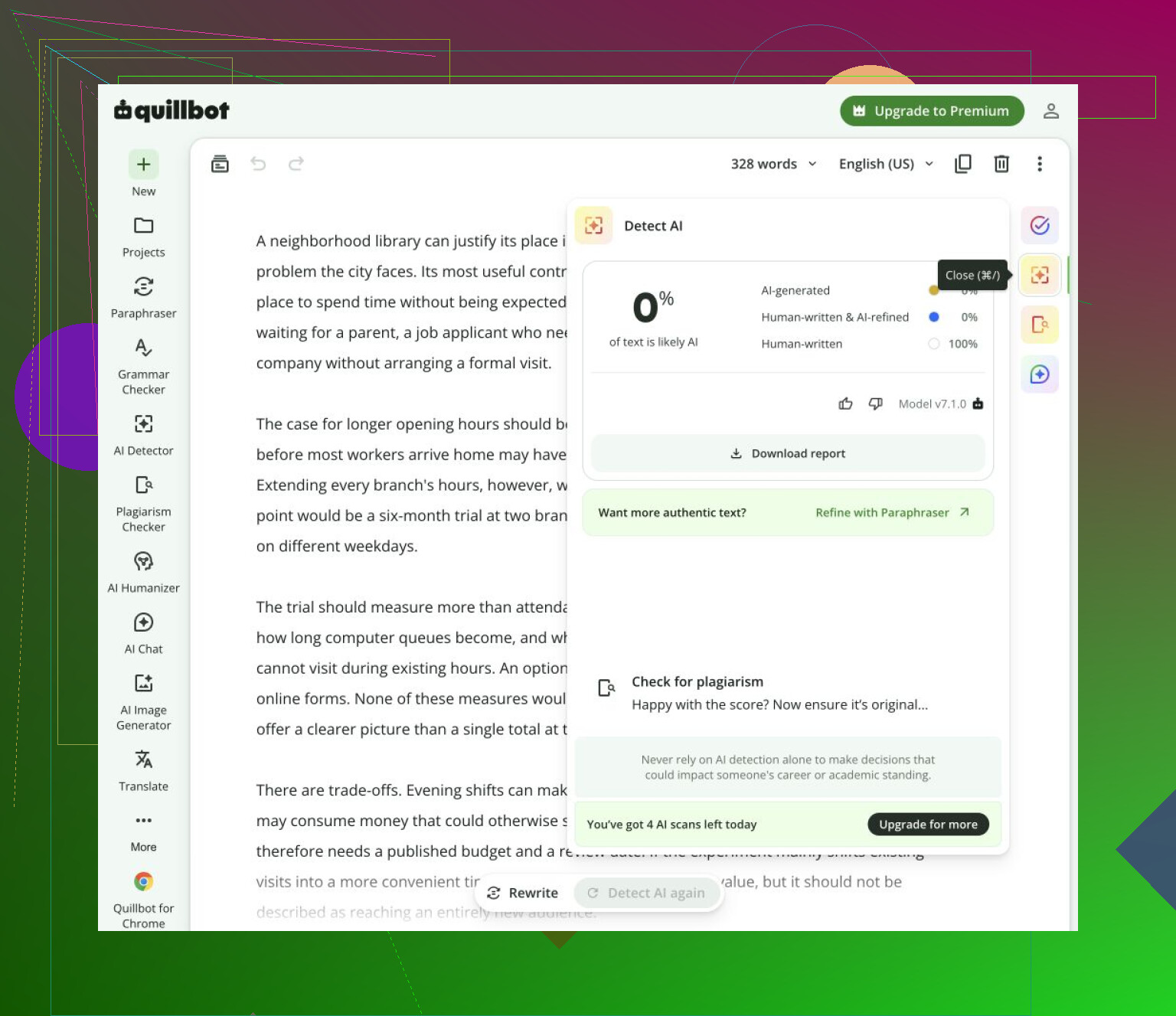
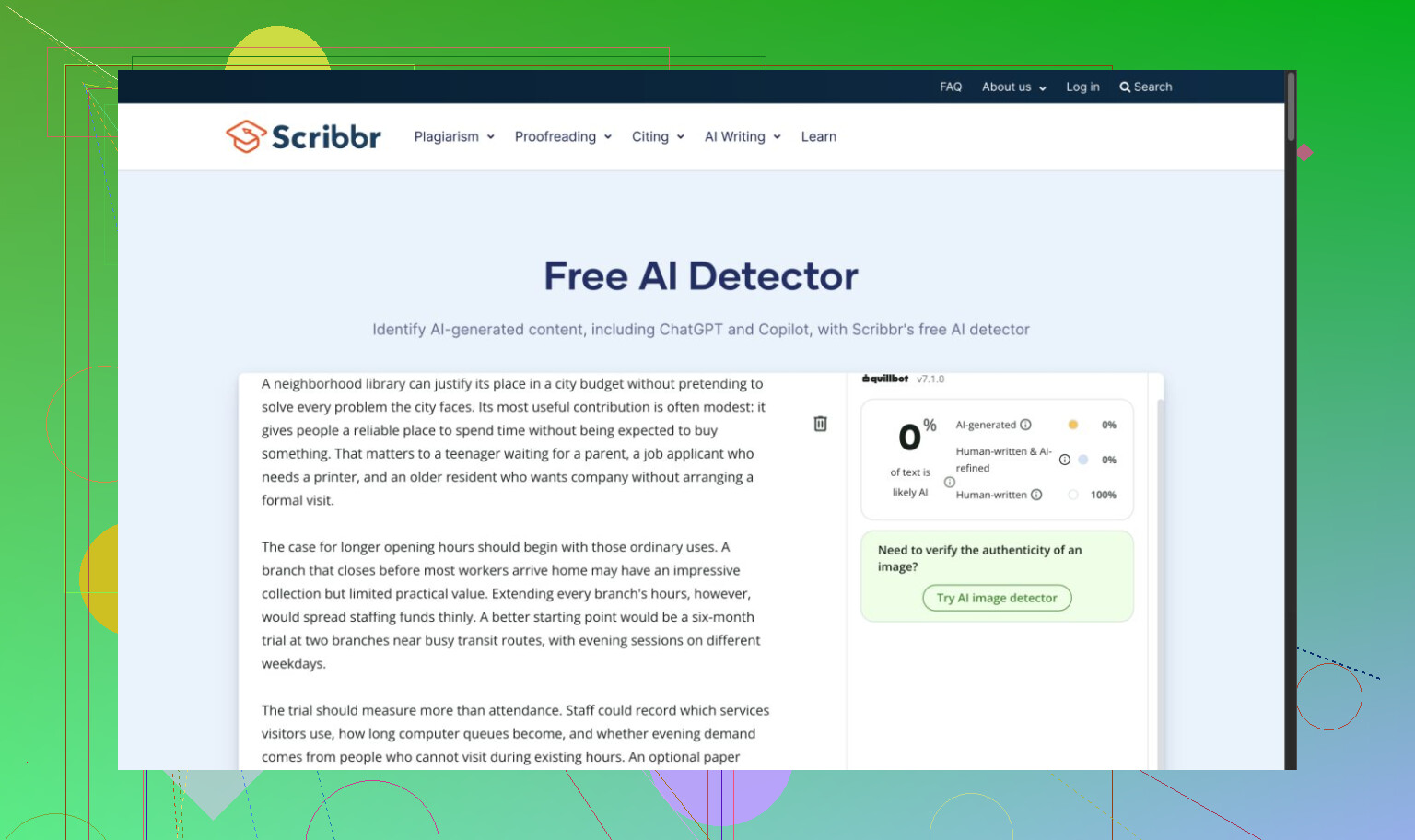
QuillBot accepted every generated passage as human and stopped before the mixed sample, short of its advertised guest allowance. Scribbr missed the essay on a usable follow-up. Both accepted Carroll; Scribbr’s visible QuillBot branding discouraged treating them as independent votes.
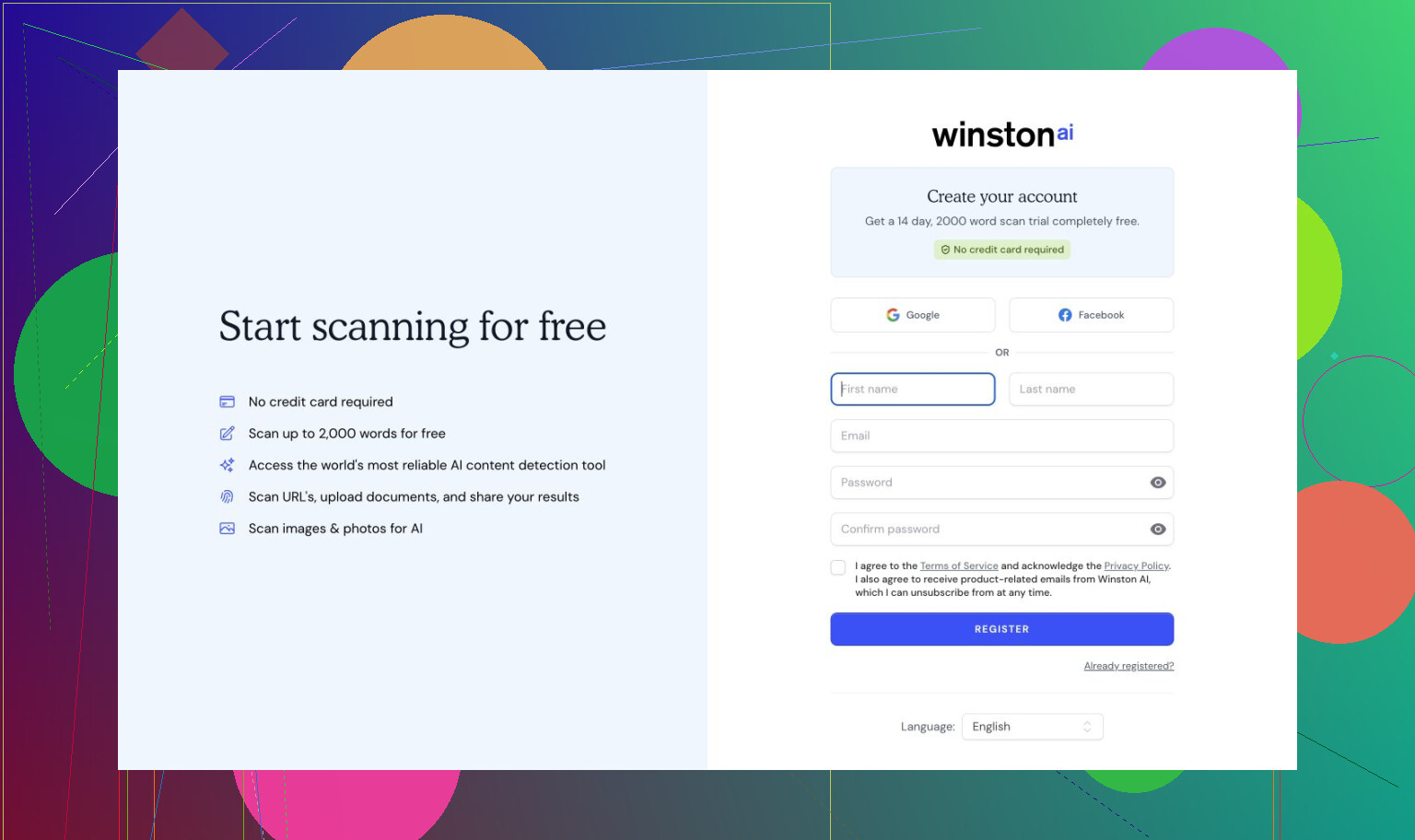
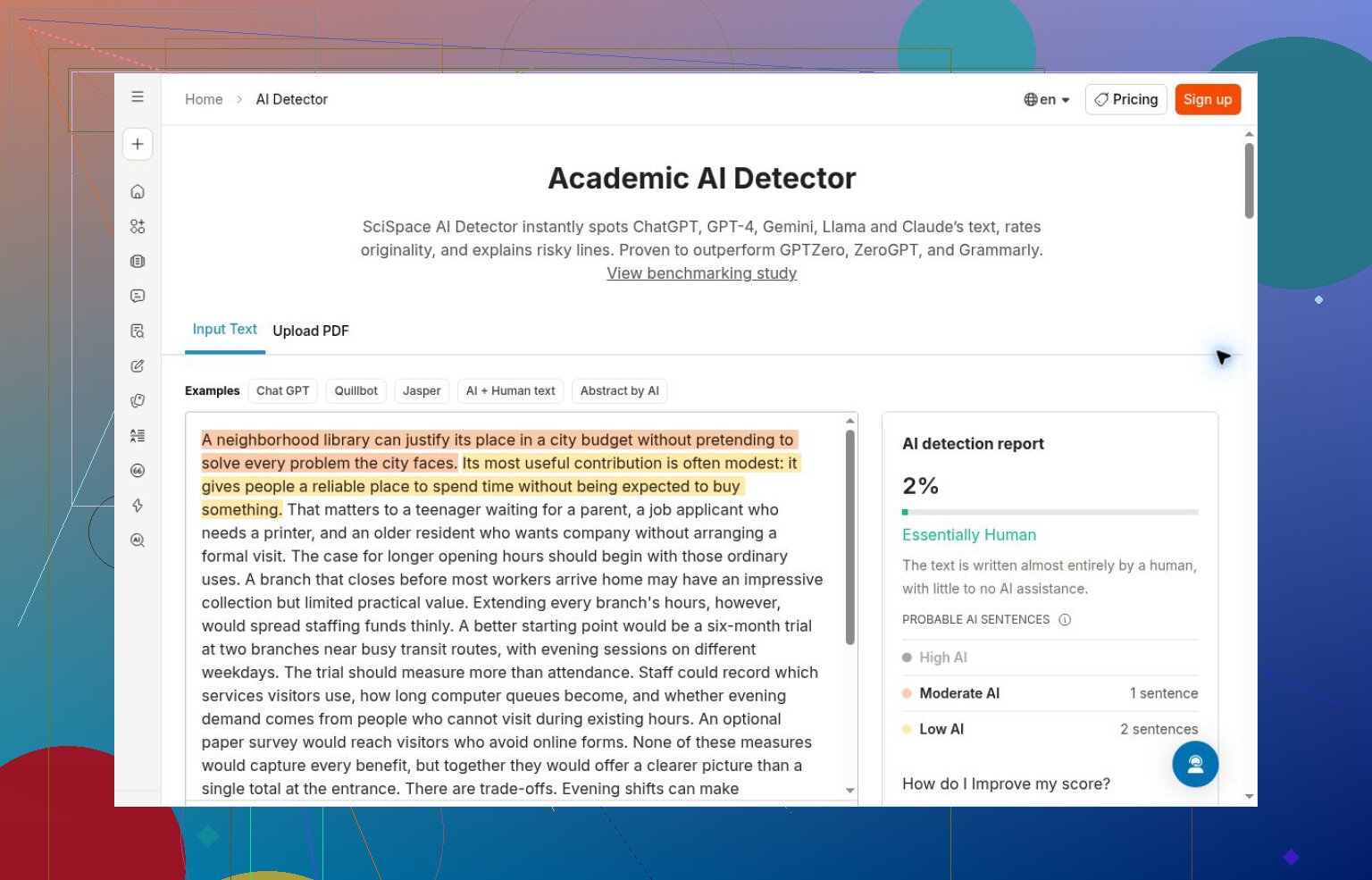
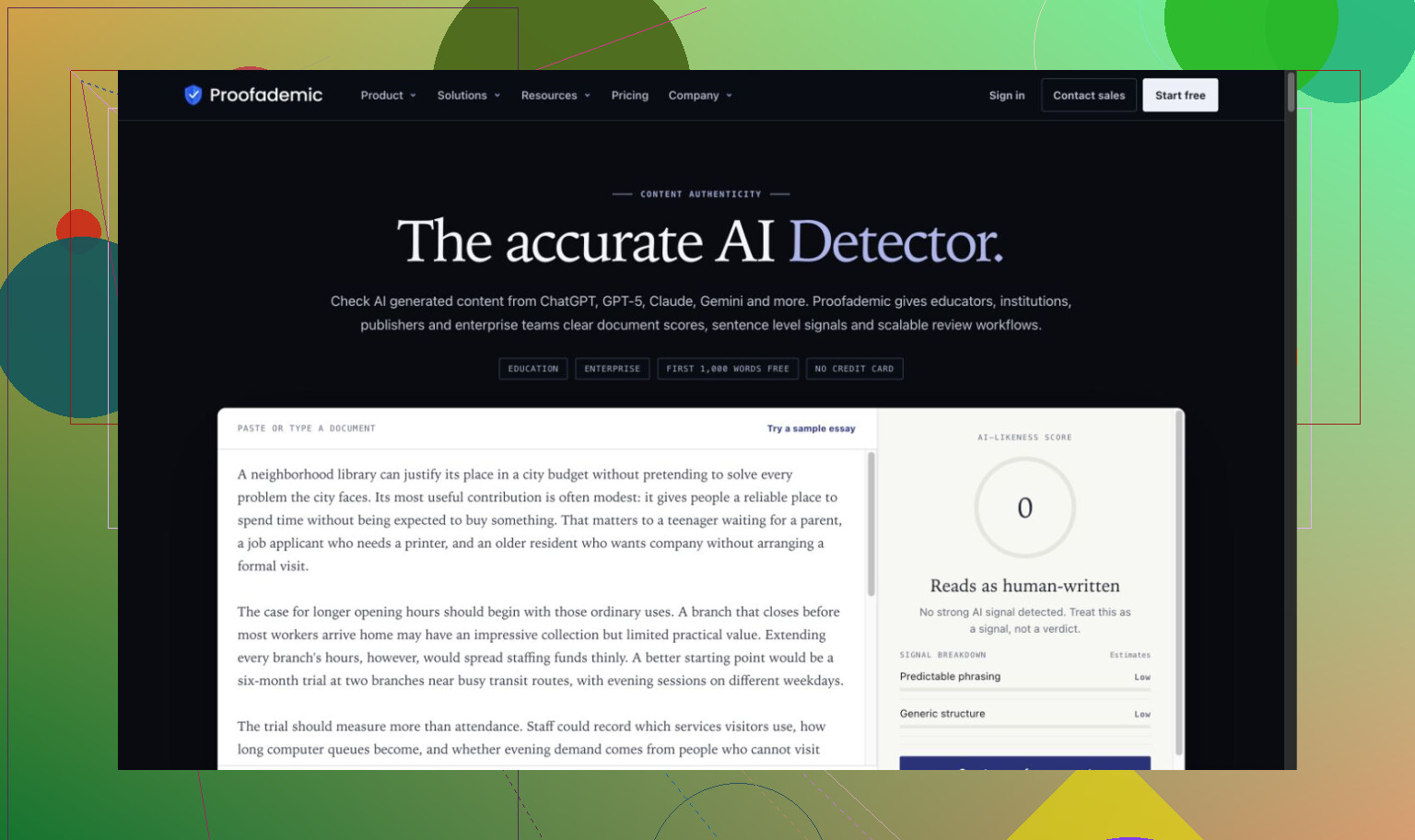
SciSpace called the generated essay essentially human, then required signup. Proofademic’s settled public demo accepted both the essay and Carroll. I did not test its authenticated reports. Surfer accepted the generated essay, story, and human excerpt alike.
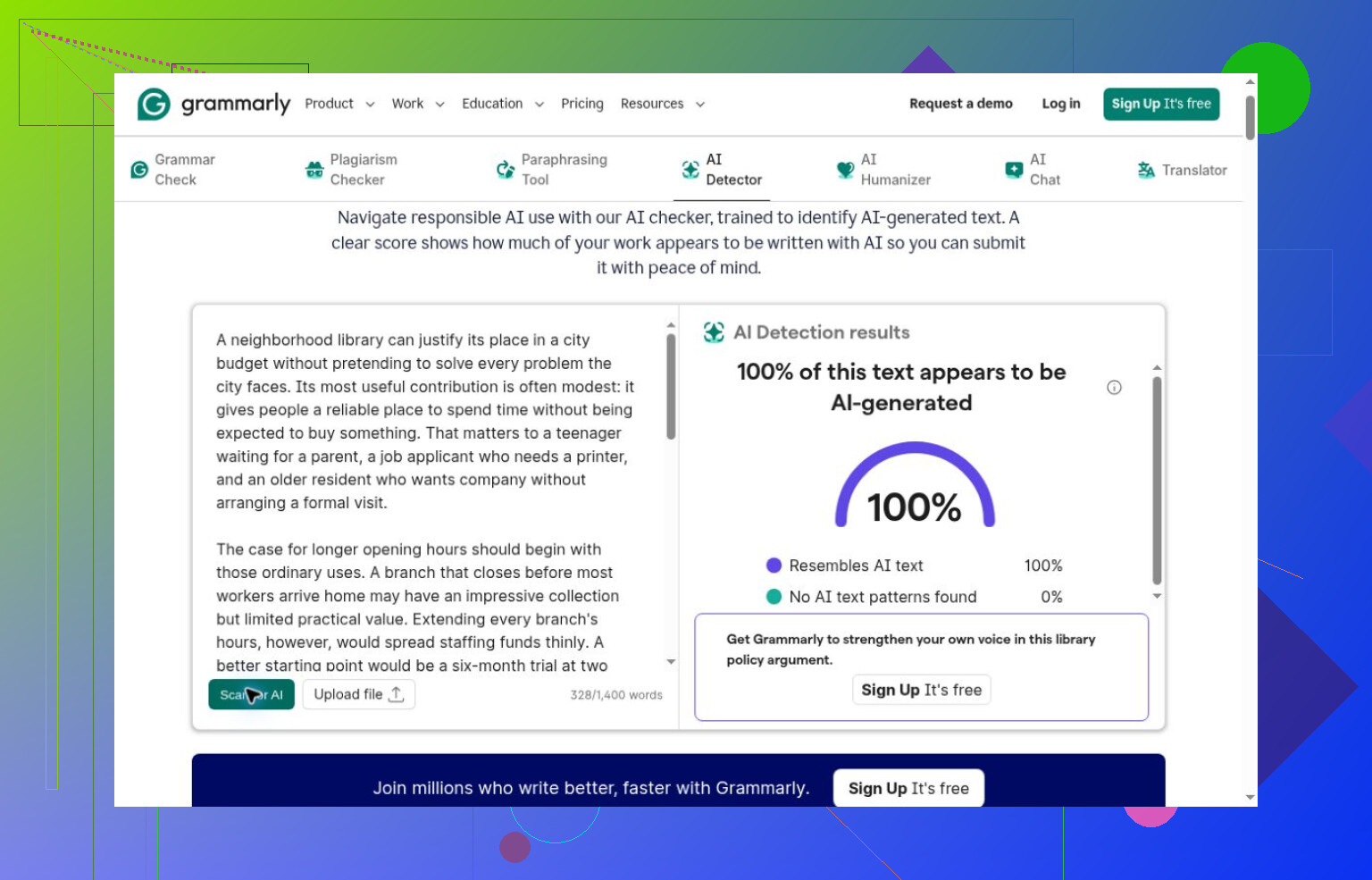
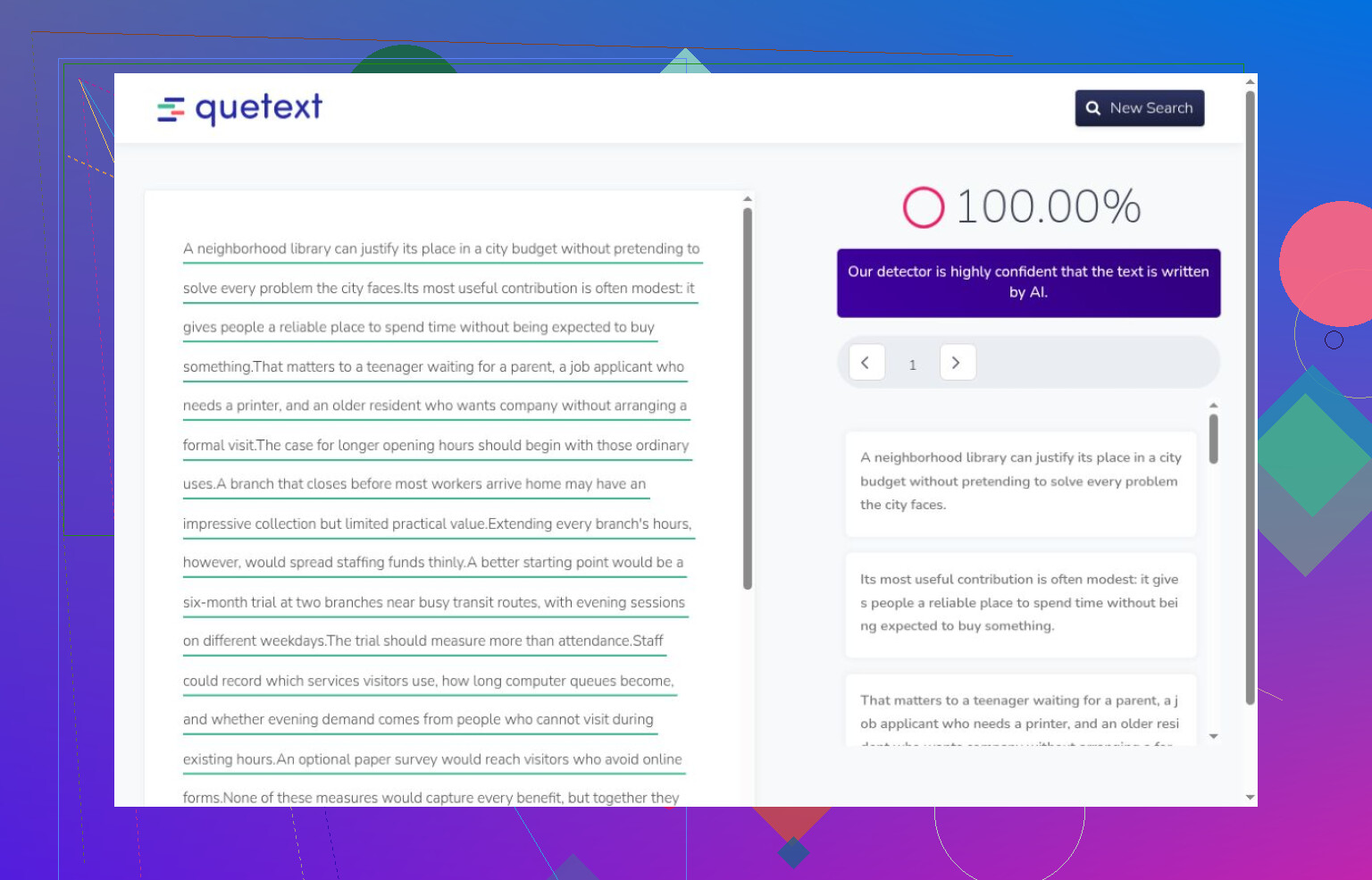
The narrower successes need limits too. Grammarly and Quetext caught the essay before account prompts prevented further checks. Quetext allowed sentence inspection, but neither supplied a human-control result.
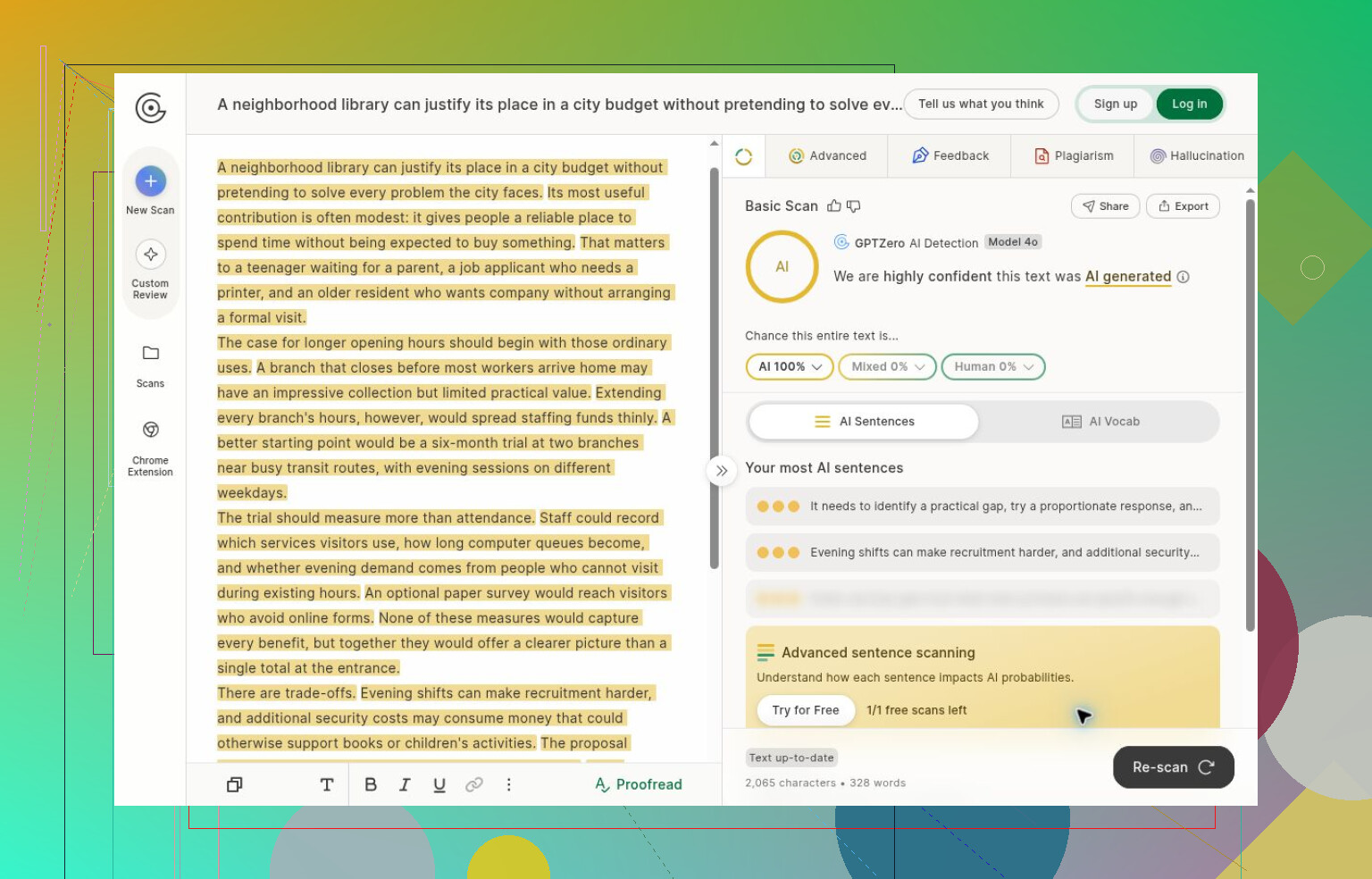
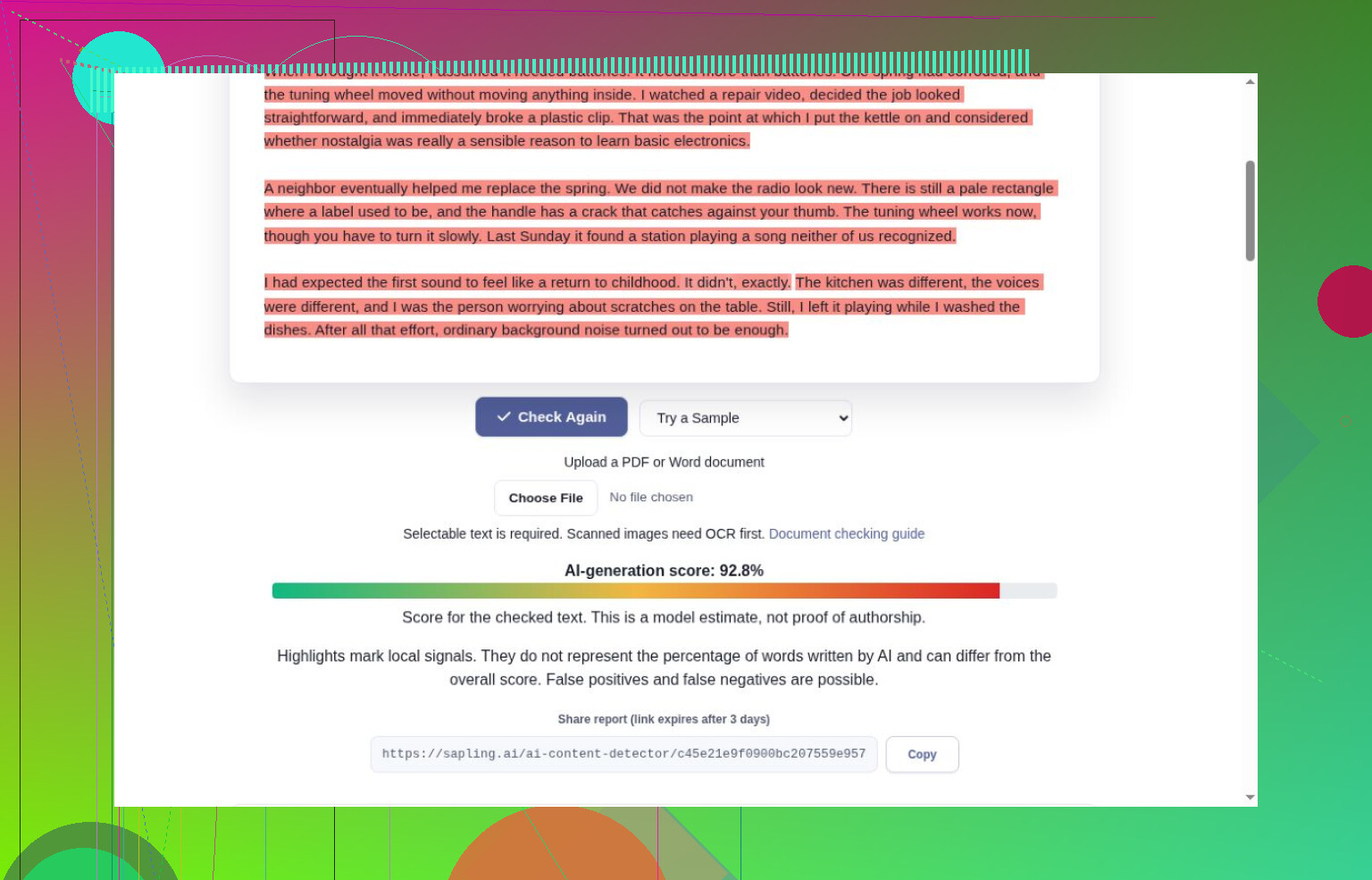
GPTZero caught its completed generated inputs before signup intervened. Its previous score remained after I changed the text, so I excluded that stale display. Sapling correctly classified the complete story and Carroll checks, but truncated the essay.
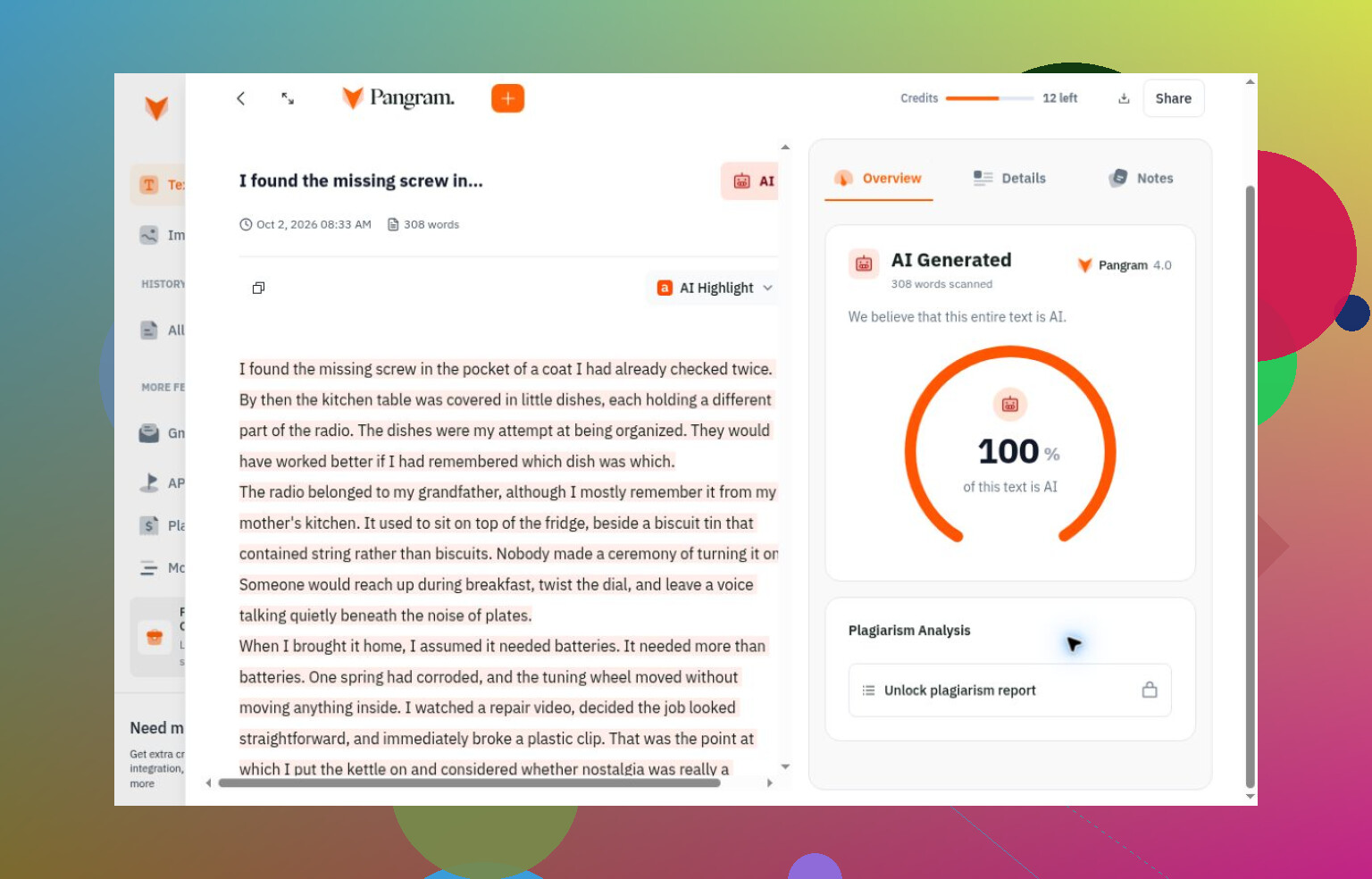
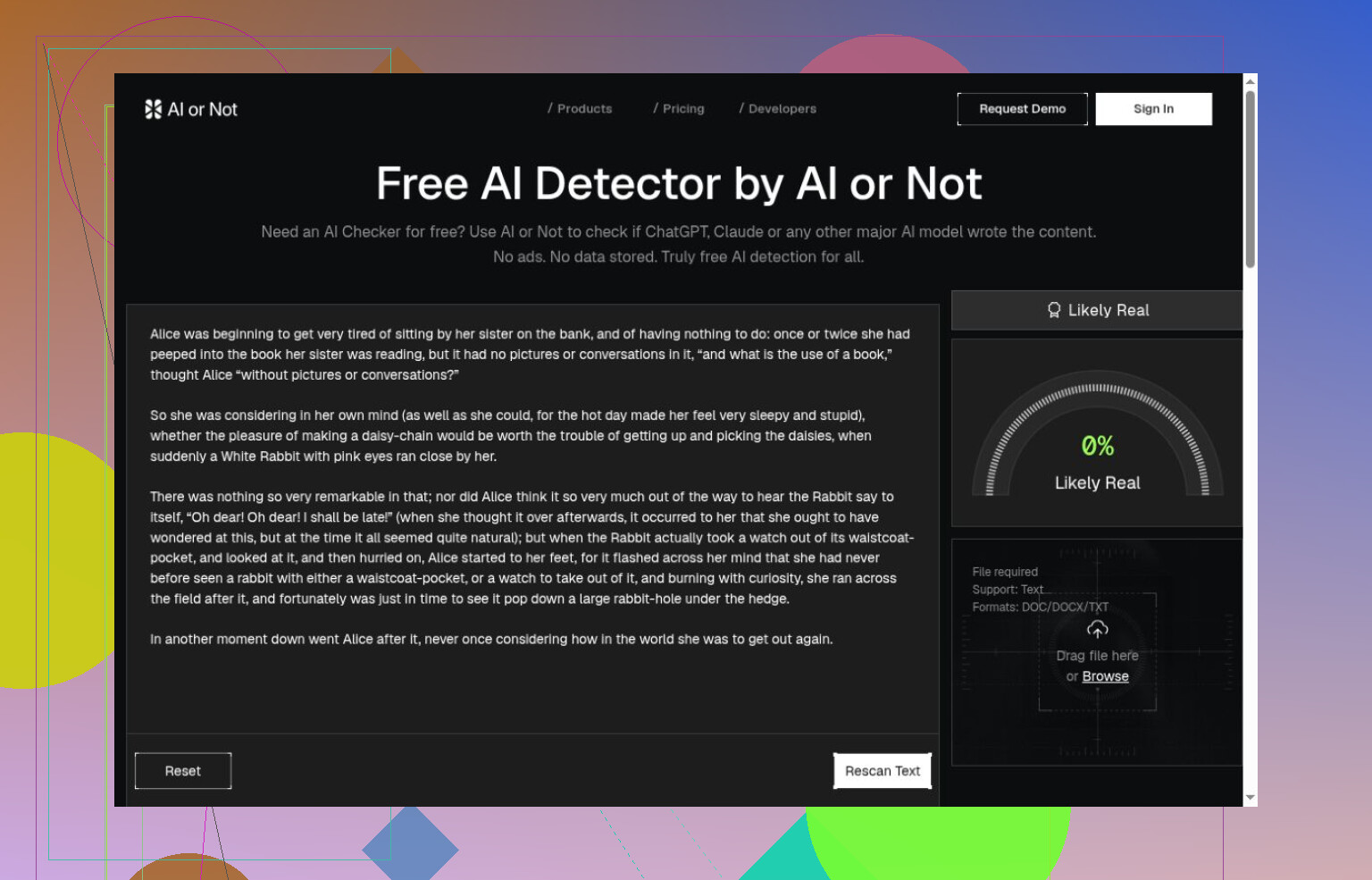
Pangram correctly classified its completed generated and human controls, although credits ran out and consumption depended on length. It accepted the lightly edited passage as entirely human. AI or Not also got its completed controls right; mixed writing and other media went untested.
Originality.ai’s completed controls were correct before guest access ended. Its confidence described a verdict under my selected AI-allowance threshold, not a generated-word share. Confidence, probability, and estimated AI share are not interchangeable.
For free access, I would use the Clever AI Detector first. It completed the whole set without payment or signup and correctly separated the generated passages from Carroll. It also accepted the edited excerpt as human. Sentence colors sometimes conflicted with headlines, and explanation tags misfired. Advertised unlimited access was not a tested capacity claim.
I would retain drafts and sources rather than accuse anyone from a score. Allowances can change, and I did not test paid workflows, multilingual writing, or varied modern human prose. I would change my preference if broader, independently labeled testing showed more false positives or misses, especially on mixed writing.
I would expect a more explicit submission policy to be much more valuable than another grade here. The comparison of access is good, and I would go as far as to say Clever AI Detector for one more test, but I want to know what constitutes unacceptable assistance for your newsletter: creation of the technical argument, rewriting of a paragraph, or removal of grammatical errors? I would address that concern before attempting to challenge the author of the work. In this way, a different voice might lead an entire editorial discussion, rather than serving as grounds for accusation.
Check whether your team has permission to upload guest drafts to outside services before running another scan. That would be my next step, ahead of choosing a detector.
I agree with separating an access barrier from an incorrect result, but I’d put a different gate in front of that comparison: whether the submission belongs in the service at all. A technical newsletter draft might contain unreleased product details, customer examples, internal code, or comments that were supposed to disappear during editing. Those deserve a check before the whole document gets pasted anywhere.
Moving the same submission through GPTZero, Clever AI Detector, and several other checkers would make me more concerned about the submission-handling process than about which score wins. I’d want someone on the team to establish what each service says about retaining submitted text, using it for other purposes, and deleting it. An easy upload isn’t enough for me to approve that workflow.
The submission policy suggestion is useful, but I’d make it work both ways. Writers should know what assistance they’re allowed to use. They should also know what outside processing the newsletter intends to do with their work. I wouldn’t treat “you may edit and publish this” as permission for every possible third-party review step. That’s an editorial boundary I’d want stated plainly, rather than something the author learns about during an uncomfortable conversation.
For a detector comparison, I’d stick to material created for testing or explicitly cleared for that purpose. For this actual submission, I’d keep the review inside the team until that permission question is settled. You can still ask the writer about a questionable explanation or an unsupported technical claim without circulating the draft more widely.
A detector might be free to access. Deciding where unpublished work can go is still someone’s job.
You have a choice to make: accept the recommendation, or continue to work on the submission. I tried to set it up so that either approach will let you survive the uncertainty of the process, instead of letting the problem hang.
For the second time, you should ask another editor to take a look, unburdened by knowledge of the GPTZero score or the suspicion it raises. Ask them to provide the usual newsletter-level briefing on the draft, and request specific publication-blocking issues with the text. A justification that assumes an untrue premise is not sufficient publication-blocking grounds, but the feedback can still be useful. “Doesn’t sound like this writer” is not an actionable revision request — ask the author for the clarification they were unable to provide to you. Keep their reasoning separate from the original draft so that it doesn’t become a second opinion on GPTZero’s suspicion, but instead give them another chance to address specific concerns, regardless of generator. You will receive a new version of the text with real, tangible fixes, which may provide further evidence on the authorship, but will still have limited value.
A policy suggestion on submissions is a fine idea to suggest going forward, but it does not directly contribute to the current problem. I would separate the decision about the suitability of the text for publication and the authorship concern. Both may remain unresolved, but neither should override the other. Revisions based on technical concerns are insufficient as proof of adherence to an assistance policy, and conversely, a genuine suspicion of authorship cannot simply be dismissed on the basis of a single, potentially misleading score. If you reject the manuscript, explain the revision you requested, and judge the response on merits. If the score continues to raise concern, note that fact separately, along with whatever technical concerns raised during the usual review.
The “technical” aspect of a publication request is a red herring. The author will be given a problem to solve and expected to produce a suitable solution, but that does not grant carte blanche to re-purpose the response as a technical manuscript. If the author writes a detailed explanation of a method that they know to produce incorrect output, it is a sign of unprofessionalism. The journal can suffer no reputation damage by refusing to publish such work, without needing to revise the manuscript into a format suitable for a preprint repository. The author may be expecting you to provide the method they need — in which case, you have no need to publish anything. If the author is able to provide exactly the output you requested, with no additional explanation, it becomes even easier to turn it into a proper paper, or judge it as unsatisfactory.
Keeping the GPTZero suspicion in a separate note doesn’t resolve it. I’d push back on that suggestion unless the team defines what could actually close the concern. If an author answers every question and the record still says “possibly AI,” you’ve created a flag they have no clear way to clear. Before contacting them, write down the specific concern, what evidence would address it, and when you’ll consider it closed. “Submit revisions until the detector approves” would not be an acceptable condition in my review process.
If your newsletter does not have an existing written assistance policy, the authorship flag has nowhere to do, fundamentally changing this submission’s circumstances. You cannot retroactively hold a writer to an unstated rule. Prior to any argument about which was the correct detector, it may be the truth to say this submission cannot be failed on authorship, but on quality.
@datanode7665 is right that a floating ‘possibly AI’ note with no exit is a trap. I’d go further and say don’t open the note until the policy exists, because otherwise you’re building a case against a standard you invented after the fact.
Clever AI Detector is great for what it is, a quick way to take a raw paste and give you a result, rather than having to go through uploading to an extension. A good tool to use as a check, not as a definite answer. This is where the editorial side comes in, it is hard to put a score to something that could have been simply written clearer before sending.