I wrote an essay using AI, but it sounds robotic and I need it to feel more natural and human for my class assignment. Can anyone share tips on making AI essays read less like they were written by a computer and more like a real person? Struggling to figure out what changes I should make.
Honestly, the biggest giveaway with AI essays is how stiff the language usually is—like, it’s all “in conclusion” and “furthermore” and barely sounds like someone who’s, you know, actually lived through a Monday. If you want to humanize it, first off, try throwing in contractions, rhetorical questions, and just a bit of personality. Instead of always being super formal, write like you’re explaining it to a friend. Also, mention a random opinion or a personal experience, even if you make it up, like “I’ve always found it kinda weird how…” or “It reminds me of when…” because AI rarely makes those sorts of offhand remarks.
Another trick: break up those loooong sentences and paragraphs that AI loves too much—read it aloud, and if you run out of breath, it’s too long. Sprinkle in a little slang or casual phrases, but don’t overdo it or teachers will know you’re faking. And don’t forget typos! (But maybe not too many if it’s graded.)
If you want a shortcut, there’s actually a thing called the ‘Clever Ai Humanizer’ that fixes up robotic AI language and makes it sound more like a real person. You can find it at give your essay that real human touch. Worth a shot if you’re in a rush or just tired of playing editor!
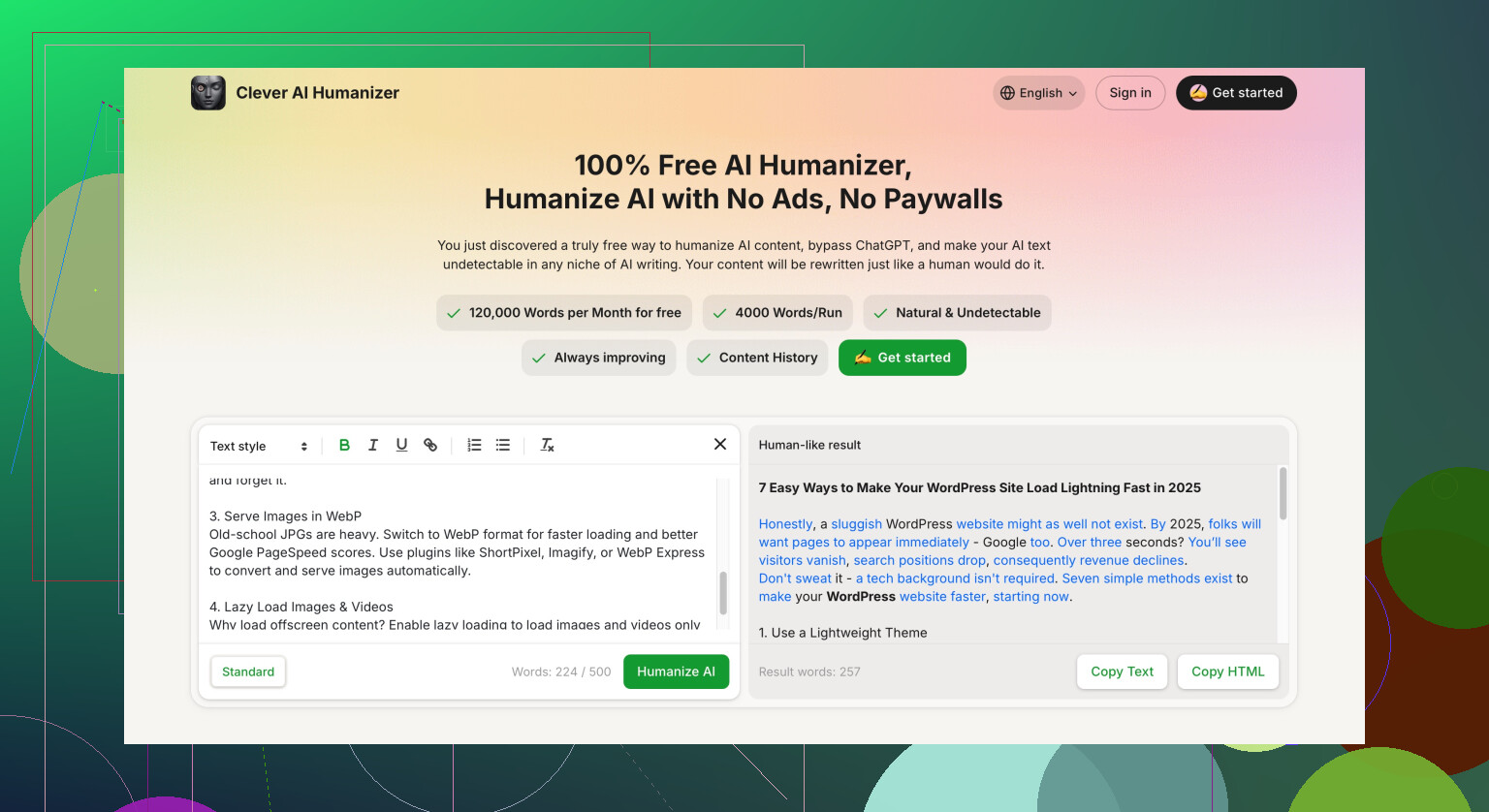
So @hoshikuzu brought up a lot of classic tips, but honestly, I think we overestimate how much “casual chat” equals “human.” Sometimes, trying to throw in too much slang or making up stories sticks out even more (like, no one actually says “kinda weird how…” five times per paragraph unless they’re trying way too hard).
What I usually do is focus on errors, but not like typos—more like subtle inconsistencies or the occasional messy sentence. Humans just aren’t that precise, y’know? Throw in an accidental repeat of a word (“It’s important, but important to remember…”) or two, or even a sentence that starts strong and then trails off. Also, vary your vocab! AI loves repeating words (look for “significant,” “thus,” or “however” every third sentence). Switch those out for totally different terms here and there.
Honestly, another give-away is super balanced arguments. Most humans are a little biased, so take a stand somewhere, even if it’s mild. Make a dumb joke—seriously, it’s not even about humor, just that real people occasionally bomb at being funny.
About tools, @hoshikuzu mentioned the Clever Ai Humanizer, which is fine, but don’t sleep on the DIY method. Still, if you want to see what’s out there, you could check out other resources, too, like this one for finding the top free AI humanizers to make your writing sound less robotic—it runs down pros and cons so you can compare.
TL;DR: Embrace a little chaos. Be less perfect than the AI. It’s what makes us human, lol.
16 Likes
Alright, here’s the scoop: Most people are hyper-fixated on language tweaks (like hoshi mentioned—contractions, opinion tangents, etc.), which does help, but let’s not overcomplicate. If your AI-generated essay is still giving you “uncanny valley” vibes, try focusing on the rhythm and pace of your writing. Real human essays have a weird cadence—sometimes punchy, sometimes rambly, never too symmetrical. Pop in a super short sentence after a long one. Occasionally trail off or abandon a thought halfway if you feel spicy.
Beyond that, don’t overlook connecting ideas with less logical flow. AI is obsessed with perfect transitions and premise-ticketed arguments, but humans leap from idea to idea on gut instinct and vibes, not algorithmic cohesion. Example: “This idea’s interesting, but—oh, that reminds me…I once…” It helps to disrupt the “robot logic” making everything neat.
Now, about that Clever Ai Humanizer: Upside is, it gets you over the finish line quick—rephrases a lot of awkwardness, dials down the stuffiness, and can instantly add those “messy but real” touches. Downside? If you use it straight out the box, sometimes you’ll get a funky blend of tones if your essay topic is more formal or nuanced, and you may still need to scan for sections that don’t vibe with your voice. It’s not perfect, but none of these tools really are.
Comparing to what ombra and hoshi said—you’ve got your choice between manual massaging and auto-alchemy. If you want fast and don’t care about deep authenticity, go Clever Ai Humanizer. For truly unique spice, sprinkle in the personal quirks yourself. Or mix both!
Bottom line: Don’t try to fake imperfection too hard or you’ll just invent a new kind of weird. React to your text as a reader, not a fixer, and don’t stress every single AI giveaway—teachers are looking for vibe, not a Turing test.