I’m trying to test software that communicates through a COM port, but my PC doesn’t have a physical serial port. I need to create a virtual COM port so the software can recognize the connection. Can someone walk me through the process or recommend a reliable tool to easily set up virtual COM ports in Windows? Any troubleshooting tips are also welcome.
First, you need specialized software that creates those elusive virtual COM ports Windows will recognize. There are a few tools, but I highly recommend jumping straight to Virtual Serial Port Driver. It’s by far the least headache-inducing way to get a virtual serial interface that your software will actually find. Setup is super simple.
Download and install the app from their official site—you can find the best info and legit downloads from setting up a virtual serial connection on your PC.
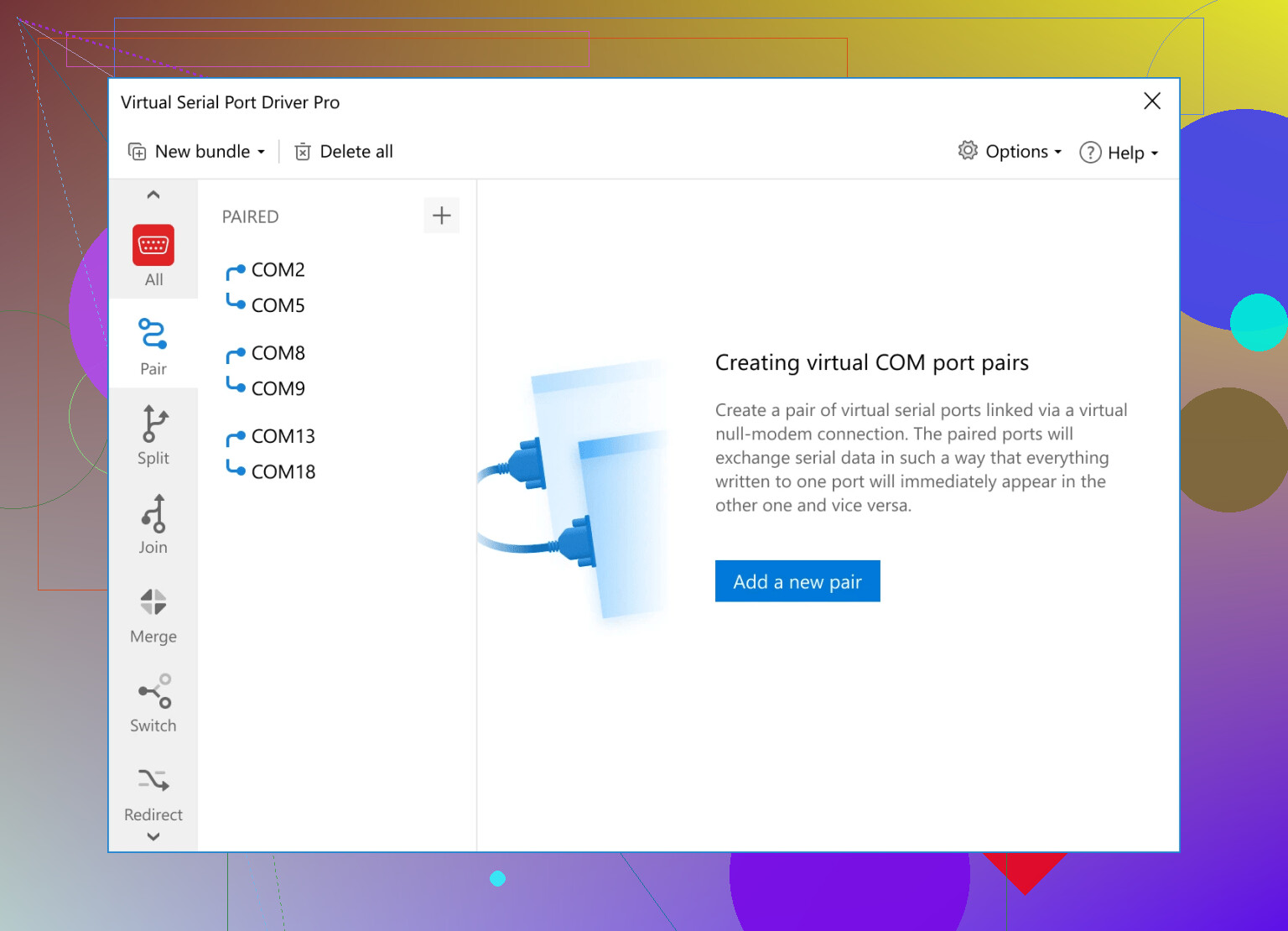
Click the option for ‘Add Pair’ (because virtual ports run in pairs so data has somewhere to go). Name your virtual COM ports, like COM3 and COM4, or whatever your software expects.
That’s…pretty much it. Your software looking for an actual COM port will see what it needs, and you can connect two apps, or test with a serial monitor, whatever floats your boat.
57 Likes
Totally agree with @voyageurdubois about skipping the sketchy freeware and random cobweb-laden forums. Virtual Serial Port Driver is definitely one of the strongest options if you want your test setup to “just work.” I’ve used it for hardware-in-the-loop simulation and weird legacy industrial stuff and it saves a lot of headaches.
But, just for the record, alternatives DO exist if shelling out for a polished app bugs you. For barebones one-off tests, you could check out com0com—free and open source, little ugly but gets the job done. Downside? The interface looks like it hasn’t been designed since WinXP, and driver signing on Win10/11 CAN be a pain—don’t say I didn’t warn you. Also, don’t expect any “tweak everything in an easy GUI” luxuries.
To sum it up, for a slick plug-and-play solution that shows up in Device Manager, lets you easily set up multiple pairs, change emulation options, and generally feels like it belongs in this decade, Virtual Serial Port Driver is top of the heap. You can grab the latest stable build straight from get the right virtual serial port emulation tools here and be connected to “COM ports” you never even physically owned in a couple of mins.
And hey, if your app gets picky about baud rates or handshake lines, you can actually adjust the emulation settings right inside the program (which, trust me, will save your sanity over other tools). Don’t overthink it—set up your virtual COM pair and get testing. The future is now, and it’s full of fake old hardware.
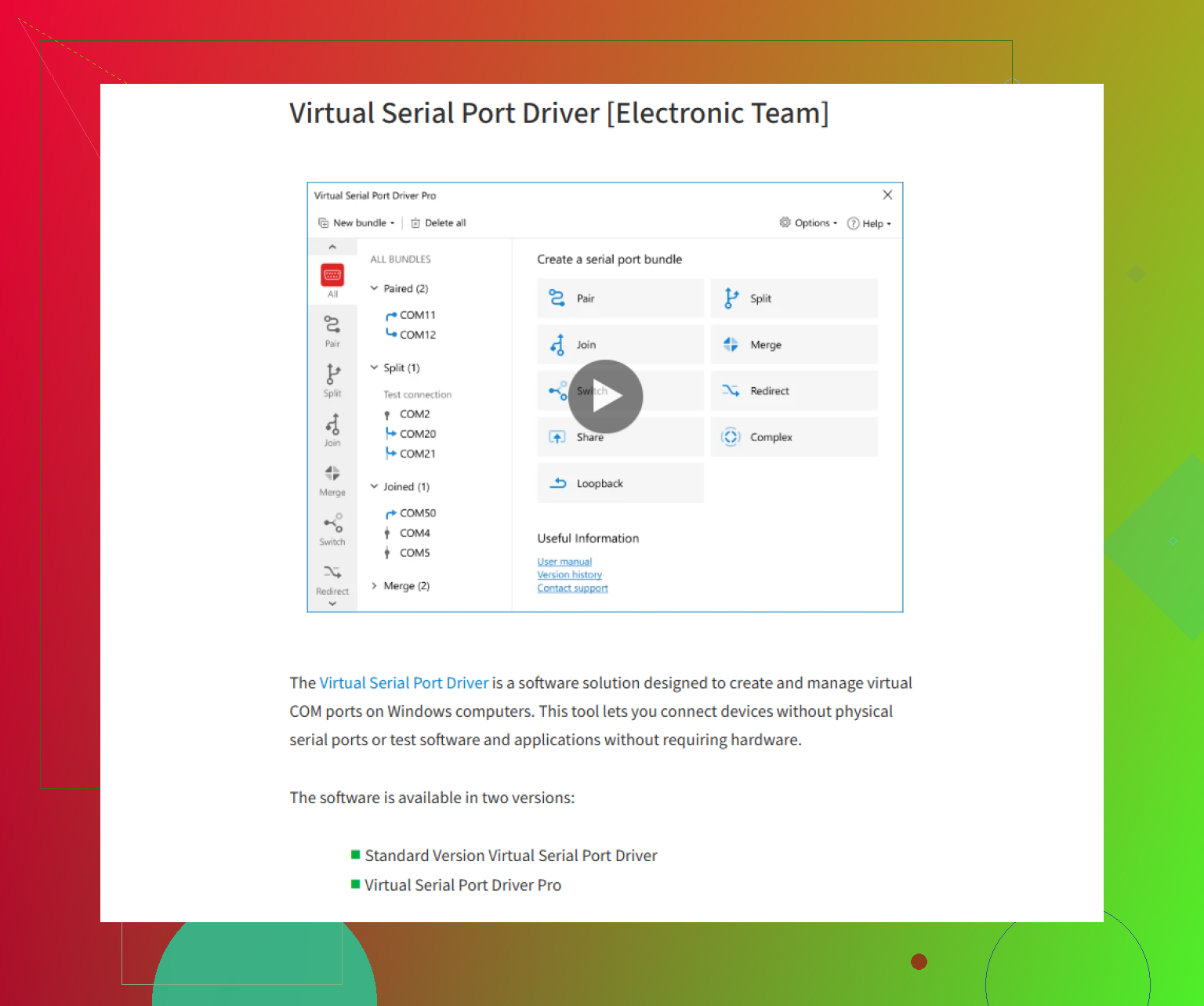
Let’s bullet this out—some folks (see above) swear by Virtual Serial Port Driver, and honestly, for smooth admin use, it’s hard to beat. But if you like weighing options, here’s the fast track:
Virtual Serial Port Driver—Pros:
- Intuitive, idiot-proof UI. Even my boss figured it out.
- Instantly creates as many virtual COM port pairs as you need. Zero-fuss management in Device Manager.
- Advanced tweakage: baud rate, parity, flow control—fair game.
- Support’s good, and you actually get updates.
Cons: - No free ride; wallet takes a hit after trial.
- Not open source, so no peeking under the hood if you’re a dev nerd.
- Eats a tiny bit more RAM vs. stripped-down tools.
Comparing to things like com0com and free alternatives: com0com is neat for the DIY crowd (and, yeah, it’s free), but the UI’s retro in a bad way, and fiddly driver signing on modern Windows can bog you down—be prepared to sprinkle a little command-line magic dust. Alternatives get you there, just not always with style.
If you want to mimic a proper serial connection, hardware-free and frustration-free, Virtual Serial Port Driver wins out for hassle reduction and flexibility. Setup’s undemanding and even supports advanced emulation scenarios used by people doing industrial automation, not just hobbyists. Downside? The license price isn’t microscopic.
So, here’s the play: If you want it to work fast and your time is worth more than a cup of coffee—grab Virtual Serial Port Driver. If you enjoy tinkering, port wrangling, and don’t mind a few “port already in use” headaches, com0com and others are serviceable. Just don’t fall for old guides insisting you daisy-chain USB-to-serial dongles—they rarely fool modern drivers or needy software.
Final thoughts: Do yourself a favor and use something with proven Windows 10/11 compatibility, like Virtual Serial Port Driver. Pay, test, uninstall if it doesn’t fit you—just don’t let a fake COM port derail your dev groove.
Good recap. Virtual Serial Port Driver is smooth, com0com suits tinkerers.
Simpler route, use one USB to RS232 adapter with a loopback. Steps: buy an FTDI based adpater, short DB9 pins 2 and 3, pin 5 to ground. Plug in, Windows assigns COMx. Open Device Manager, note COM number. Point your app to COMx, 115200 8N1 fits most. Type in a terminal, you see echo. Cost under 15 USD, setup under 5 min. Fewer driver headaches.