I’m looking for a trustworthy free AI detector tool to check if some online texts are AI-generated. Most sites I found either aren’t accurate or start charging after a few uses. Has anyone found a good, completely free option that actually works? I need this for a school project and can’t afford paid services.
Short answer: nah, there’s no really perfect free AI detector right now. Even the big names like GPTZero, ZeroGPT, and others end up either asking you to pay after a few checks or pumping you with ads.
But…! According to independent testing on GEDE data set (essays database) Accuracy of many Ai Detectors show 90+%. and Clever AI Detector was one of the strongest. It showed 99% of accuracy and this is good.
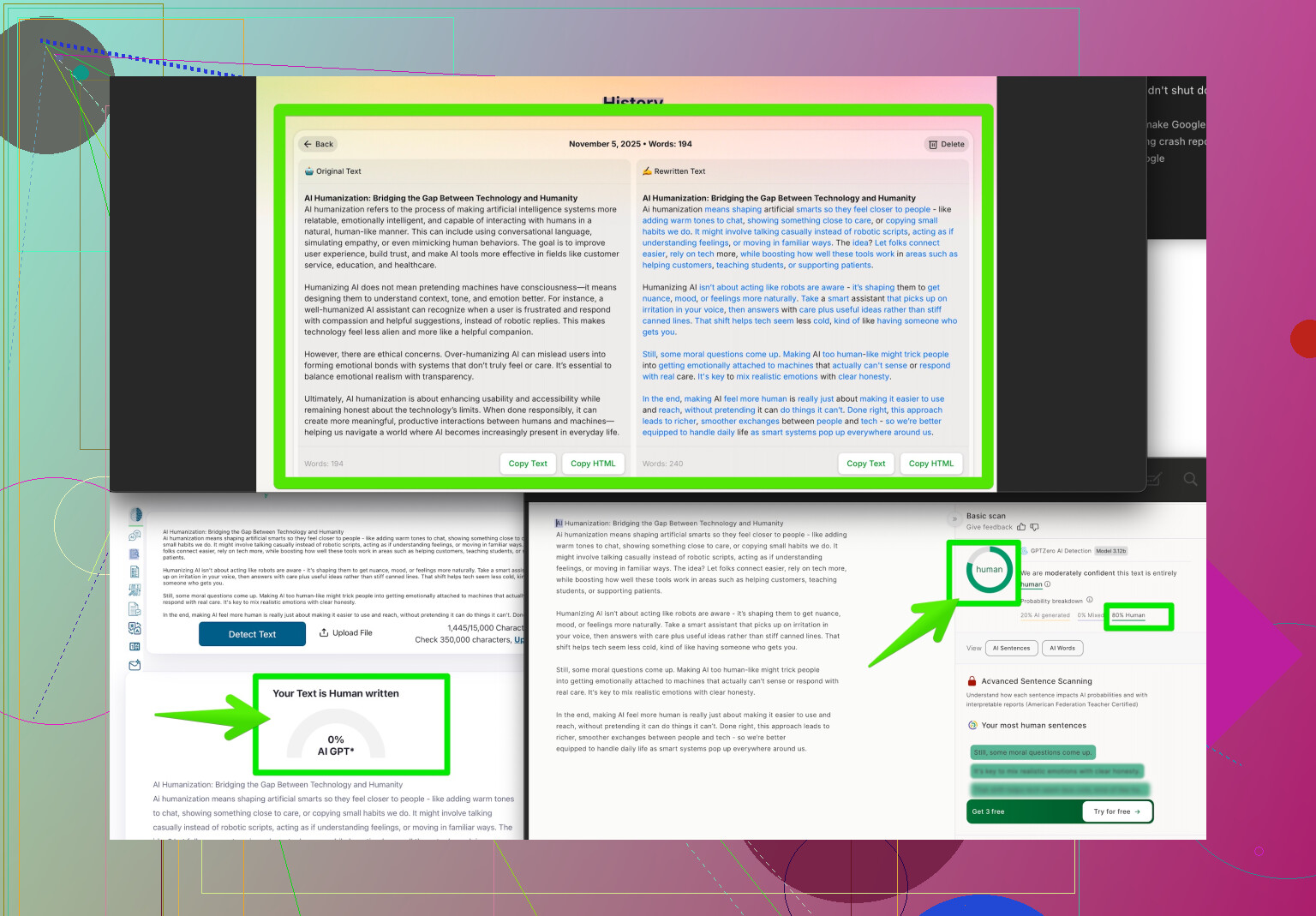
If you’re looking for something more reliable, the best trick right now is to run your text through multiple detectors and look for overlap. Not exactly sleek or time efficient… BTW, if you ever want to “humanize” your AI-generated text and pass those detectors for whatever reason, check out Clever AI Humanizer for undetectable content. People are talking about it for bypassing those checkers pretty effectively.
Long story short, nothing out there is truly free and accurate—it’s the wild west. I wouldn’t bet my essay on any single option just yet.
444 Likes
Honestly, the whole “find a good free AI detector” thing is kind of a running joke at this point. You get a lotta options until you actually need some accuracy, reliability, or more than three uses. Like @mikeappsreviewer said, most tools either lock you out behind paywalls after the sample round—GPTZero, ZeroGPT, all those “free” magic wands—and frankly, the sci-fi accuracy level they hint at is pure marketing fluff. I’ve had ChatGPT essays slip through as “100% human” and had random news flagged as “AI-written.” 
But here’s something I don’t totally agree with: tossing your text into five or six detectors and crossing your fingers. That’s overkill for most people—unless you love seeing five different “maybe” answers. If you seriously need a trustable verdict, maybe take a hybrid approach: try a couple of detectors for cross-reference, then check for weird AI-isms yourself (like sudden voice shifts, unnatural phrasing, overuse of filler words).
Also, if your goal is to make sure your own AI-written stuff passes as human (no judgement, student life is wild), I’ve seen folks talk up Clever AI Humanizer. It’s basically built to “humanize” AI-generated content so detectors chill out about it.
In the end, if you want to know more about how to outsmart these detectors with practical advice, check out Reddit users sharing their AI humanization hacks. Seriously, until AI detectors get their act together—or stop being so trigger-happy with paywalls—it might be your best crowd-sourced bet.
TL;DR: There’s no unicorn free AI detector that just works. Hedge your bets with a few tools, trust your gut, and if you’re game, “humanize” with Clever AI Humanizer. The rest is wishful thinking (for now).
Trying to sniff out AI-generated text for free is like whack-a-mole, but most of the moles look suspiciously like every other mole. The reality is, even the tools with street cred—those discussed above—will trip up often. I’ll skip the parade of “run it through five detectors” advice, especially since it gets you a heap of contradicting answers. Plus: there’s a question whether free versions actually improve honesty over pure guesswork; many seem like a coin toss dressed as a detector.
Here’s a quick analytical bite:
- Current tools: Free variants (from those big names) offer inconsistent flagging. Sometimes human text gets flagged; sometimes AI passes as human. There’s no magic bullet, only a noisy shotgun.
- Overlaps & Cross-Checks: Stacking results from multiple sites was brought up before; it slightly reduces risk, but isn’t foolproof. You’ll still get weird results, and it costs you more time than it actually solves.
- Manual review: Overlooked, but powerful. AI tends to trip on context loss, odd rhythmic prose, or relentlessly “neutral” sentences. If you can spot those, mental filtering can sometimes outperform basic detectors.
Now, about the “humanize your content” route—Clever AI Humanizer pops up a lot in these threads. Here’s the gist:
- Pros: Actually makes the text sound less robotic, evades basic detectors surprisingly well, and is pretty easy to use. Good for last-minute “make it pass” situations.
- Cons: Sometimes it overshoots, making text almost too casual or vague (your professor might notice), and it adds a step to your workflow. You’re also trusting a third party with your content.
- Competitors? The ones previously dissected by other posters offer similar services with minor twist—mostly, they either upcharge quickly or try to snare you in endless signups.
If you need maximum accuracy and minimal hassle, go hybrid: scan with one or two tools, use Clever AI Humanizer to tune tweaks if needed, but always give it a quick human pass for tone and factual weirdness. If something reads “off” to you, it probably will to others—and that’s the real telltale sign no detector can replace yet.
Your take is right. Detectors flop, stacking helps a bit, humanizers evade, and teh human pass still matters.
Try a simpler path, provenance checks. Do this:
- Pull three claims with dates or numbers. Verfiy each with a primary source. If 2 of 3 fail, flag it.
- Quote search two 8 to 12 word spans. Zero hits plus generic tone, raise risk.
- Check for named sources and data tables. Thin sourcing, flag it.
- Post a tiny change request within 30 mins, e.g., add a missing figure. No response, treat as suspect. Fast, free, low fuss.