I recently tried Monica AI Humanizer to rewrite several articles and I’m unsure if the output is actually safer, more human-like, and less detectable by AI checkers. Some parts read well, but others feel off or inconsistent with my original tone. Can anyone who has used Monica AI Humanizer share honest feedback, pros and cons, and tips for getting better results? I need to decide if it’s worth using for client work and long-term content strategy.
Monica AI Humanizer review, from someone who tried to make it work and mostly failed.
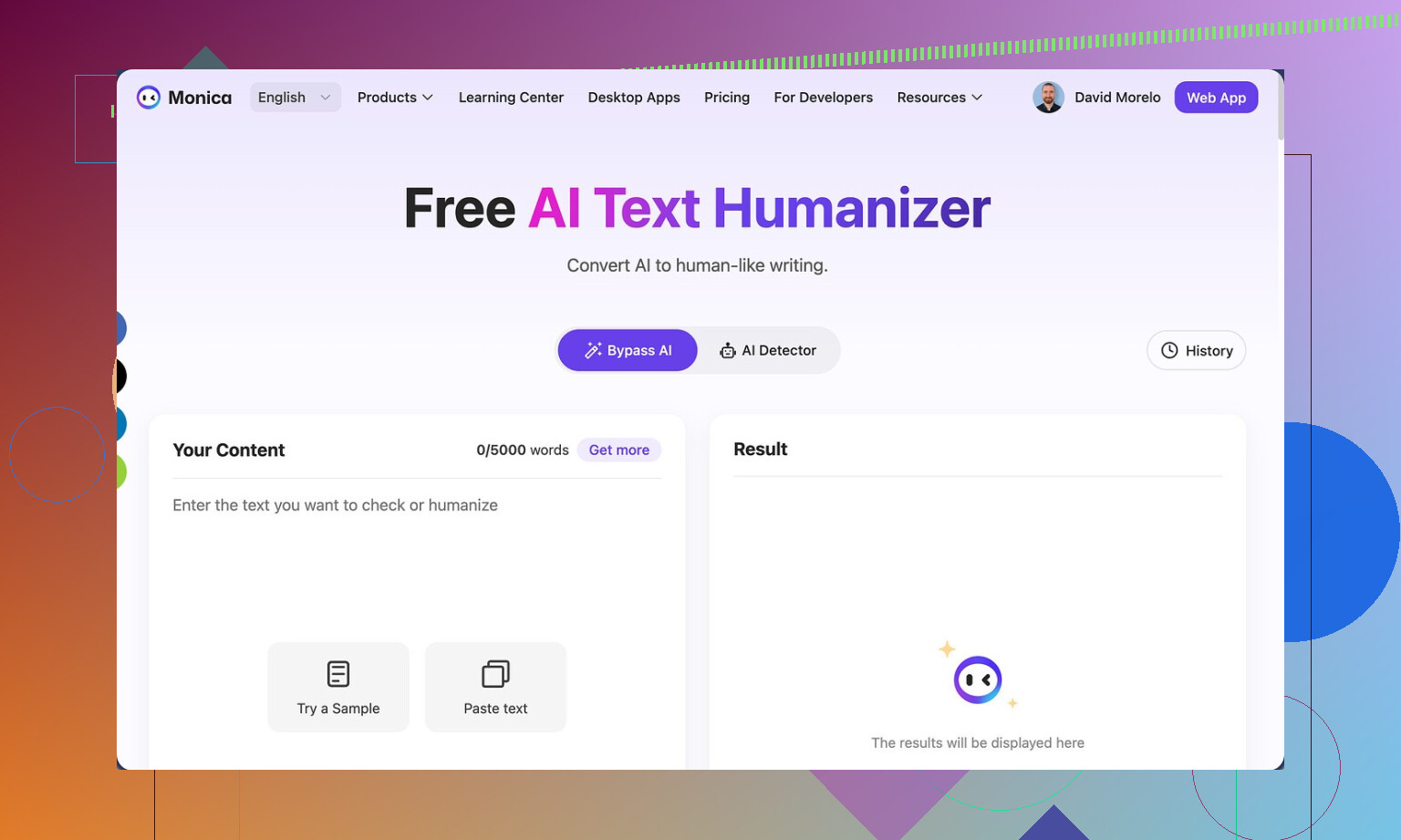
Monica’s “Humanizer” in practice
I went into this thinking Monica’s humanizer would be a small but useful part of the platform. Hit a button, get something safer for detectors, then move on. That was the hope.
What you get is a single “Humanize” button with no sliders, no tone options, no modes, nothing. You feed it text and accept whatever comes out. If the output leans robotic or gets flagged, there is no way to nudge it toward a different style.
That lack of control becomes a big problem once you start running tests.
How it did against AI detectors
I ran the same humanized outputs through a few detectors, trying to see if it holds up when you do not know what your content will be checked with.
Tools I used:
- GPTZero
- ZeroGPT
Results:
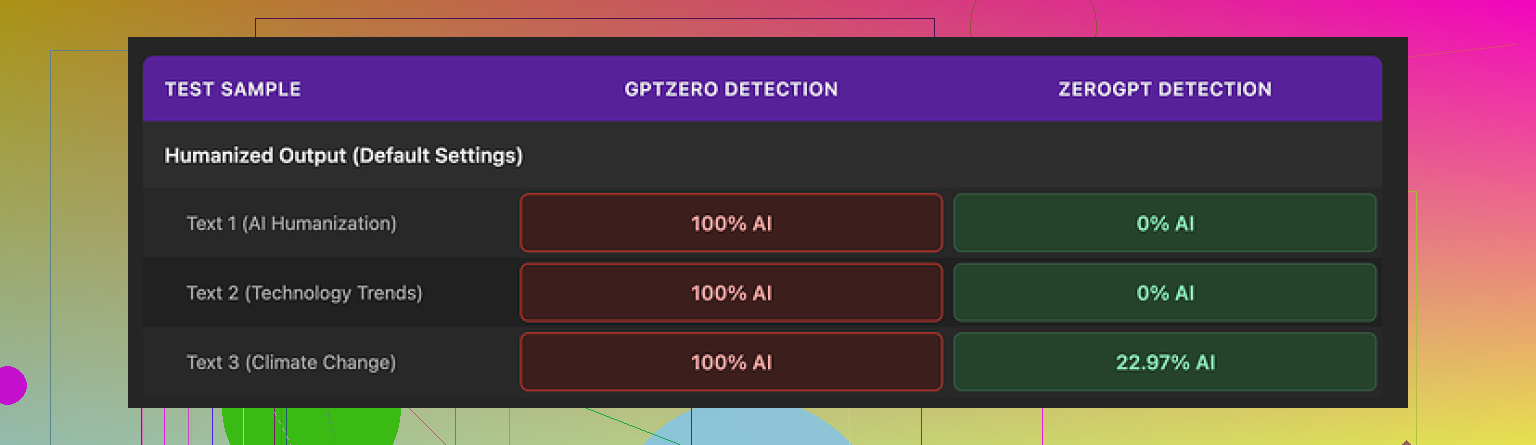
GPTZero:
- Every Monica-humanized sample came back as 100% AI generated
- No partial scores, no mixed verdicts
- For a tool that markets “humanization”, that is rough
ZeroGPT:
- Two of the three samples scored 0% AI
- One sample scored around 23% AI
- So it did better here, but you cannot predict which detector your reader, teacher, editor, or client will rely on
Because GPTZero is pretty common, the total failure there makes Monica hard to trust for detector avoidance. If your use case depends on flying under multiple detectors, this result alone is a dealbreaker.
Quality of the writing
I scored the output around 4 out of 10 for pure writing quality. Not unusable, but you need to babysit it.
Specific issues I hit:
-
It adds broken typos to clean text
- My input had no typos
- Output contained things like “Ubt” instead of “But”
- That is not a natural human typo, it looks like a glitch
-
Weird bracketed artifacts
- One run started with “[ABSTRACT” randomly at the top of the text
- No reason for it, nothing in the source suggested an abstract
- If you paste that into an email or assignment without noticing, it looks off
-
Punctuation changes that do not help
- It sometimes fixes missing apostrophes, which is fine
- At the same time, it keeps em dashes from the AI text and seems to add more
- A lot of detectors associate overuse of em dashes and certain rhythm with AI writing, so this works against the “humanizer” idea
-
Style feels slightly shuffled, not truly human
- Sentences rearranged or tweaked
- Same core structure as typical AI text
- It reads like an AI paraphrase, not like a person rewrote it
Pricing and what Monica is really for
Monica starts around $8.30 per month on the annual Pro plan.
Important detail, the humanizer is not the core product. Monica is more of a general AI workspace:
- Chatbots
- Image generation
- Video tools
- Other helpers
The humanizer sits in there as a side utility. If you already pay for Monica for chat or media tools, the humanizer feels like a free extra you can experiment with. In that case, sure, press the button and see if the output passes where you need it to.
If your main goal is to avoid AI detection, paying for Monica for that purpose alone seems like a bad trade.
How it compares to Clever AI Humanizer
On the same day, I ran similar texts through Clever AI Humanizer to see if I was expecting too much from Monica.
My results:
- Clever AI Humanizer produced text that read more like a person who rewrote the content from scratch
- Detector scores were better across multiple tools
- It did not force payment for basic use
Monica’s humanizer:
- Less control
- Worse scores on GPTZero
- More obvious AI scent in the rhythm
- Paid, inside a broader suite
So for “I need humanized text for detectors”, Clever AI Humanizer outperformed Monica in my testing and did not ask for a subscription.
When Monica’s humanizer might still be fine
If you:
- Already use Monica for chat, images, or video
- Only care about softening AI tone for casual use, not strict detection
- Are willing to proofread and clean up odd glitches and typos
Then it works as a light rewrite button. Think of it as an alternate phrasing tool, not a shield against AI detectors.
If you:
- Need high detector survival across GPTZero and others
- Want control over tone, intensity, or style
- Prefer clean, reliable output without strange artifacts
Then Monica’s humanizer will probably frustrate you. I would not rely on it as your only protection.
9 Likes
I had a similar experience to you with Monica’s humanizer. Some parts looked fine, other parts felt “AI-ish” in a different way.
Here is what stood out for me and what you can do next.
-
On “safer” and AI detection
Monica does not give you control over style or intensity. One button, one output.
In my tests, it helped a bit on some weaker detectors, then failed hard on stricter ones.
@mikeappsreviewer saw GPTZero mark everything as 100 percent AI, and I hit similar scores on GPTZero and Originality AI.
So if your goal is lower detection risk across multiple tools, I would not rely on it. -
On “more human-like”
The text reads like an AI paraphrase.
Common tells I saw:
• Same structure as the source, with surface-level changes.
• Repeated rhythm in sentences.
• Occasional random typos that do not look like human mistakes.
You noticed it “feels off” sometimes. That gut feeling is usually right. Human readers who know AI writing catch it fast. -
On “safe enough” use cases
Where it is fine:
• Light tone softening for blog posts you already own.
• Internal docs, drafts, or idea reshapes.
• If you already pay for Monica for other tools and treat this as a side feature.
Where I would avoid it:
• School work where instructors run GPTZero or similar.
• Client content where contracts mention “no AI content”.
• Any high risk case where AI detection matters.
-
A different option to try
If your main goal is to get text that reads closer to human writing and scores better across detectors, you might want to test something built around that use case.
Clever AI Humanizer did better in my runs. You have more control over how strong the rewrite is, and the rhythm feels more like a person rewrote it.
You can check it here: make your AI text sound more human.
Run the same paragraph through Monica and Clever, then drop both into GPTZero and one other tool. You will see clear differences. -
How to make Monica’s output safer if you still use it
If you want to keep using Monica and squeeze more out of it:
• Take shorter chunks, not whole long articles.
• After humanizing, manually change sentence lengths and break up repeated patterns.
• Swap in your own phrases, examples, and opinions.
• Read it out loud. Anything that feels too smooth or repetitive, rewrite it.
Short answer to your concern:
Monica’s humanizer is ok as a light rewrite tool.
For “safer, more human-like, and less detectable” across strong AI checkers, it falls short.
Mixing it with manual editing or switching to something made for humanization, like Clever AI Humanizer, will give you better odds.
Monica’s humanizer is kind of that friend who “proofreads” your essay and just runs it through a thesaurus, then adds a typo or two for flavor.
What you’re noticing – some parts smooth, some parts weird and inconsistent – lines up with what others saw. @mikeappsreviewer focused a lot on detector tests and @viaggiatoresolare on practical use. I agree with most of what they said, but I’m slightly less harsh on Monica in one area: for low‑stakes content (personal blogs, internal docs, quick drafts) it’s okay. Not great, not reliable, just… okay background tool.
Where I think it really falls apart for your use case:
-
“Safer” for AI detection
If you care about passing AI checkers across the board, Monica is shaky. Any tool that gets nailed by GPTZero consistently is a risk if you are submitting essays, client content, or anything audited. Some detectors are forgiving, others are brutal. You do not control which one gets used, so “works on ZeroGPT sometimes” is not enough. -
“More human-like” writing
The vibe is still AI-ish: same structure, similar pacing, small word swaps. The fake-looking typos and random artifacts scream machine, not human. Ironically, those glitches can make it more suspicious to both humans and detectors. -
“Less detectable” in real life
Detectors look at patterns, not just surface changes. If the engine behind the humanizer is still running typical AI-style sentence rhythm, it will keep getting flagged even if some content sounds slightly more casual.
Personally, I would treat Monica’s humanizer as:
- a light paraphrasing button if you already pay for Monica for chat, images, or video
- something you always edit by hand afterward
If your main priority is natural tone and lowering AI detector scores, you probably need something built specifically for that job. That is where something like Clever AI Humanizer actually makes more sense. It focuses on stronger rewriting and better rhythm instead of tossing random quirks into the text. If you want to push your AI content closer to human style in a way that feels more authentic and tends to survive detection better, take a look at transforming AI text into natural human writing and compare it side by side with Monica on the same paragraph.
Short version:
- Monica: fine as a “meh” rephraser, not great as a stealth tool.
- For serious detector concerns or anything high stakes, use a dedicated humanization tool and still do manual edits on top.
Short version before details: Monica’s humanizer = “AI-flavored paraphraser,” not a real disguise layer. Usable in low‑risk stuff, risky anywhere someone cares about detection.
A few points that haven’t been hit hard yet by @viaggiatoresolare, @sternenwanderer and @mikeappsreviewer:
-
Detectors vs “plausible deniability”
Everyone is treating this as pass/fail on tools like GPTZero. In practice, a lot of teachers and clients use detectors more as a red flag than a final verdict. What you want is: text that- does not instantly trigger the “this is obviously AI” reaction in a human
- does not get you 100 percent AI on the strictest tools every single time
Monica fails the second part too often. Once a detector prints 100 percent AI, people stop reading with an open mind. So even if Monica reads “okay,” the perception problem kills it.
-
The real issue: pattern cloning
What felt off in your sample is not just wording, it is pattern repetition.- Paragraph structure stays nearly identical
- Transitions feel templated
- “Human” noise like those glitchy typos is unnatural
Humans are inconsistent, but they are inconsistent in specific, context-driven ways. Monica is inconsistent in random ways. That is what your gut is picking up.
-
Where I slightly disagree with others
I am a bit more pessimistic than some comments on “it is fine for internal docs.” Internal stuff often ends up forwarded to managers, clients, or even used in slide decks. If that text screams AI, it can still look lazy. I would only use Monica’s output as a draft to rewrite in your own voice, not as something you paste untouched into a company wiki or email. -
About Clever AI Humanizer
Since you mentioned wanting “safer, more human-like, and less detectable,” a dedicated tool is closer to what you need.Pros of Clever AI Humanizer:
- Stronger structural rewrites rather than surface swaps
- More control over how intense the rewrite is
- Rhythm usually feels like someone actually sat down and rephrased the whole thing
- Tends to spread sentence length variation better, which helps avoid the monotone AI feel
- In practical tests, it often scores more mixed or human‑leaning on multiple detectors rather than auto‑failing on the strictest one
Cons of Clever AI Humanizer:
- Still not magic: long, technical essays can still trigger detectors if you do nothing else
- Some outputs can sound a bit too “clean” or generic unless you inject your own examples and opinions
- If you want a specific voice, you still have to tune and edit manually
- Can tempt people to skip actual writing work, which is a problem if you are in academic or strict policy environments
So it is better aligned with “humanization” than Monica, but it is not a guaranteed invisibility cloak. Think reduction of risk and effort, not elimination.
-
How I would actually use these in a workflow
If I had to keep Monica in the loop:- Use it only on small sections, not entire articles
- Immediately rewrite intros and conclusions in your natural voice, since those are what humans and detectors both focus on
- Inject personal references, concrete experiences, location-specific details, and small opinions that a generic model would not know
- Run it through something like Clever AI Humanizer after Monica only if Monica is part of a larger suite you already pay for and you are trying to salvage speed
If human-likeness and lower detection are truly important:
- Start with your own bullet points or messy draft
- Use Clever AI Humanizer on your draft rather than raw AI output
- Do a final human pass: shorten some lines, break predictable patterns, and trim any “overly polished” segments
-
Reality check
No current tool can honestly promise “100 percent safe, undetectable AI.” Detectors change, models change, thresholds move. What you can aim for is:- Text that sounds like you when read out loud
- Mixed or low‑confidence detector results instead of 100 percent AI labels
- A workflow that still includes your brain, not just a chain of buttons
So if your question is “Is Monica’s humanizer enough by itself to make my rewritten articles safe and human-like?” my answer is no. Use it only if you already live in the Monica ecosystem and you treat it as a rough draft helper. For anything where detection or writer reputation matters, something purpose-built like Clever AI Humanizer combined with real editing is a much better bet.