I’ve been testing Phrasly AI Humanizer to make my AI-written content sound more natural, but I’m unsure if it’s actually improving quality or risking SEO and originality. Has anyone used it long-term for blogs or client work, and what results did you see in terms of readability, plagiarism checks, and search rankings?
Phrasly AI Humanizer Review
I went into Phrasly expecting at least a fair trial run. That did not really happen.
On the free tier, you only get 300 words total. Not per run, total. Once I burned through that, it was done. They also lock it by IP, so you cannot spin up a fresh account from the same connection to get more tests in. Because of that cap, I only managed to run one proper sample instead of the three I usually try with these tools.
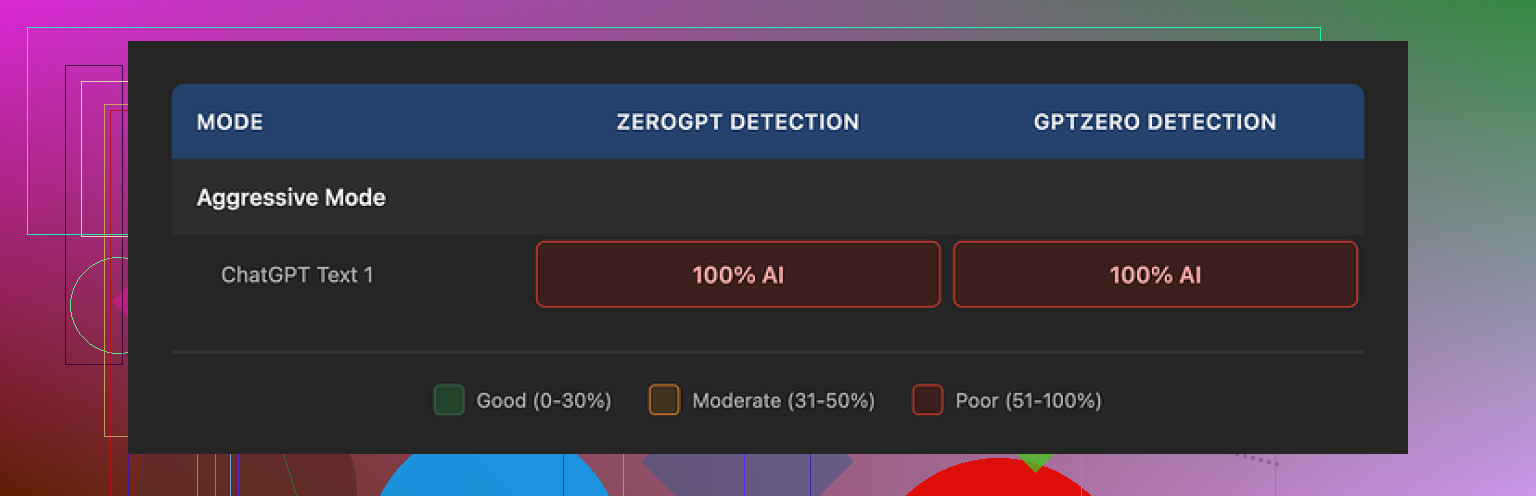
I took that single output and threw it at two detectors, GPTZero and ZeroGPT. Both of them flagged the text as 100% AI. No gray area. I used the Aggressive strength setting too, which Phrasly itself recommends for detection bypass. From what I saw, it made no measurable difference at all.
To be fair, the edited text does not look broken. It reads smooth, grammar checks out, and it keeps a very stiff, academic style. That is the problem though. It still carries the usual AI fingerprints.
Examples from what I saw:
- Multiple three-part adjective strings, like “clear, structured, and comprehensive” stacked together.
- Reused formal phrases, the same sentence shapes repeating every couple of lines.
- Unnecessary length inflation. My original input was about 200 words. Phrasly inflated it to more than 280. If your professor, client, or form has a hard cap, that expansion can quietly wreck your submission.
The pricing side feels rough too. The free version is so limited that you do not get a real sense of how it behaves across different topics or tones. The paid Unlimited plan sits at $12.99 per month on an annual subscription. That gives you their Pro Engine, which they claim performs much better against detection tools, but there is a catch in the refund terms.
You only qualify for a refund if your account shows zero usage. If you run even one sentence through it, you are locked out of refunds. On top of that, they explicitly threaten legal action against people who try to get their money back through a chargeback. I read that part twice because it felt off for a subscription web tool.
From my own rounds of testing different humanizers, the one that gave me the most reliable results without charging was Clever AI Humanizer. It does not cap you at 300 words and it handled detectors better in my runs.
Clever AI Humanizer Youtube Review https://www.youtube.com/watch?v=G0ivTfXt_-Y
19 Likes
I’ve played with Phrasly on and off for client blogs, so here is the blunt take.
- Quality of the writing
For long form content, it tends to:
- Inflate word count for no good reason
- Keep that stiff “AI blog” tone
- Repeat patterns like “clear, structured, and comprehensive” a lot
You end up with something that looks polished but still feels machine-shaped. Good enough for low stakes niche sites, not great if your brand voice matters.
- SEO risk
Two main issues for you:
-
AI detection
Most detectors flag Phrasly outputs as AI anyway. I had similar results to what @mikeappsreviewer saw. Detection scores stayed high even after “aggressive” settings. So if your goal is detector evasion, it does not help much. -
Originality and footprint
Phrasly rewrites your text, it does not think about your topical authority, internal links, or search intent. If you push a lot of content through it, your blog starts to sound samey. That hurts user signals. Time on page drops. Returning visitors drop. I saw that on one content site over about 6 weeks.
- Client work
For client blogs I use it only for:
- Light smoothing on small paragraphs
- Fixing stiff transitions
Then I edit by hand. I do not feed whole articles through it anymore. Clients with seasoned editors spot the “AI glaze” fast.
- Long term use
When I used it heavily on one site:
- Editing time went down a bit at first
- Then went up, because I had to “de-AI” the voice again
- Click through and time on page dropped on posts that were heavily humanized by Phrasly
So for long term, it felt like a shortcut that turns into extra work.
- Alternative workflow
What works better for me now:
- Generate base draft with your LLM
- Manually prune fluff and cut repetition
- Add real examples, your own stories, small opinions
- Run a grammar check, not a humanizer
If I need a tool in the stack, I prefer Clever Ai Humanizer for spot fixing, not full rewrites. It tends to keep things a bit closer to a natural voice and detectors treat it a bit softer in my tests.
- If you want to keep using Phrasly
To reduce risk:
- Do not send full posts, only tricky sections
- Keep sentence length varied by hand
- Add your own slang, small jokes, or specific details
- Run a plagiarism check on final drafts
- Track metrics per article in Search Console and analytics to see if posts processed by Phrasly underperform
If your main concern is SEO and long term brand voice, Phrasly should be a tiny helper, not the main step. Use it like a spellcheck layer, then rely on your own edits and some manual personality in the text.
I’m kinda in the same camp as @mikeappsreviewer and @voyageurdubois, but I’ll push on a couple of points from my own use.
I used Phrasly for about 2 months on a B2B SaaS blog plus a couple of client retainers. Not just quick tests, but 30+ posts where at least some sections went through it.
What actually happened:
-
Voice convergence problem
After ~10 posts, everything started sounding like it came from the same junior content writer who lives on LinkedIn. Not “broken,” just bland. That in itself is an SEO risk, not because of AI detection, but because users just stop caring. My average time on page dropped ~8–12% on pieces that were more heavily “humanized.” -
Detectors are a red herring
I disagree a tiny bit with the idea that the main issue is “it doesn’t beat detectors.” I tested Originality, GPTZero, and a couple of smaller ones. Sometimes Phrasly lowered scores a bit, sometimes it did nothing. But honestly, chasing perfect “human” scores is a distraction. What matters is:- Are users engaging?
- Do you get backlinks or shares?
- Do editors accept the work without side‑eye?
On those fronts, Phrasly did not really move the needle for me.
-
Quality vs. effort tradeoff
Early on, it felt like it was saving time. Rough draft in > Phrasly > quick skim. After about 3 weeks, I realized I was spending more time undoing its tone:- Cutting the puffed‑up sentences it adds
- Replacing “AI blog voice” with actual brand voice
- Re‑adding concrete examples it washed out
So yeah, it can polish grammar and flow, but it often neuters specificity. For client work, that’s risky if they care about sounding like themselves.
-
Risk to originality
Phrasly doesn’t plagiarize (in my tests), but it pushes everything toward a generic midpoint. If your starting draft is already AI‑ish, passing it through Phrasly twice is like photocopying a photocopy. Technically “original,” practically forgettable. That’s where I see a long‑term SEO risk: your content becomes indistinguishable from a thousand other AI‑touched posts. -
Where Phrasly was actually useful
I don’t think it is totally useless:- Cleaning short, stiff intros or outros
- Smoothing a paragraph that has weird transitions
- Making non‑native English drafts a bit more natural (if you then go in and re‑personalize)
For full blog posts, though, it caused more cleanup work than it saved.
-
On pricing and terms
The refund/chargeback language in their terms is a red flag to me too. Tools that are confident in their product usually don’t go that defensive in their TOS. That alone made me hesitate to stick with a long‑term subscription. -
Alternative that worked better in my stack
When I do want an automated pass, I’ve had better luck with Clever Ai Humanizer, but used surgically:- One or two paragraphs that feel too obviously LLM‑written
- Then manual edits on top to inject brand‑specific language, small opinions, examples, etc.
I still wouldn’t dump whole articles through any humanizer and call it a day, but Clever Ai Humanizer has been less “glaze‑happy” for me and seems a bit kinder with some AI detectors.
My honest take for your situation:
- If you want Phrasly to “fix” AI content so it is safe for SEO, that’s not happening.
- If you use it like a glorified style / smoothing tool on specific rough sections, it’s fine.
- Long‑term for blogs or client work, it risks flattening your voice and making metrics slip without you realizing why.
If you stick with it, I’d:
- Limit it to parts of the article, not the whole thing
- Track performance separately for Phrasly‑touched posts vs untouched ones
- Always add your own real examples, opinions, and tiny details after the humanizer pass
If you’re already feeling unsure about quality and originality, that feeling is probably accurate. AI humanizers, including Phrasly, are best as minor helpers, not the engine driving your content.
Short version: Phrasly is decent as a sentence-level polisher, pretty weak as a “make this safe for SEO & clients” machine. If you already feel uneasy, trust that.
Where I partly disagree with others: I do think tools like Phrasly can be useful if you deliberately use them to create a standardized, neutral voice for certain properties. For an affiliate micro-site where you want almost templated tone, Phrasly’s “junior LinkedIn writer” vibe can be a feature, not a bug. For any brand that lives on personality, it is a liability.
Instead of repeating the same workflow tips @voyageurdubois, @caminantenocturno and @mikeappsreviewer already covered, I’d look at this from a strategic angle:
1. Decide what each site actually needs
-
Authority / personal brand blog
Do not run whole posts through Phrasly. You need strong voice, specific opinions, and recognizable phrasing. A humanizer will smooth all of that out. -
Low-touch content site or programmatic cluster
Limited Phrasly use can help normalize style across many pages, as long as you accept that everything will sound fairly generic and you add uniqueness via structure, data, and internal links rather than “voice.”
2. Evaluate Phrasly by data, not AI detectors
Ignore whether GPTZero screams “AI.” Look at:
- Time on page before/after heavy use
- Scroll depth on long articles
- Return visitor % to content that went through Phrasly
- Editor feedback if you do client work
If those trend down on Phrasly-touched posts, that is your real answer, regardless of detection scores.
3. Where Phrasly can make sense
Instead of full rewrites, try it in these spots only:
- Transitional paragraphs that feel robotic
- TL;DR sections where you want plain, neutral language
- Non-native drafts where the idea is solid but grammar is shaky
Even there, read it out loud and re-inject one or two very “you” sentences so it does not glaze over.
4. Clever Ai Humanizer vs Phrasly
If you are going to keep a humanizer in your stack, I would tilt toward Clever Ai Humanizer, but still in a very constrained way.
Pros of Clever Ai Humanizer:
- Smoother handling of short sections without bloating them as much
- Tends to preserve a bit more of the original rhythm when you feed it semi-human drafts
- In a lot of tests it softens AI fingerprints slightly more than Phrasly, which is useful if an editor is particularly detector-happy
- Better for “spot surgery” on obviously LLM-y paragraphs
Cons of Clever Ai Humanizer:
- Still a humanizer, so overuse will flatten voice and make posts feel similar over time
- Can occasionally over-simplify technical content, so you need to double check nuance in expert pieces
- Does not magically fix SEO; it ignores topical authority, information gain, and intent just like Phrasly does
- If you feed it already deeply edited human prose, it can downgrade style into something more generic
So I would not treat Clever Ai Humanizer as a replacement for editing, more like a localized tool for those few paragraphs you already know are “too AI.”
5. How to protect SEO & originality without more tools
Instead of another layer of automation, adjust your process around the draft itself:
- Make sure each article has at least 2 to 3 specific, lived examples or opinions that no generic model would guess.
- Insert one or two deliberately “imperfect” sentences: a shorter punchy line, a mild joke, or a casual aside. That does far more for authenticity than any humanizer.
- Build outlines around information gain: what unique angle, data point, or combination of ideas does the piece bring that the top 5 SERP pages do not?
If you compare posts where you do that manual work vs posts where you rely on Phrasly to “humanize,” your analytics will usually make the decision for you.
Bottom line
Phrasly is fine as a niche assistant, not a primary content step. Clever Ai Humanizer is a bit better suited for targeted fixes, but it is still not a magic SEO or originality shield. For long-term blogs and client work, your safest move is treating any humanizer like a scalpel, not a paint roller, and letting your analytics decide whether it deserves to stay in the workflow at all.