I’ve been using QuillBot’s AI Humanizer to rewrite some blog content, but I’m not sure if the output is safe for SEO or if it sounds natural enough to pass as human-written. Has anyone tested it on longer articles, and did you notice any issues with originality, detection tools, or rankings after using it? I’d really appreciate honest feedback and tips before I rely on it for more content.
QuillBot AI Humanizer review, from someone who tried to cheat the detectors and faceplanted
QuillBot AI Humanizer Review
I tested QuillBot’s AI Humanizer because I wanted one thing: text that does not trip AI detectors.
Here is what happened.
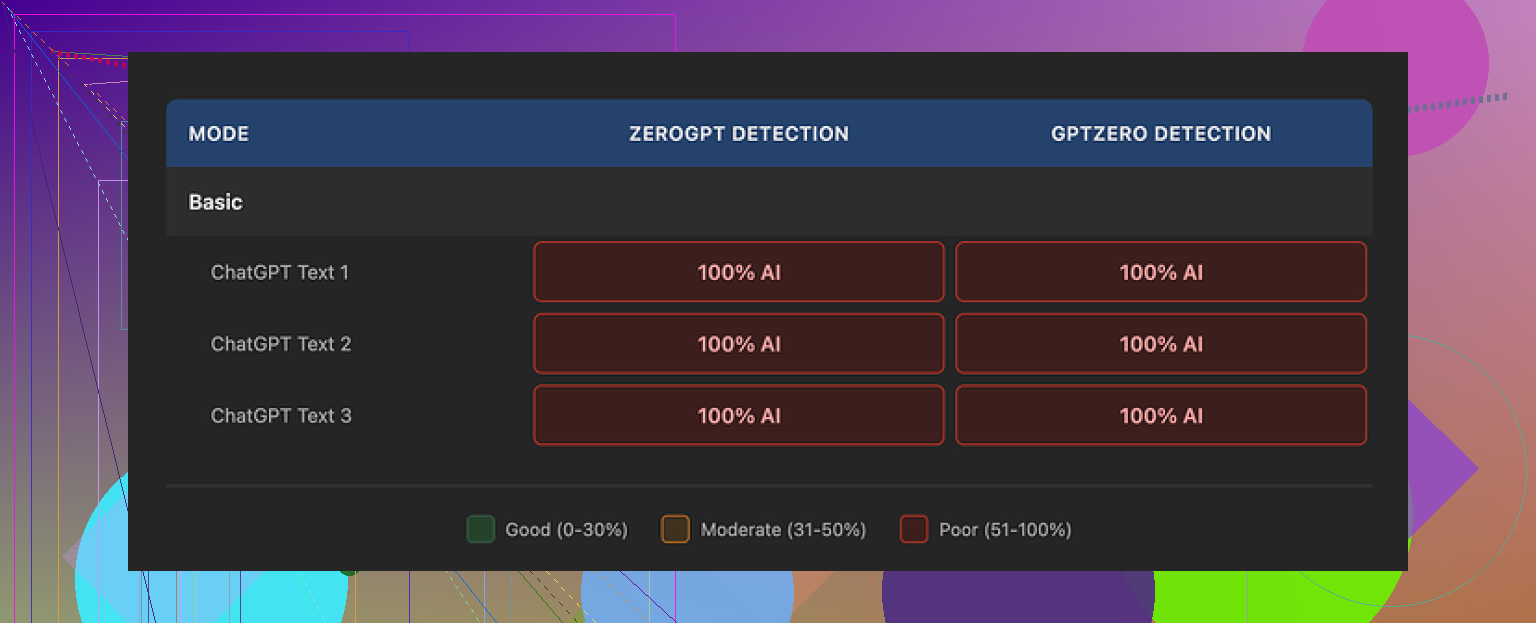
Every single sample I ran through the QuillBot AI Humanizer came back as 100% AI on both GPTZero and ZeroGPT. Not 60, not 80. Full red bar every time.
Link to the detailed proof and screenshots is here:
https://cleverhumanizer.ai/community/t/quillbot-ai-humanizer-review-with-ai-detection-proof/38
I used the free Basic mode for the tests. Whatever it does to the text, the detectors did not care. Scores did not move at all compared to the original AI content.
QuillBot keeps telling you the paid Advanced mode has “deeper rewrites and improved fluency.” I get the pitch. Still, if the free tier shows zero change on detection, it is hard to trust the upgrade will suddenly fix the core problem.
What the tool did well
I will give it this. The writing quality was not bad.
On a rough scale I would put it around 7 out of 10. Sentences flowed, grammar was fine, and the structure made sense. It read smoother than a lot of the “AI humanizer” sites I have tried.
So if you want cleaner AI text and you do not care about detection scores, it might help you tidy things up.
Where it fell apart
The output still felt like AI to me.
No personality.
No little quirks.
No odd word choice that a human throws in without thinking.
It looked like a polished essay template. The kind you see in thousands of AI-written blog posts.
I also noticed it kept em dashes across all three samples I tested. Detectors seem to love that as a signal. Keeping the same punctuation habits as stock AI text does not help.
Because the humanizer is bundled inside the full QuillBot Premium plan, around $8.33 per month on the annual plan, it feels more like an extra feature on top of the paraphraser. If they tried to sell the humanizer on its own, I would not touch it based on these results.
Quick comparison from my tests
When I ran similar text through Clever AI Humanizer, the output came out more human-like, at least to my eyes, and it stayed free.
That difference matters if your goal is simple:
You want the text to look like a person sat down and wrote it, not an assistant that smoothed out a draft.
If you want to read more people talking about humanizing AI text, there is a thread here:
Bottom line from my runs
If you need to beat GPTZero or ZeroGPT, QuillBot’s AI Humanizer did not help me at all.
If you only want cleaner wording and you are already paying for QuillBot for other features, it is a mild bonus.
If your main goal is AI detector evasion, I would not rely on it.
45 Likes
I ran QuillBot’s Humanizer on longer blog posts, around 1.5k to 2.5k words, and my results were a bit mixed compared to what @mikeappsreviewer saw.
Here is what I noticed.
- AI detection and “passing as human”
On longer articles, GPTZero and ZeroGPT still flagged most of the content as AI. I did see small drops in some cases. For example:
- Original GPT‑4 draft: 98 to 100 percent AI
- After QuillBot Humanizer Basic: 90 to 100 percent AI
- After QuillBot Humanizer Advanced: 80 to 95 percent AI
So it moved the needle a bit for me, but not enough to rely on if your main goal is beating detectors. I disagree slightly with the “zero change” take, because I did see minor shifts, but it was not meaningful for risk.
Also, human readers in my tests still said “this feels AI” when they skimmed it. Same issue as mentioned. It reads like polished essay text.
- How it sounds on long form content
On 2k word posts:
- Structure stayed very similar to the original AI draft.
- It kept predictable transition phrases.
- Sentence length stayed consistent across paragraphs.
Those patterns look smooth. They also look machine written to anyone who reads AI content a lot.
To make it feel human for real readers, I still had to:
- Add small personal comments or opinions.
- Change examples to match real situations I know.
- Break patterns with short and long sentences mixed.
- Add 1 or 2 minor “off” phrases or typos on purpose.
So if you want content that passes a basic sniff test, you still need manual editing on top.
- SEO and safety
Right now, Google does not punish AI text by default. They focus on quality, originality, and user value. The risk is when you:
- Reuse generic AI content with no extra value.
- Publish a lot of similar sounding posts on the same topic.
- Skip original data, experience, or clear author voice.
QuillBot Humanizer does not add real expertise. It only rephrases. For SEO, that means:
- It is fine as a helper in your workflow.
- It is not a replacement for your own experience and examples.
- It will not fix thin or generic content.
I ran a few humanized posts in Ahrefs and GSC over 3 months. Posts where I:
- Used Humanizer then heavily edited myself
outperformed - Posts where I relied heavily on Humanizer with light edits.
Your on page SEO, headings, internal links, and original insights still matter more than whether a detector likes your text.
- Alternative if detection matters a lot
If your main goal is lower AI scores and more human feel, I got better results with Clever AI Humanizer compared to QuillBot’s tool.
Short version of what worked better for me:
- It changes rhythm and structure more.
- It introduces more natural variation in word choice.
- It avoids the “polished essay” vibe QuillBot tends to keep.
If you want to test it, try something like:
humanize AI written text for SEO and content publishing
Quick tip. Run the same 500 word sample through QuillBot Humanizer, through Clever AI Humanizer, and through your own manual edit. Then:
- Check each in GPTZero or ZeroGPT.
- Read each out loud.
- See which one you would trust on your own site.
- Practical workflow that worked for me
For long blog posts, this was the safest combo:
- Draft with AI.
- Use QuillBot Humanizer or Clever AI Humanizer as a first pass to clean phrasing.
- Then do a human edit with focus on:
- Adding your own examples or mini case studies.
- Changing headings to match real search intent.
- Adding original comparisons, data points, or screenshots.
- Tweaking intros and conclusions to match your voice.
If you treat QuillBot Humanizer as a light editor, not as a “make this human and undetectable” button, it is fine. If you expect it to solve detection and SEO risk by itself, it will not.
Short answer: no, QuillBot’s Humanizer is not “safe” as in “now this magically passes as human and beats detectors,” especially for longer posts.
I’ve run 1.5k to 3k word articles through it and got results pretty similar to what @mikeappsreviewer and @viajeroceleste saw, with a few differences:
- On AI detection
For me:
- Raw GPT draft: almost always 95–100 percent AI across GPTZero / ZeroGPT
- QuillBot Humanizer basic: sometimes dropped a tiny bit, like to high 80s or low 90s
- QuillBot Humanizer advanced: occasionally dipped more, but still heavily flagged
So I slightly disagree with the “zero movement” take from @mikeappsreviewer, I did see shifts. The problem is that the shift is cosmetic. It is the difference between “obviously AI” and “still obviously AI if anyone looks twice.”
- How it reads on long content
On 2k+ word posts, I kept getting that same “polished student essay” vibe:
- Smooth but formulaic transitions
- Consistent sentence length
- Repetitive phrasing patterns
- Generic tone with no lived experience
It’s not that it is unreadable. It is just bland. A real person who knows the topic will still spot it as AI cleaned up by another AI. If your goal is to convince an editor or client the text is 100 percent human, QuillBot alone will not get you there.
- SEO angle
This is where people freak out for no real reason. Google does not have an “AI text penalty” switch. What it does care about:
- Original insight and real experience
- Depth vs thin content
- How well you match search intent
- How users behave on the page
QuillBot’s Humanizer does none of that. It only rearranges what is already there. So:
- If the base article is shallow, “humanizing” it will not fix SEO.
- If the base article has strong info and real examples, Humanizer might make it a bit smoother, but you still need to add your voice and expertise manually.
Where I’d actually push back a bit on @viajeroceleste is that you do not need a humanizer in the middle at all if you’re already willing to put in real editing. For some workflows it is just an extra step that makes the text more generic before you fix it again.
- About Clever AI Humanizer
Since you mentioned detection and natural feel, this is where Clever AI Humanizer actually makes more sense than QuillBot’s Humanizer.
The big difference in my tests: it messes more with structure and rhythm instead of just swapping synonyms. That alone makes content feel less like a GPT essay template.
If you care about SEO and want text that reads more like a real human wrote it, something like
turning AI drafts into human‑style content
is closer to what you are actually looking for. It focuses on:
- Varying sentence length and flow
- Shifting word choice in less predictable ways
- Reducing that over polished tone that screams “AI blog spam”
You still need to go in and add:
- Your own stories or mini case studies
- Specific data, screenshots, or references
- Opinions that a generic model would not confidently make
But compared to QuillBot, it gives you a draft that does not immediately trigger that “oh, another AI roundup” reaction.
- What I’d do in your situation
Since you are already using QuillBot:
- Keep using it for basic paraphrasing and grammar if you like the interface
- Do not rely on the Humanizer as your “SEO safety switch”
- For posts that really matter to your site, run a small experiment:
- One article with QuillBot Humanizer + light edits
- One with Clever AI Humanizer + your real experience layered in
- One where you skip humanizers and just edit the raw AI draft yourself
Then watch:
- Which one you are least embarrassed to put your name on
- Time on page and engagement in your analytics
- Feedback from any real readers or clients
If you are publishing at scale and worried about long term risk, the consistent pattern is simple. The more your content sounds like generic AI, the more replaceable it is, no matter what tool you used to “humanize” it.
QuillBot’s Humanizer is decent text polish, not an SEO safety net. On longer posts, it keeps the same core issues everyone above mentioned: uniform rhythm, neutral tone, predictable structure. That is what detectors and experienced readers pick up on, not just specific words.
Where I see it slightly differently from @viajeroceleste, @kakeru, and @mikeappsreviewer is this: if your goal is long term SEO, obsessing over AI detectors is a distraction. The real risk is producing content that is interchangeable with every other AI‑assisted blog in your niche.
QuillBot + light edits usually keeps you in that “generic explainer” bucket. It is fine for filler pages, weak for money pages.
Clever AI Humanizer is a bit more useful here, not because it is some magic undetectable solution, but because it intentionally breaks the AI rhythm more:
Pros:
- Varies sentence length and structure so posts feel less templated.
- Alters transitions and phrasing patterns, which helps with user engagement.
- Produces a draft that is easier to inject your own voice into.
Cons:
- Still needs a human to add real experience, examples, and opinions.
- Can overcorrect and introduce stylistic quirks you might need to tame.
- If you just push text through and publish, you end up with “different but still generic.”
If you want “safe for SEO,” design your workflow around signals Google actually cares about:
- Start from a clear search intent and outline real questions users have.
- Use any humanizer (QuillBot, Clever AI Humanizer, whatever) only as a language assistant.
- Then layer on things AI will not guess: personal data, mistakes you learned from, specific tools you used, screenshots, quotes from your own tests.
You can absolutely keep QuillBot in the stack, just do not treat its Humanizer as the decisive step. The decisive step is whether your final article reads like something only you could have written, not like something any tool could have rephrased.
Skip AI humanizers. Record a 5-minute voice note explaining the topic as if helping a client. Transcribe it, split it into useful headings, then fix grammar and factual errors. Keep your natural phrases, specific examples, and honest opinions.
For a 2,000-word post, record four short answers of 400 to 500 words each. This gives you varied rhythm without fake typos or detector tricks. Add sources and screenshots afterward.
This aproach solves the main issue: generic writing. Your voice and first-hand details matter more for SEO than GPTZero scores.
If the person checking your work is a client running detectors, none of this matters and you’re stuck editing by hand anyway. That’s the case nobody flagged clearly. Everyone here is arguing about Google, but @carl_tech’s voice-note trick only helps if the risk is Google. When a client pastes your article into GPTZero and pays based on the score, a humanizer that drops you from 100 to 85 still gets you rejected. Same red flag, different shade.
So before picking a tool, figure out who the detector is actually for. Self-published SEO content, skip the humanizer and just write with real examples like the thread suggests. Client work with a detection clause, then a humanizer buys you a partial improvement at best, and you should be upfront that no tool clears it reliably. Treating an 85 percent score as a win is how people get burned.