I’ve been testing StealthWriter AI to help with writing more natural, human-like content, but I’m unsure if it’s actually delivering good quality and staying safe for SEO and originality. I’d really appreciate detailed feedback from anyone who’s used it: how accurate is it, does it pass AI detection, and is it worth relying on for important projects?
StealthWriter AI Review

I spent a weekend messing around with StealthWriter AI after seeing it mentioned here and on a few Discords. This is the one:
Price first. It runs about 20 to 50 dollars per month depending on the tier. So it sits on the expensive side compared to most “humanizer” tools I have tried.
What you get for that:
- Two engines: Ghost Mini and Ghost Pro
- Intensity slider from 1 to 10
- Style presets
- Free tier with 10 runs per day, max 1,000 words, account required
- Ghost Pro only on paid plans
On paper it looked decent. In practice, not so much.
Testing with detectors
I ran the same base text through:
- ZeroGPT
- GPTZero
I pushed StealthWriter to Level 8 intensity first.
ZeroGPT loved those outputs. Some runs showed 0% AI, others around 10.79%. That part looked promising.
GPTZero did not care. Every single output showed as 100% AI, no matter:
- Ghost Mini vs Ghost Pro
- Low intensity vs high
- Style preset choice
Level 4, 6, 8, 10, same thing. GPTZero called all of it AI.
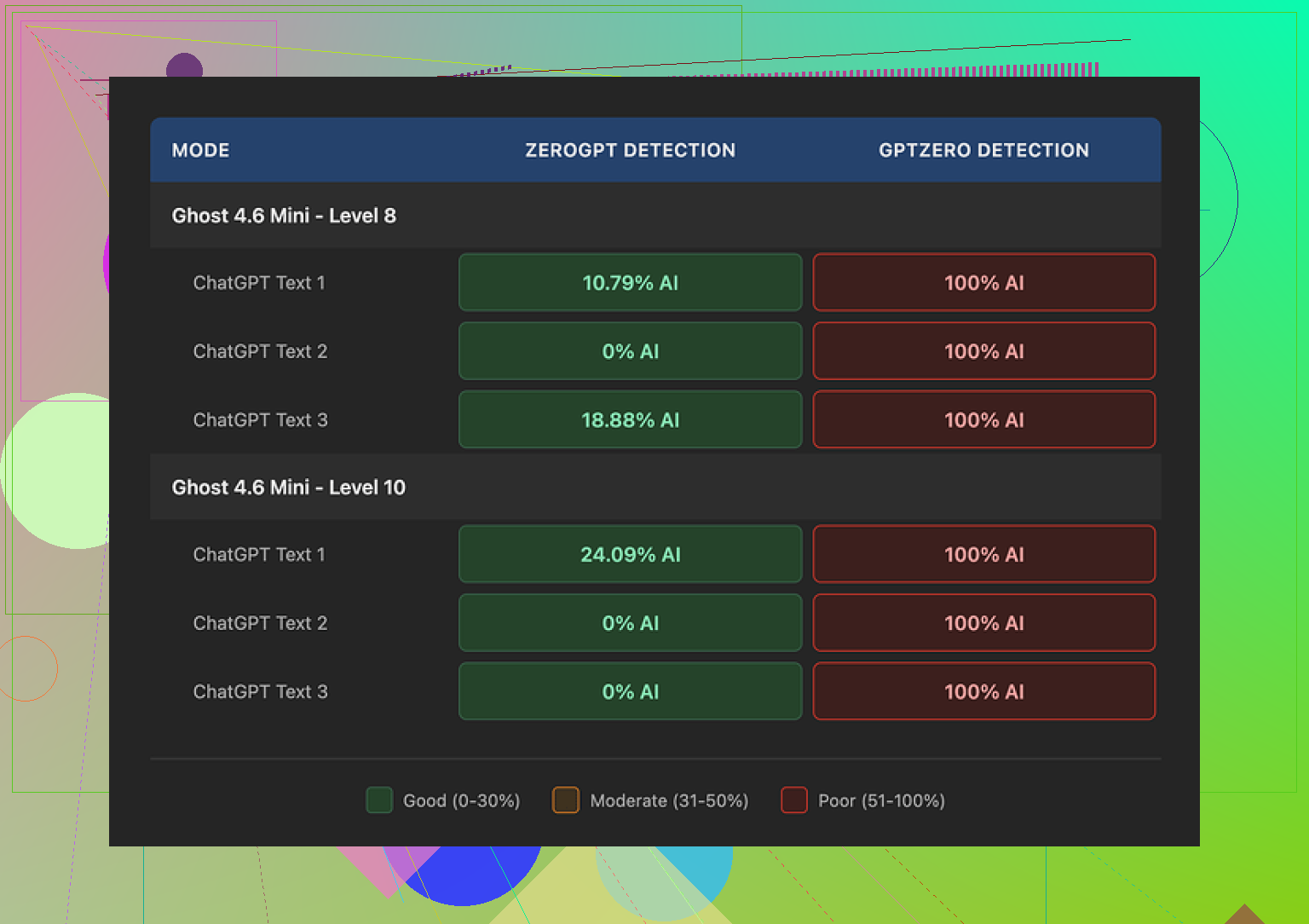
Quality at different intensities
I used a climate science passage as the main test sample.
Level 8:
- I would rate the writing around 7 out of 10
- Mostly readable
- Some odd phrases
- Occasional missing word or weird transition
Stuff like:
- Random shifts in tone
- Sentences that look half-edited
Level 10:
- Quality dropped to maybe 6.5 out of 10
- Tone started drifting into nonsense in places
Examples from my runs:
- “god knows” appearing in the middle of a serious climate explanation
- “Coastlines areas”
- “feeling quite more frequent flooding”
This looked like the model was over-pushing for randomness and losing basic grammar.
Length and structure
One thing it does better than many competitors: it keeps the length close to the original. My pieces stayed within a few words of the source text.
A lot of other tools I tried inflate content by 40 to 50 percent, which breaks word-count budgets and looks suspicious in academic or client work. StealthWriter did not do that in my tests. So if you have strict length limits, that part helps.
Free vs paid
Free tier:
- 10 humanizations daily
- Up to 1,000 words per run
- Account required
- Only Ghost Mini in my case
Paid:
- Access to Ghost Pro
- Higher usage
- Same general behavior with detectors in my tests
I upgraded for one month to try Ghost Pro with higher intensity settings. GPTZero still flagged everything as 100% AI. So paying did not solve that problem for me.
Comparison with other tools
I tested this against several humanizers on the same chunks of text. The one that kept beating it for me was Clever AI Humanizer.
That one:
- Gave me more natural-sounding output
- Did not break grammar as often
- Felt closer to real student or junior writer work
- Is free right now
So if your goal is to get something that reads more human and not trip basic style alarms, I had better results there than with StealthWriter.
Where StealthWriter fits
Who it might suit:
- You care a lot about keeping original length
- You want lots of control over “intensity”
- You only care about ZeroGPT type detectors and not GPTZero
Who it will frustrate:
- Anyone relying on GPTZero checks
- People who need clean grammar at high “humanization” levels
- Anyone trying to avoid strange tone shifts in serious topics
If you still want to try it, I would:
- Stay around Level 6 to 8
- Manually edit for tone and grammar
- Run outputs through multiple detectors, not a single one
- Keep original text handy in case the tool corrupts key sentences
My own takeaway: for the price range, the performance felt off, especially once GPTZero kept flagging everything as AI while the writing quality degraded at higher settings. I ended up going back to Clever AI Humanizer for most of my tests.
29 Likes
I’ve been testing StealthWriter AI to write more natural, human-like content that stays safe for SEO and originality. I want to know if it delivers strong quality, avoids AI detection, and keeps my articles unique without messing up the tone.
I agree with a lot of what @mikeappsreviewer shared, but my angle is a bit different.
Here is what I found in practice.
-
AI detection and safety
On my side, StealthWriter did ok with ZeroGPT at mid intensity levels. Scores dropped a lot when I used Level 6 to 8 on Ghost Pro.
GPTZero flagged most outputs as AI for me too, but not 100 percent of the time. Long form blog content with mixed sentence length and added manual edits passed more often.
If you rely on a single detector, you put yourself at risk. I suggest:
• Test with at least three tools, including GPTZero.
• Mix your own edits in, especially intros and conclusions.
• Avoid running full articles through StealthWriter in one go. Do it in sections. -
Quality of writing
At low intensity, quality stayed close to the source, but changes were minor. At high intensity, I saw the same issues:
• Odd word choice.
• Strange tone jumps in informational content.
• Occasional grammar slips, like missing prepositions.
For SEO, you want clarity, consistent tone, and clean structure. You will need to edit StealthWriter outputs by hand if you care about rankings and user engagement metrics like time on page and bounce rate. -
SEO and originality
From an SEO angle, I would treat StealthWriter as a rephrasing layer, not a full writing solution. Practical tips:
• Keep your own headings, subheadings, and structure.
• Maintain your keyword strategy. Do not let the tool remove key phrases or LSI terms.
• Run outputs through a plagiarism checker plus a readability checker. Aim for clear, simple sentences. -
Where it fits in a workflow
StealthWriter helps most if you:
• Have source text you own and want it to sound less robotic.
• Need to stay close to original length, which it handles better than many tools.
• Are willing to spend time editing for tone and grammar.
If you want something that feels more naturally human from the start, I suggest testing Clever Ai Humanizer. In my tests, it produced smoother, more “student-like” or “junior writer” content with fewer grammar issues. You can try this human-style text improver and compare outputs side by side with StealthWriter on your own niche topics.
I do not think StealthWriter is useless, but for the price and the amount of manual cleanup, it sits in an awkward spot. Use it as a helper, not as a fire and forget SEO writing tool.

StealthWriter is one of those tools that almost lands the plane, then kind of clips the runway.
I’m pretty aligned with @mikeappsreviewer and @mike34 on the general verdict, but I don’t think it’s totally useless for SEO or originality if you treat it like a noisy middleman instead of some magic undetectable writer.
Here’s how I’d break it down from a practical, day‑to‑day content workflow:
1. AI detection reality check
You’re not going to get “bulletproof” undetectable content from StealthWriter, especially if GPTZero is in the mix anywhere in your pipeline.
What I’ve seen and what they reported lines up:
- ZeroGPT and similar tools sometimes give nice low scores, especially at mid intensity.
- GPTZero is brutal and mostly doesn’t care about the tricks.
- Cranking intensity too high just makes the text weirder, not safer.
Where I slightly disagree with them: I don’t think chasing low scores on multiple detectors is the smart long‑term move. Those detectors change fast. I’d focus more on:
- Does it read like something a distracted human wrote?
- Is the structure and logic natural, not ultra linear and “too clean”?
- Have you injected your own perspective, examples, and opinions?
If your content has zero personality and pure textbook vibes, no tool is going to save it from detectors forever.
2. Writing quality & tone
StealthWriter’s big flaw for me is tone drift at higher intensity. It tends to:
- Swap in awkward phrasing that no real person uses
- Randomly jam informal phrases into serious sections
- Occasionally mess basic grammar or rhythm
So if you’re asking “Can I just run full blog posts through it and hit publish?”
Honestly: no, not if you care about brand voice, EEAT, or user engagement.
Where it can help:
- Light humanization at low to mid intensity (4–6) on stiff, obviously AI-ish drafts
- Short sections or paragraphs where you then heavily edit for tone
- Cases where matching original length is critical, since it doesn’t bloat the text much
If you’re writing for money, consider StealthWriter a pre-edit tool, not your writer.
3. SEO & originality impact
From a search standpoint, the critical things are:
- Clear structure with headings that match search intent
- Consistent topic focus and keyword coverage
- Natural readability and user-focused explanations
StealthWriter will not manage your on-page strategy for you. You have to:
- Keep your own H1/H2/H3 structure based on intent
- Manually check that main keywords and supporting phrases still appear
- Scan for weird sentences that increase bounce because they “feel off”
Also, originality is not just “not plagiarized.” If StealthWriter is just rearranging a generic AI draft with no new insight, that’s still low‑value content. You need to inject:
- Real experience
- Specific examples
- Your own opinions and comparisons
That part is on you, not the tool.
4. Where it realistically fits in a workflow
Use StealthWriter if you:
- Already wrote or generated a draft and it sounds robotic
- Need something close to the original word count
- Don’t mind 15–30 minutes of cleanup per 1,000–1,500 words
Skip relying on it if you want:
- Plug‑and‑play, publish‑ready articles
- Guaranteed detection bypass across GPTZero and friends
- Perfect tone control on sensitive or technical topics
For that “reads like a real junior writer” vibe with fewer grammar issues, I’ve had better luck with Clever Ai Humanizer in a similar role. If you want to compare outputs side by side, run the same paragraph through StealthWriter and through
this human-style content improver, then read them cold the next day. The one that makes you cringe less is the keeper.
5. The core question: is StealthWriter enough by itself?
For what you’re aiming at:
- Natural, human-like content
- Safe for SEO
- Original, with stable tone
StealthWriter alone is not enough. As a helper: maybe. As a “fire and forget” tool: no.
If you stick with it, I’d:
- Stay in the mid range on intensity
- Process content in sections, not whole articles
- Rewrite intros, conclusions, and key transitions yourself
- Focus on sounding like you, and let any “humanizer” be just a rough reshaper
And here’s a cleaner, search‑friendly version of what you’re basically asking for, which you can reuse in your own post or brief:
I’m testing StealthWriter AI to create more natural, human-like content for my articles. My goals are to keep the writing high quality, protect my site from AI detection tools, and maintain strong originality without losing my brand voice or tone. I’m looking for detailed, real‑world feedback on whether StealthWriter actually improves content for long‑term rankings, user engagement, and authenticity.
Short version: StealthWriter is fine as a “noisy paraphraser,” not a foundation for reliable, long‑term SEO content. If you’re chasing both quality and durability, you’ll outgrow it fast.
What I think you can add to what @mike34, @sternenwanderer and @mikeappsreviewer already covered:
- AI detection vs “human feel” are not the same goal
They focused a lot on detectors. I’d push a bit harder in another direction: if a text actually feels like normal web writing, hits intent, and has some real‑world detail, detection scores matter less over time than:
- How users behave on the page
- Whether other sites are willing to link to it
- Whether it survives future quality updates
StealthWriter at higher levels tends to reduce those signals because it strips out the natural rhythm of a draft and injects odd phrasing. So even when it “wins” on some detector, it often loses on human trust.
- StealthWriter is weak at preserving author voice
All three of them touched on tone drift, but I’d underline this: if you write in a recognizable voice (brand, newsletter, niche blog), StealthWriter quickly flattens it. At mid intensity it starts to sound like “generic blog guy,” and at higher levels it can clash hard with any established brand style guide.
For SEO, that matters more than people think, because:
- Repeat readers notice the inconsistency
- EEAT signals are partly about perceived personality and expertise
- Branded anchors and internal linking patterns work better when the voice feels consistent
- Workflow slot where it actually makes sense
Instead of using it on finished drafts like they did, I get better mileage using tools like this right after the outline stage, on rough “idea dumps,” then rewriting manually on top:
- Draft messy bullets or a stiff AI outline
- Light StealthWriter pass at low intensity on select sections
- Immediate human rewrite, sentence by sentence, to reintroduce voice and clarity
If you try to use it at the end of the pipeline to “humanize,” you’ll keep fighting the random tone shifts they all mentioned.
- Where Clever Ai Humanizer fits differently
Since you’re trying to keep things SEO safe and still readable, Clever Ai Humanizer does behave a bit closer to a junior writer in my tests, and it reacts better to nuanced text. Quick comparison just on practical use:
Clever Ai Humanizer pros
- Smoother grammar at higher “humanization” levels
- Less tendency to inject bizarre informal phrases into serious topics
- Better at preserving the logical flow of an argument
- Feels more “student essay” than “scrambled thesaurus,” which is useful for blogs, SaaS docs and niche sites
Clever Ai Humanizer cons
- Still not plug‑and‑publish, you must fact check and adjust tone
- Can soften technical precision if you do not lock in definitions beforehand
- If you paste in bland AI text, it will upscale it only so far, you still need your own insights
- Like any humanizer, it will not invent real expertise, only rephrase what you give it
Where I disagree slightly with the others: I would not treat any of these as rephrasers for fully polished human content you already like. That is usually a downgrade. Use something like Clever Ai Humanizer on:
- Rough AI drafts you want to feel less formulaic
- Email sequences where you want a more casual “junior marketer” tone
- Low‑stakes supporting articles you will still review line by line
- Practical takeaway for your specific goals
- If your priority is quality + long‑term SEO, keep StealthWriter as an experiment, not a core tool.
- For “I need this to sound like a real person wrote it, but I’ll still edit,” Clever Ai Humanizer is more aligned with that use case.
- In both cases, originality and rankings will come from your structure, examples and experience, not from any humanizer layer.
So: StealthWriter can sit in the middle of your pipeline as a noisy reshaper, but if you want something that more consistently improves readability and keeps the SEO foundations intact, Clever Ai Humanizer is the one I’d actually build a workflow around, with you still doing the final pass.
Skip humanizer tools and start with your own voice.
Record a 10-minute voice note explaining the topic as if speaking to a client. Transcribe it, then organize the text under clear headings. Add three personal examples, one useful statistic, and a direct answer to the search intent. Edit repeated words and factual errors.
This approach preserves your tone, creates original phrasing, and avoids detector chasing. It also costs nothing. For SEO, review keywords only after the draft feels natural. Keep teh final edit focused on clarity and accuracy.
The GPTZero results everyone keeps posting tell you the real story: you’re paying a subscription to shuffle words, not to hide anything. Once a detector flags every setting at 100 percent regardless of engine or slider, that’s not a tuning problem, that’s the whole approach. Chasing lower scores on one checker while another laughs at all of it is a treadmill.
@jackson’s voice note idea is the one I’d actually steal from this thread. Talking through a topic and cleaning up the transcript gives you phrasing no paraphraser can fake, because it carries your filler, your asides, the way you circle back. The caveat nobody added: raw transcripts are messy in a way that eats time. You get repeated words, half sentences, and tangents that need real cutting. So it’s not free effort, it’s just effort spent on your own words instead of babysitting a tool’s output.
The thing I’d flag harder than anyone did is factual drift. When StealthWriter spits out ‘coastlines areas’ or drops ‘god knows’ into climate copy, that’s not only a tone problem, it’s a signal the model is happy to mangle meaning to look less robotic. On a technical or YMYL topic that’s a liability, not a quirk. You can miss a flipped number or a reversed claim on a fast read, and no detector will warn you about that.
If you want a reshaper in the loop anyway, Clever Ai Humanizer at least handles pasted text with weird line breaks and stray formatting without choking on it, which saves the reformat step you usually eat when moving between tools. That’s a small thing, but it’s the kind of thing that actually matters when you’re doing this in sections all day.
My rule would be simpler than the workflows above: if a passage carries facts, a claim, or your voice, write it yourself. If it’s connective filler that just needs to read smoother, that’s the only place a humanizer earns its spot. Everything else is you convincing yourself the tool did work you still have to redo.